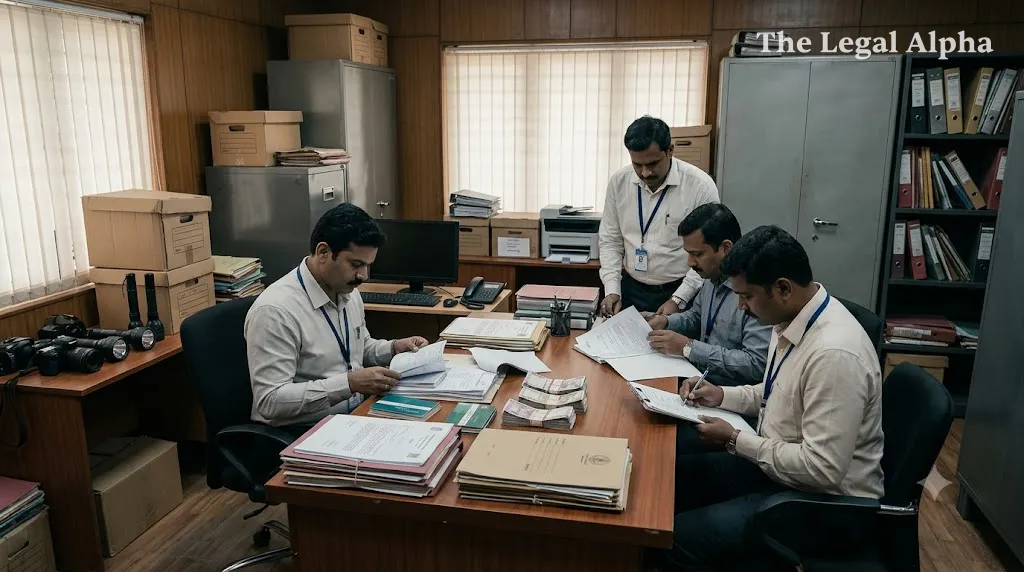
Maharashtra FDA Crackdown: Retail Giants and Quick-Commerce Executives Booked Over Alleged Resale of Expired Food Stock
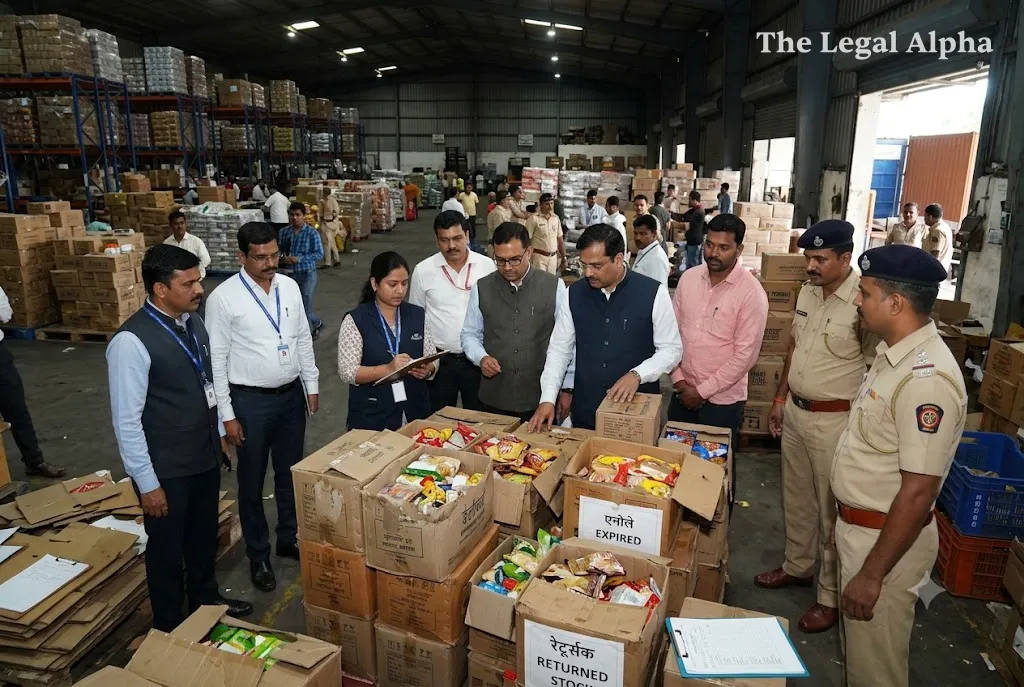
The Maharashtra Food and Drug Administration (FDA) initiated criminal action against officials and employees associated with Reliance Retail, Reliance Consumer Products, Blinkit, and Zomato Hyperpure, alongside third-party disposal operators and local vendors.
Following coordinated multi-district enforcement drives in Thane and Pune on October 14 and 15, regulatory authorities seized expired, damaged, and returned food inventory valued at approximately ₹48 lakh. According to regulatory findings, inventory meant for mandatory destruction was allegedly siphoned off through disposal agencies, intermediaries, and unlicensed sorting facilities, finding its way back onto open retail shelves.
The action is notable as it exposes critical supply chain gaps in reverse logistics and waste disposal within India's rapid-delivery and organized retail ecosystems.
Legal Topic
-
Area of Law: Food Safety and Consumer Protection Law
-
Sub-topic: Corporate Compliance, Reverse Logistics Liability, and Criminal Negligence
Core Legal Issue
The primary legal inquiry addresses whether corporate food business operators and quick-commerce entities can be held vicariously and criminally liable for the unlawful re-entry of condemned stock into the market when waste disposal and destruction mandates are outsourced to third-party vendors.
It further examines the extent of statutory duty owed by retail platforms under the Food Safety and Standards Act to maintain verifiable chain-of-custody documentation ensuring that expired goods marked for disposal are irreversibly destroyed rather than diverted.
What Did the Court / Authority Decide?
Acting on a formal complaint filed by the Assistant Commissioner of the FDA, the Thane Police registered a First Information Report (FIR) at the Shanti Nagar police station against 10 individuals, including corporate personnel, disposal agency contractors, and middle-tier suppliers.
At the administrative level, following regulatory hearings conducted on October 15, the FDA ordered:
-
The suspension of five warehouse licences linked to Reliance, Blinkit, and Zomato Hyperpure across Bhiwandi, Ambernath, and Khed (Pune district).
-
The immediate closure of four unlicensed premises and sorting centres operating without valid statutory registrations or purchase audit trails.
-
Seizure of the entire tainted inventory valued at ₹48,09,924.
The criminal case is currently at the preliminary investigation stage, and formal chargesheets have yet to be submitted before a judicial magistrate.
Key Legal Points
-
Chain of Custody and Destruction Compliance: Food business operators bear a non-delegable duty to maintain verifiable, tamper-proof logs confirming the end-of-life disposal of unfit food products.
-
Discrepancies in Statutory Records: Discrepancies between disposal manifests, stock ledger reconciliations, and physical goods constitute strong prima facie evidence of regulatory breach under food safety enactments.
-
Joint and Several Liability in Reverse Logistics: Companies cannot fully shield themselves behind third-party disposal contractors if internal checks fail to verify that returned or expired items were permanently removed from the commercial chain.
-
Enforcement Powers of Regulators: State food authorities possess wide summary powers to issue stop-work notices and suspend operating licences where public health risks are imminent.
Relevant Law
-
Food Safety and Standards Act, 2006 (FSSA):
-
Section 26: Responsibilities of the food business operator to ensure compliance at all stages of production, distribution, and storage.
-
Section 27: Liability of manufacturers, distributors, and sellers for substandard, expired, or unsafe food.
-
Section 59: Punishment for manufacturing, storing, selling, or distributing unsafe food.
-
Section 66: Offences by companies, fixing liability on individuals responsible for the conduct of the corporate entity's business.
-
-
Bharatiya Nyaya Sanhita, 2023 (BNS) / Indian Penal Code, 1860 (IPC): Provisions concerning cheating, criminal conspiracy, and public health endangerment through the adulteration and fraudulent sale of noxious food.
-
Food Safety and Standards (Licensing and Registration of Food Businesses) Regulations, 2011: Rules governing premises licensing and traceability obligations.
Arguments of the Parties
Regulatory Authority / State The FDA submitted that the retail and quick-commerce companies failed to adhere to statutory destruction protocols for compromised food items. State inspectors found expired goods, leaky packages, and off-spec food items being sorted at unauthorized sites without procurement bills or licenses, indicating a systematic pipeline facilitating illicit re-entry into discount and local markets rather than lawful disposal.
The Companies / Accused While detailed defenses are reserved for judicial proceedings, retail operators generally assert that once condemned stock is handed over to licensed waste-management contractors with signed destruction slips, the platform's custody ceases. Corporate entities frequently argue that rogue vendors or independent middlemen commit acts of diversion downstream without corporate authorization or knowledge.
Why Does It Matter?
This enforcement action marks a notable shift in regulatory scrutiny toward reverse supply chains in India's booming retail and quick-commerce sectors. Historically, regulatory inspections concentrated heavily on point-of-sale authenticity and warehouse hygiene; however, this crackdown establishes that how companies dispose of unsold, returned, or expired stock is equally subject to strict regulatory enforcement.
For quick-commerce platforms operating high-volume, low-margin dark stores, return rates and short-expiry write-offs present continuous logistical challenges. The development signals to corporate enterprises that outsourcing waste management to unregulated third parties does not absolve management from statutory compliance. Companies will need to implement end-to-end digital tracing, verified incineration/destruction protocols, and tighter supplier audits to avoid criminal exposure.
Legal Takeaway
Food business operators cannot treat disposal as an unchecked external process; delegating waste management to third-party contractors does not eliminate statutory liability. Under food safety laws, companies must maintain verifiable, auditable proof of physical destruction for all expired goods to prevent criminal exposure and sudden licence suspensions.
Sources
-
Primary Source: Official Police Complaint and Inspection Orders, Food and Drug Administration (FDA) Maharashtra, Shanti Nagar Police Station FIR (Thane).
-
Additional Sources: Enforcement proceedings and statements reported via Press Trust of India (PTI) and regulatory briefing records (October 2026).