Living in Parents' Home and Funding Repairs Creates No Co-Ownership: Delhi High Court Directs Son to Vacate Mother's Property
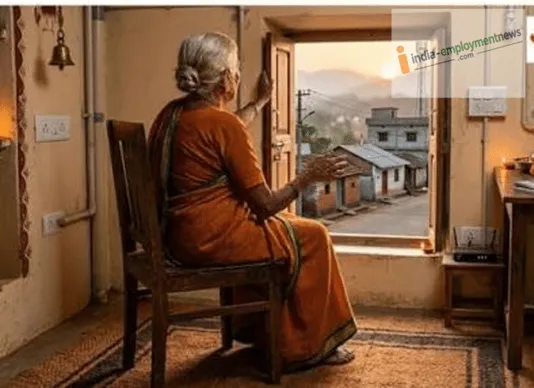
A prolonged family property dispute in Karawal Nagar, northeast Delhi, culminated in the Delhi High Court affirming that an adult son and his wife have no inherent legal right to occupy his mother's home. The son, who had resided in portions of the house following his marriage, resisted his mother’s attempts to recover possession by claiming co-ownership. He claimed he had paid Rs 1.5 lakh toward the initial land purchase in 1996 and spent Rs 60,000 on subsequent construction.
The mother, whose late husband had purchased the property in her name through customary documents including a General Power of Attorney, an Agreement to Sell, a Will, and a receipt, filed a civil suit to reclaim the premises following years of strained relations and police complaints. Justice Neena Bansal Krishna dismissed the son's appeal against a trial court decree, holding that family members living under one roof and contributing to domestic upkeep or construction cannot transform a parent’s property into jointly owned real estate.
Legal Topic
Area of Law: Property Law / Family Property Disputes
Sub-topic: Permissive Possession, Licensee Rights of Adult Children, and Relative Title
Core Legal Issue
The central legal question before the High Court was whether an adult child’s prolonged residence in a mother’s property, accompanied by uncorroborated assertions of having contributed toward purchase and construction costs, creates an independent right of co-ownership or legal interest in the property.
Additionally, the court considered whether an occupant who resides on purely permissive grounds can defeat an owner's superior possessory claim by citing the non-conveyance rule under Suraj Lamp, despite having no independent title or documentary right of their own.
What Did the Court Decide?
Justice Neena Bansal Krishna dismissed the Regular First Appeal brought by the son, Amar Bahadur Singh, and his wife, Sitara Devi, upholding the judgment and decree for possession and permanent injunction passed by the District Judge.
The High Court ruled that the appellants' occupation was strictly permissive in nature, arising solely from their relationship as son and daughter-in-law. Because the son failed to provide receipts, bank records, or documentary evidence to substantiate his alleged financial contributions, his claim to co-ownership collapsed. The court affirmed the order directing the son and daughter-in-law to vacate the premises, remove the locks they had placed on the disputed rooms, and hand over peaceful possession to the mother.
Key Legal Points
-
Financial Contribution Does Not Confer Title: Mere monetary contribution toward household expenditures, domestic repairs, or construction does not, by itself, grant an adult child legal co-ownership rights over a parent's property.
-
Permissive License Over Adverse Claim: Adult children residing in a parent’s home are deemed permissive occupants (licensees); their presence is rooted in family accommodation and does not mature into an adverse or independent proprietary title.
-
Self-Contradictory Defense Barred: Once an occupant admits during proceedings that the property was acquired in the mother's name, they cannot invoke the Suraj Lamp doctrine to challenge the mother’s sale documents while holding zero title themselves.
-
Superior Possessory Entitlement: While Agreement to Sell and General Power of Attorney transactions do not confer absolute registered title, they establish a superior possessory right that enables an owner to eject licensees whose permission has been revoked.
Relevant Law
-
Section 96 read with Order XLI of the Code of Civil Procedure, 1908 (CPC): Governs Regular First Appeals against original civil decrees.
-
Section 52 and Section 60 of the Indian Easements Act, 1882: Define permissive licenses and the owner’s authority to revoke permissive residence.
-
Section 2(9)(a) of the Prohibition of Benami Property Transactions Act, 1988: Recognizes properties acquired by an individual for the benefit and in the name of a spouse.
-
Suraj Lamp & Industries (P) Ltd. v. State of Haryana (2012) 1 SCC 656: Established that General Power of Attorney, Agreement to Sell, and Will transfers do not convey absolute statutory title; however, such documentation protects settled possessory claims against mere licensees lacking title.
Arguments of the Parties
Appellants (Amar Bahadur Singh & Sitara Devi)
The appellants argued that the suit property in Shahadatpur Extension was acquired jointly through pooled family funds rather than as the mother’s exclusive estate. The son submitted that he had worked as an electrician since 1991–1992 and directly paid Rs 1.5 lakh toward the initial purchase alongside his father, followed by Rs 60,000 for construction, thereby making him a joint owner. The appellants further contended that because the mother relied on unregistered General Power of Attorney and Agreement to Sell documents, she did not hold absolute title under the Suraj Lamp precedent and was barred from obtaining an eviction decree.
Respondent (Ram Pati Devi)
The respondent submitted that her late husband, an MTNL employee, had purchased the plot in November 1996 strictly in her name using his personal savings and retirement benefits. She maintained that her son and daughter-in-law were allowed into the house solely out of familial permission and that no joint funds were ever used. The respondent highlighted that the son had previously filed a suit for injunction that was dismissed in 2015, had applied for an unauthorized separate electricity meter, and had made relations untenable, fully justifying the revocation of permission and recovery of the premises.
Why Does It Matter?
This judgment addresses a frequent flashpoint in Indian residential litigation: adult offspring resisting parental eviction by asserting informal financial contributions or decades of co-residence. By ruling that living expenses, renovations, and shared roofs do not dilute a parent’s exclusive property rights, the Delhi High Court establishes a protective boundary for elderly parents against possessory interference.
The decision also clarifies the practical reach of the Supreme Court's Suraj Lamp verdict in domestic ejectment suits. While informal Power of Attorney-based sales do not constitute formal registered conveyance, an adult child with no independent claim of title cannot wield Suraj Lamp defensively to evict or strip a parent who holds the primary possessory agreements and municipal occupancy.
Legal Takeaway
Living in a parent's home and helping with maintenance or domestic construction does not establish legal co-ownership. When permission to occupy is revoked, adult children cannot resist an eviction decree unless they can establish an independent, legally recognized title with verifiable proof.
Sources
Primary Source:
Amar Bahadur Singh & Anr. v. Ram Pati Devi, RFA No. 704/2026, High Court of Delhi (Judgment dated September 8, 2026, coram: Justice Neena Bansal Krishna).
Additional Sources:
Suraj Lamp & Industries (P) Ltd. v. State of Haryana, (2012) 1 SCC 656 (Supreme Court of India).
Judgment and Decree in Civil Suit No. 58/2016, Court of District Judge, Shahdara, Karkardooma Courts, Delhi (Dated February 9, 2026).