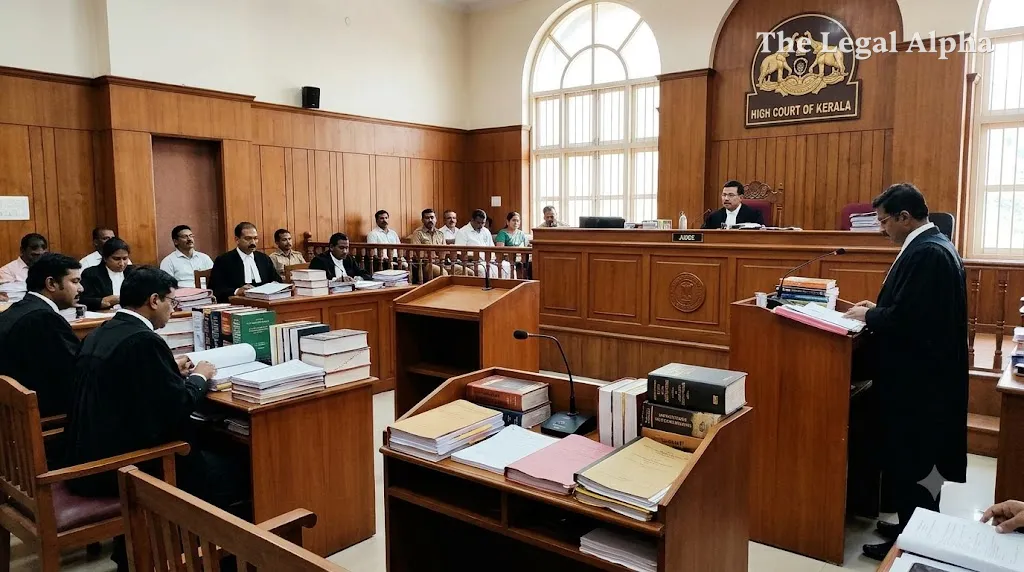
Life Interest in Settlement Deed Does Not Imply Obligation to Provide Basic Amenities: Kerala High Court

The Kerala High Court addressed a long-running property dispute between family members under the welfare law governing senior citizens. A father executed a registered settlement deed conveying property to his son and daughter-in-law, while reserving a life interest to reside in the house on the premises and collect income during his lifetime. Relations soured, leading the father to approach the Maintenance Tribunal seeking cancellation of the transfer deed on the premise that he was neglected.
The Maintenance Tribunal initially declined to cancel the settlement deed, ruling instead that the father retained residential rights and prohibiting the transfer of the property during his life. Both sides challenged this decision. The Appellate Tribunal subsequently overturned the lower order and declared the settlement deed cancelled under Section 23(1) of the Maintenance and Welfare of Parents and Senior Citizens Act, 2007. The transferees petitioned the Kerala High Court to set aside the cancellation. While the petition remained pending, the father passed away, prompting his other legal heirs to resist the writ and argue that the dispute must be relegated to a civil court.
Legal Topic
-
Area of Law: Family Law / Elder Law
-
Sub-topic: Transfer of Property / Maintenance and Welfare of Senior Citizens
Core Legal Issue
The primary question before the court was whether reserving a life interest in a settlement deed satisfies the statutory condition under Section 23(1) of the Senior Citizens Act that the transferee must provide basic amenities and physical needs to the transferor.
The court also had to determine whether a writ petition brought by a transferee challenging an adverse cancellation order survives the senior citizen's death, or if the transferee is required to initiate a separate civil suit.
What Did the Court Decide?
Justice M.A. Abdul Hakhim allowed the writ petition, quashed the Appellate Tribunal's order cancelling the settlement deed, and dismissed the senior citizen's original application.
The High Court held that reserving a life interest or right of residence within a deed does not amount to an express condition obligating the transferee to provide basic amenities and care. Because Section 23(1) requires an explicit undertaking within the document itself, tribunals lack jurisdiction to declare a deed void merely by inferring obligations from a life-estate reservation.
The bench also determined that the writ petition did not abate with the transferor's passing. Because the Appellate Tribunal's cancellation order had divested the transferee's legal title, the transferee was fully entitled to pursue public law remedies to restore the deed without being driven to a civil suit.
Key Legal Points
-
Strict Statutory Prerequisite: A transfer deed can be declared void under Section 23(1) only if the document contains an express condition requiring the transferee to provide basic physical needs and amenities to the senior citizen.
-
Life Interest Cannot Substitute Express Covenants: An explicit reservation of a life interest or residential rights in favor of the transferor cannot be stretched or inferred as a contractual obligation on the transferee to maintain the elderly transferor.
-
Maintainability Following Death: When a statutory tribunal cancels a deed under Section 23(1), the transferee’s constitutional challenge does not abate upon the senior citizen’s death, as the cloud over the transferee's legal title persists and requires judicial determination.
Relevant Law
-
Section 23(1) of the Maintenance and Welfare of Parents and Senior Citizens Act, 2007: Provides that transfers of property made subject to the condition of providing basic amenities and physical needs may be deemed fraudulent or void if the transferee fails to deliver such care.
-
Subhashini v. District Collector, Kozhikode (Full Bench, Kerala HC): Established that the condition to provide maintenance and basic amenities must be an express stipulation in the deed and cannot simply be implied by the tribunal.
Arguments of the Parties
Petitioners (Transferees): The petitioners contended that the settlement deed contained no contractual or conditional clause obligating them to cater to the transferor's basic physical amenities. They argued that the presence of a clause reserving the transferor's life interest does not meet the jurisdictional threshold demanded by Section 23(1), making the Appellate Tribunal's cancellation illegal and ultra vires.
Respondents (Legal Heirs / State): The legal heirs argued that reserving a life interest demonstrated that the conveyance was conditional on ensuring the senior citizen's continued security and accommodation. They further contended that following the senior citizen's demise, the statutory right ceased to exist, rendering the writ petition non-maintainable and necessitating a trial before an ordinary civil court.
Why Does It Matter?
This ruling reinforces the strict evidentiary and jurisdictional boundaries imposed on Maintenance Tribunals in property cancellation matters. Senior citizens often reserve residential rights or rental income when settling family properties, assuming this affords them comprehensive protection under the 2007 Act.
The decision makes it clear that conveyancers and family members cannot rely on general life-interest reservations if they intend to trigger the protective clawback provisions of the Senior Citizens Act. To invoke Section 23(1), the deed itself must plainly recite the transferee's obligation to provide care and daily necessities. It also protects property owners from being forced into lengthy civil litigation when challenging unauthorized administrative cancellations that survive the original applicant's death.
Legal Takeaway
A reservation of life interest or right of residence in a settlement deed does not satisfy the requirements of Section 23(1) of the Senior Citizens Act in the absence of an explicit maintenance clause. Tribunals cannot imply an obligation of care into a document, and transferees whose titles are improperly set aside retain the right to have those orders overturned by the High Court even after the senior citizen passes away.
Sources
Primary Source:
-
Bindu & Anr. v. The District Officer & Ors., High Court of Kerala, W.P.(C) No. 24102 of 2019 (Neutral Citation: 2026:KER:77464), Judgment delivered on October 8, 2026.
Additional Sources:
-
Maintenance and Welfare of Parents and Senior Citizens Act, 2007 (Act No. 56 of 2007), Section 23.
-
Subhashini v. District Collector, Kozhikode, 2020 (5) KHC 195 (FB).