Kerala High Court Distinguishes Mere Touching From Placement Under POCSO Act, Clarifies Penalty Duplication With Section 376AB IPC
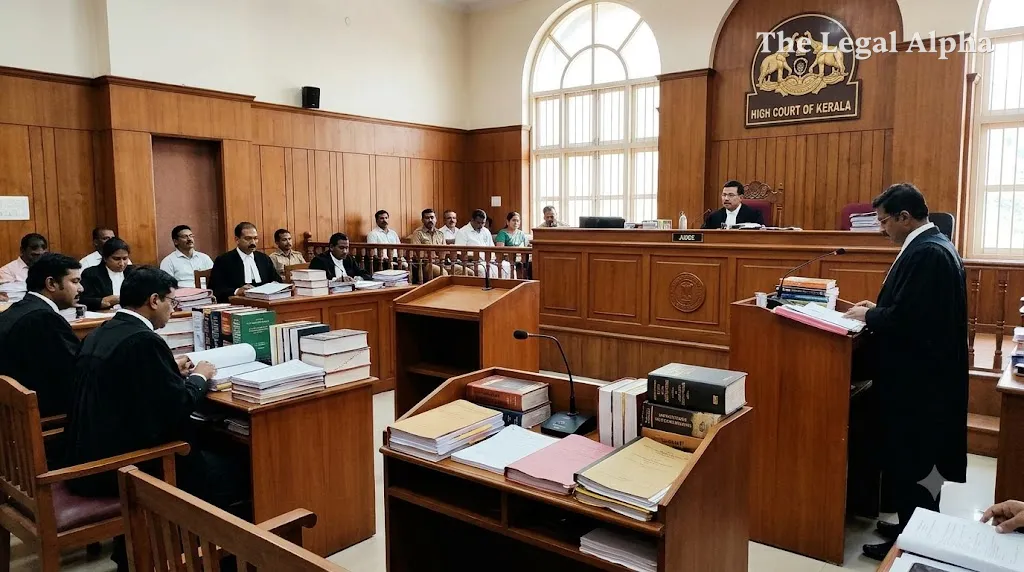
The Kerala High Court partly allowed a criminal appeal filed by a convict named Shaji challenging his conviction and sentence in a child sexual abuse case involving a three-year-old girl. The Special Court for POCSO Act Cases had earlier convicted him and sentenced him to concurrent 20-year terms under both Section 6 of the Protection of Children from Sexual Offences (POCSO) Act and Section 376AB of the Indian Penal Code. On appeal, the High Court scrutinized the evidentiary thresholds distinguishing incidental contact from deliberate penetrative placement, affirmed that the overt act satisfied the statutory test for penetrative assault, and removed the parallel sentence imposed under the general penal law.
Legal Topic
Area of Law: Criminal Law / Child Protection Sub-topic: Penetrative Sexual Assault and Concurrency of Sentencing under POCSO Act and IPC
Core Legal Issue
The primary questions before the High Court were whether an act described as placing an organ on a child's genitalia amounts to penetrative sexual assault under Section 3 of the POCSO Act when medical evidence shows no hymenal rupture or external lacerations, and whether a trial court can impose concurrent substantive sentences under both Section 6 of the POCSO Act and Section 376AB of the Indian Penal Code for the identical underlying act.
What Did the Court Decide?
The High Court affirmed the appellant's conviction for aggravated penetrative sexual assault under the POCSO Act, concluding that deliberate bodily placement causing immediate pain satisfied the definition of penetrative assault. However, the Court modified the sentencing structure: it set aside the 20-year rigorous imprisonment and fine imposed under Section 376AB of the IPC, upholding only the punishment under the special statute pursuant to the bar on multiple punishments for the same act under Section 42 of the POCSO Act and Section 71 of the IPC.
Key Legal Points
-
Physical placement and mere touching are legally distinct; while an accidental or transient touch lacks penetrative gravity, placing an organ directly against the private parts with duration and force fulfills penetration "to any extent" under Section 3(a) of the POCSO Act.
-
Absence of visible physical trauma, bleeding, or hymenal rupture does not contradict a child victim's direct testimony of penetrative sexual assault where clinical observations remain compatible with recent assault.
-
Trial courts cannot punish an offender twice under both Section 376AB of the IPC and Section 6 of the POCSO Act for the same transaction, as special enactments take precedence and double punishment violates statutory sentencing protections.
Relevant Law
-
Section 3(a), Section 4(2), and Section 6 of the Protection of Children from Sexual Offences (POCSO) Act, 2012
-
Section 42 of the POCSO Act (Alternative punishment and precedence of law)
-
Section 375, Section 376AB, and Section 71 of the Indian Penal Code, 1860
-
Section 374(2) of the Code of Criminal Procedure, 1973
Arguments of the Parties
Appellant / Convict
The appellant contended that the trial court erred in convicting him of penetrative sexual assault because the medical examination revealed an intact hymen and recorded no external abrasions or tears. Counsel argued that without medical evidence of physical entry, the overt act amounted at most to non-penetrative sexual assault or outraging modesty, and that the parallel sentences handed down under both the IPC and POCSO Act were impermissible in law.
Respondent / State
The State submitted that the direct testimony of the infant victim, corroborated by prompt disclosure to parents and medical records noting an altered vaginal condition, proved penetration beyond reasonable doubt. The prosecution maintained that Section 3 of the POCSO Act expressly encompasses penetration "to any extent" and does not require full bodily entry or structural physical tearing to sustain an aggravated conviction.
Why Does It Matter?
This ruling offers critical guidance for trial courts handling child sexual abuse trials where forensic reports do not show violent structural injuries. By articulating the qualitative and durational divide between a momentary touch and an intentional placement of genitalia, the High Court ensures that offenders cannot exploit the absence of physical trauma to dilute statutory definitions of penetration. Furthermore, it reinforces clear procedural boundaries against double sentencing, requiring trial judges to apply Section 42 of the POCSO Act strictly and avoid redundant penalties under the Indian Penal Code.
Legal Takeaway
For penetrative sexual assault under the POCSO Act, proof of anatomical tearing or internal physical injury is not legally required if intentional placement against the genitalia is established by credible testimony. When convicting on the same set of facts, trial courts must enforce punishment under the special statute alone rather than handing down concurrent sentences under both the POCSO Act and the IPC.
Sources
Primary Source:
High Court of Kerala, Judgment in Shaji v. State of Kerala, Criminal Appeal No. 1265 of 2023 (Neutral Citation: 2026:KER:78048).
Additional Sources:
Protection of Children from Sexual Offences Act, 2012; Indian Penal Code, 1860; Trial Court Record, Special Sessions Court (POCSO), Ernakulam.