Airline Held Accountable: ₹50,000 Payout Mandated After Passengers Left Without Meals on Long-Haul Flight
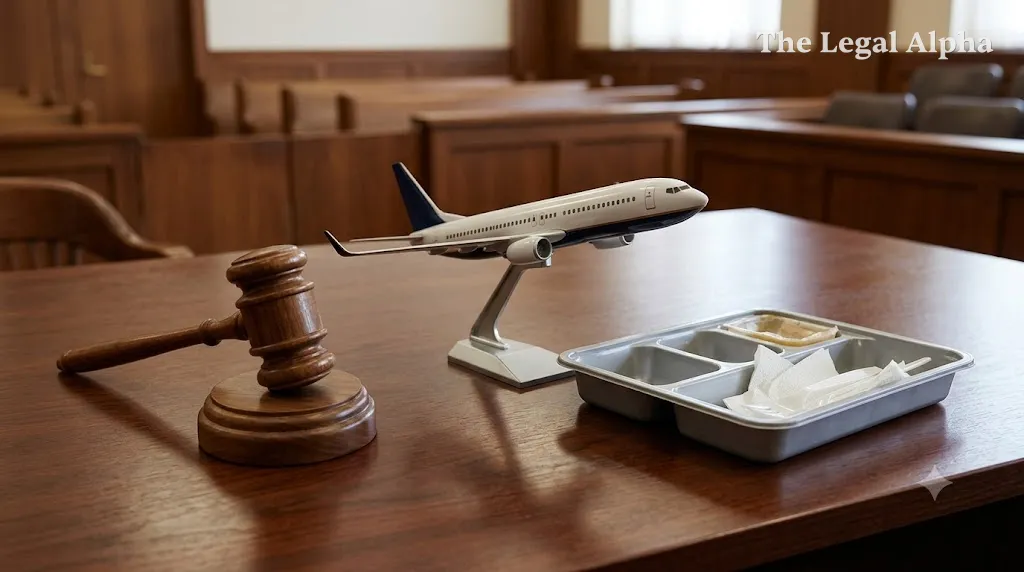
A consumer dispute forum has pulled up Singapore Airlines for deficiency in service after passengers, including an 11-month-old infant, were left without food and essential provisions during a 15-to-16-hour long-haul journey from New Delhi to Melbourne.
The passenger had booked tickets for himself and his family in March 2020. During the extended flight, the cabin crew failed to serve proper meals to the family and did not provide even basic necessities such as milk for the infant. When the passenger escalated the grievance post-travel, the airline resisted responsibility, claiming that the passenger had not pre-selected any specific or vegetarian meal preference.
Finding this defense unacceptable, the State Consumer Disputes Redressal Commission ruled against the carrier, modifying a previous district forum order to award ₹50,000 as composite compensation for mental agony, harassment, and litigation expenses.
Legal Topic
Area of Law: Consumer Protection Law Sub-topic: Deficiency in Aviation Services / Passenger Rights
Core Legal Issue
The dispute centered on whether an international airline operating a long-haul commercial flight can evade liability for failing to serve meals and basic sustenance by relying on the defense that a traveler did not register a pre-departure special meal request.
The Commission examined whether providing reasonable nutrition and basic care over an extended flight constitutes an inherent, non-negotiable obligation within a contract of carriage, irrespective of prior special meal bookings.
What Did the Court / Authority Decide?
The Commission held Singapore Airlines deficient in rendering the contracted air transport services:
-
The carrier was ordered to pay a composite sum of ₹50,000 covering compensation for harassment and mental distress alongside litigation costs.
-
The Commission set aside the District Commission's earlier directive demanding a total refund of the ₹1,25,000 airfare with 7% interest, finding a full fare refund excessive given that the transit service itself was executed.
-
The airline was granted 45 days from the receipt of the certified copy to disburse the awarded amount.
Key Legal Points
-
Inherent Service Obligation: On journeys spanning 15 hours or more, an airline's duty to provide meals and reasonable amenities is an essential term of carriage that exists independently of prior special menu selections.
-
Inadequate Defense on Pre-Selection: An airline cannot shield itself against service deficiency simply by pleading that a passenger did not mark a specific dietary preference.
-
Burden of Proof on the Carrier: Once a passenger substantiates lack of sustenance and distress, the evidentiary burden shifts to the carrier to demonstrate on record that requisite food and standard passenger care were actually furnished.
-
Proportionality in Consumer Damages: Where a journey is completed despite acute hardship, awarding appropriate composite damages for harassment rather than ordering a total ticket refund strikes an equitable balance.
Relevant Law
-
Section 2(11) of the Consumer Protection Act, 2019 (Deficiency in service)
-
Section 41 of the Consumer Protection Act, 2019 (Appeals before State Commissions)
-
General Principles of the Contract of Carriage (Aviation Law)
Arguments of the Parties
Petitioner / Complainant
The passenger argued that the airline committed a gross deficiency of service by neglecting to serve proper meals during an exhausting 15-hour flight between New Delhi and Melbourne. It was further submitted that despite travelling with an 11-month-old infant, the cabin crew failed to provide even basic milk or sustenance for the baby, subjecting the family to severe physical discomfort and mental agony.
Respondent / Airline
The airline contended that it was not liable for deficiency because the passenger had failed to register or pre-book any special or vegetarian meal preference prior to departure. The carrier maintained that standard catering was carried out in accordance with menu norms and that the District Commission erred in granting a complete ticket refund when the carriage had been successfully performed.
Why Does It Matter?
This ruling reinforces the baseline standard of care demanded of global commercial airlines under Indian consumer jurisdiction. International carriers often depend on fine-print digital opt-ins to curtail in-flight liabilities; this decision clarifies that dietary pre-selection mechanisms do not replace the fundamental duty to feed and assist passengers during prolonged travel.
Moreover, the decision highlights that travelling with dependents and infants heightens an airline’s duty of care. While the modification from a full ticket refund to ₹50,000 composite compensation prevents unjust enrichment when transportation has occurred, it delivers a firm compliance warning against treating basic passenger welfare as an optional add-on.
Legal Takeaway
Airlines operating long-haul flights bear an inescapable legal duty under the Consumer Protection Act to ensure basic sustenance and care for passengers and infants aboard. Passengers cannot be starved of food simply because they did not submit a prior meal selection.
Sources
Primary Source:
Consumer Appeal Order under Section 41, Consumer Protection Act, 2019, State Consumer Disputes Redressal Commission (Modifying District Consumer Disputes Redressal Commission Order in CC/86/2022).
Additional Sources:
Consumer Protection Act, 2019 statutory definitions and Directorate General of Civil Aviation (DGCA) passenger service standards.