Kerala High Court Orders State Audit of Sacred Temple Ornaments at Thuravoor Devaswom Over Multi-Decade Record Lapses
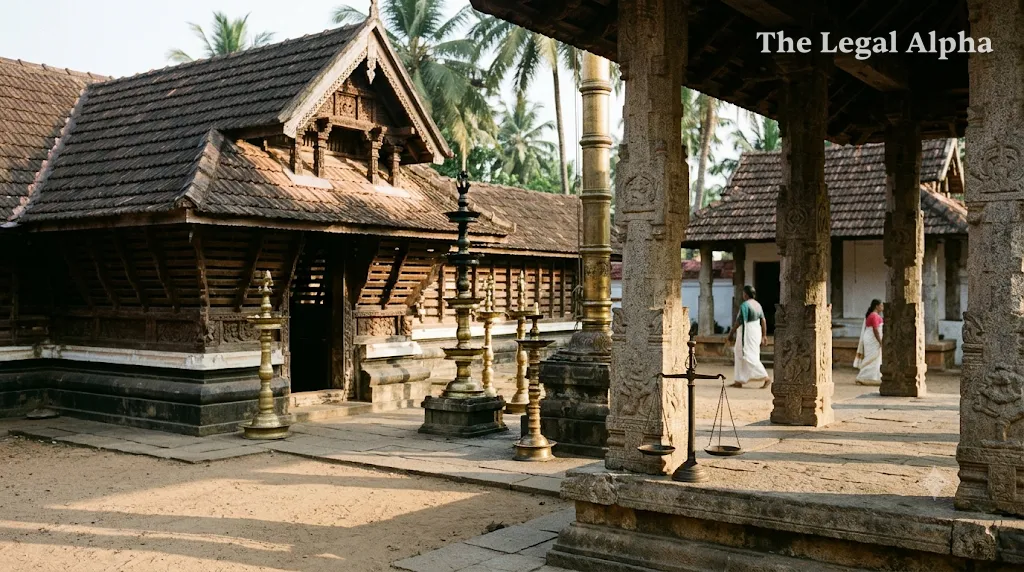
The Kerala High Court has stepped in to mandate an independent financial and physical audit of the sacred gold ornaments—known as Thiruvabharanams—belonging to the Thuravoor Mahakshethram in Kerala's Alappuzha district.
A Division Bench comprising Justices Raja Vijayaraghavan V and K.V. Jayakumar issued the directive after examining an official report submitted by the Thiruvabharanam Commissioner. The report flagged major irregularities and prolonged administrative negligence in maintaining asset registers for the temple's valuables over a span of nearly 25 years. The court's intervention stems from a petition filed by an Alappuzha resident, Sreekumar P.S., who sought judicial oversight and a clear accounting of the gold ornaments and other precious items stored in the temple's strong room.
Legal Topic
Area of Law: Administrative and Religious Endowment Law Sub-topic: Temple Asset Governance / Statutory Audit and Fiduciary Accountability
Core Legal Issue
The central legal question before the High Court is how to enforce fiduciary accountability and statutory transparency over public religious endowments when internal administrative mechanisms fail. Specifically, the Bench had to determine whether persistent record-keeping lapses by temple administrators and an unexplained delay by the Travancore Devaswom Board (TDB) in executing its own internal verification warranted an external, court-monitored audit by the State Audit Department.
What Did the Court / Authority Decide?
The Kerala High Court issued interim directions aimed at establishing an accurate inventory and fixing accountability for the temple's assets, while keeping the broader petition open for compliance monitoring:
-
State Audit Ordered: The Bench directed the Kerala State Audit Department to carry out a thorough audit of the Thiruvabharanams at Thuravoor Devaswom. Auditors must examine all relevant registers, verify historical transactions, and submit a comprehensive report directly to the court.
-
Status Report from TDB: The court questioned the Travancore Devaswom Board's inaction following a July 6, 2026 meeting, where the Board had resolved to reconstitute a verification team led by the Special Deputy Devaswom Commissioner. Because no updates were provided on whether the team was formed or had begun work, the Bench ordered the TDB to file a detailed status report outlining the progress made on physical verification and scrutiny of charge-handing-over records (mahazars) maintained by Sub Group Officers.
-
Strict Timeline Demanded: The TDB has been instructed to specify a clear, binding deadline within which it will complete the internal verification exercise agreed upon in its July 2026 minutes.
Key Legal Points
-
Strict Fiduciary Standards: Courts treat temple boards as trustees of public religious endowments, requiring asset registers for high-value offerings to be maintained with uncompromising accuracy and transparency.
-
Independent Verification Over Self-Regulation: When internal administrative reports—such as the Thiruvabharanam Commissioner’s findings—reveal systemic, multi-decade record gaps, judicial intervention through an external statutory auditor becomes necessary rather than relying solely on departmental inquiries.
-
Accountability Through Custodial Records: The court specifically highlighted the scrutiny of charge-handing-over mahazars (official transfer logs) maintained by Sub Group Officers, underscoring that individual custodial accountability must be traced across administrative tenures.
-
Enforcement of Administrative Resolutions: Statutory boards cannot pass resolutions to investigate irregularities and leave them unimplemented; administrative inaction invites direct judicial supervision and court-mandated timelines.
Relevant Law
-
Travancore-Cochin Hindu Religious Institutions Act, 1950: Governs the administration, asset management, and statutory audit obligations of temples under the Travancore Devaswom Board, vesting the Board with duties to safeguard temple properties and valuables.
-
Kerala Local Fund Audit Act, 1994: Provides the statutory framework under which the State Audit Department conducts independent financial and asset audits of public institutions and statutory boards, including Devaswom accounts.
-
Article 226 of the Constitution of India: Empowers the High Court to exercise writ jurisdiction over statutory bodies like the Travancore Devaswom Board to prevent administrative arbitrariness and protect public charitable and religious trusts.
Arguments of the Parties
Petitioner The petitioner, Alappuzha resident Sreekumar P.S., approached the court seeking transparency and an official disclosure of the gold ornaments and other valuables housed inside the Thuravoor Mahakshethram strong room, raising concerns over the security and proper documentation of the deity's assets.
Thiruvabharanam Commissioner & Statutory Oversight While the Travancore Devaswom Board had previously noted in its July 6, 2026 meeting minutes a plan to set up a special verification team, the Thiruvabharanam Commissioner formally submitted to the court that serious lapses had persisted in the temple's asset registers for nearly two and a half decades, recommending a special audit to verify the records.
Why Does It Matter?
Public temples in Kerala receive substantial donations in gold and precious metals, making asset governance a recurring subject of legal scrutiny. This order reinforces the principle that statutory temple boards cannot treat internal verification processes as open-ended formalities. By bringing in the State Audit Department alongside demanding a concrete timeline from the TDB, the Kerala High Court has set a clear procedural benchmark: administrative delays in auditing public religious wealth will trigger external, court-supervised audits. For temple officials and sub-group officers, the emphasis on historical mahazars signals that past record-keeping failures will be traced across officer transfers rather than written off due to the passage of time.
Legal Takeaway
Custodians of public religious institutions are bound by strict fiduciary standards to maintain transparent, verifiable records of temple assets. When internal oversight stalls or multi-decade lapses surface, courts will bypass internal committees and mandate independent statutory audits to protect public trust property.
Sources
Primary Source:
-
Interim Order of the Division Bench of the High Court of Kerala (Justices Raja Vijayaraghavan V and K.V. Jayakumar), passed on November 16, 2026, in the writ petition filed by Sreekumar P.S. concerning Thuravoor Devaswom.
Additional Sources:
-
Press Trust of India (PTI) legal report on the Kerala High Court proceedings regarding Thuravoor Devaswom (November 16, 2026).
-
Travancore-Cochin Hindu Religious Institutions Act, 1950.