Kerala High Court Declines Interim Stay on State Waqf Board Reconstitution, Refers Challenge to Division Bench
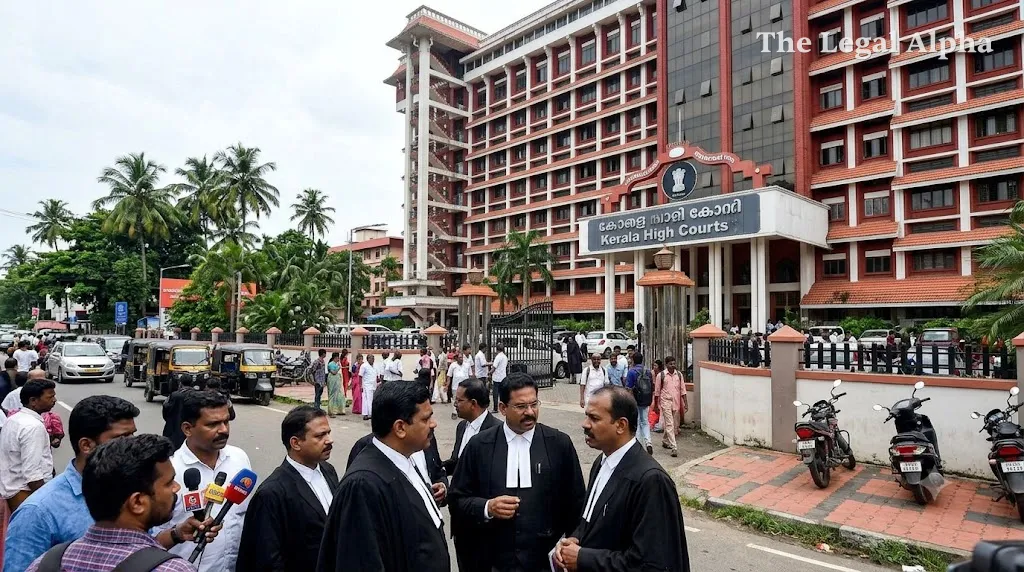
The Kerala High Court declined to grant an interim stay against the Kerala government’s executive order that dissolved the existing State Waqf Board and reconstituted it with nine new members.
The state government had issued an order superseding its earlier notifications and appointing IUML leader M.C. Mayin Haji as the new Chairperson, replacing the previous board led by K.S. Hamza less than seven months into its term. Outgoing Chairperson K.S. Hamza and board member C.K. Usman Haji filed writ petitions challenging the supersession. Justice S. Manu, presiding over a single bench, refused to halt the government’s notification and referred the matter to be heard alongside connected public interest litigations before a division bench.
Legal Topic
-
Area of Law: Administrative and Waqf Law
-
Sub-topic: Statutory Board Reconstitution / Supersession and Interim Relief
Core Legal Issue
The controversy centres on whether a state executive holds the statutory power to dissolve and reconstitute a Waqf Board before the expiry of its term under the guise of rectifying representation defects, or if such premature dissolution operates as an unlawful supersession of statutory appointees.
The court had to determine whether an interim order staying the reconstitution was warranted while connected writ petitions challenging the lawful composition and compliance of the Waqf Board were already sub judice before a division bench.
What Did the Court Decide?
Justice S. Manu refused to grant an interim injunction against the implementation of the state government’s reconstitution order.
The single judge observed that a division bench of the High Court was already seized of connected public interest litigations examining whether the Board conformed to statutory requirements. Finding that the division bench had never restrained the state from taking steps to align the board's constitution with the law, the court held that an interim stay was unwarranted. The bench invoked its procedural powers under Section 3 of the Kerala High Court Act to adjourn the writ petitions for hearing and determination directly before the division bench. The court clarified that the reconstitution remains subject to the final outcome of the pending writ petitions.
Key Legal Points
-
No Interim Interference with Administrative Rectification: A single bench will avoid passing conflicting interim orders when a higher division bench is actively overseeing the broader legal framework of the board’s compliance.
-
Conditional Functioning: Although the newly reconstituted Waqf Board is permitted to assume office, its tenure and administrative actions remain provisional, subject to the final outcome of the pending writ proceedings.
-
Interplay of Judicial Oversight: The court highlighted that where an executive action is taken in response to or alongside pending Public Interest Litigations (PILs), individual statutory challenges should be unified before the appropriate bench to maintain judicial propriety.
Relevant Law
-
Waqf Act, 1995 (and Amendment Act provisions): Section 14 (Composition of Board).
-
Kerala High Court Act, 1958: Section 3 (Powers of a Single Judge to refer proceedings to a Division Bench).
Arguments of the Parties
Petitioners (Outgoing Chairperson & Member) Senior counsel appearing for K.S. Hamza and C.K. Usman Haji argued that the state government acted arbitrarily and ultra vires by superseding an existing, legally functioning board without statutory authority. They contended that the state had previously informed the division bench it would only fill vacant positions, but instead dissolved the board entirely on the eve of court holidays through an extraordinary executive order.
Respondents (State of Kerala & Waqf Board) The Additional Advocate General argued that the state possessed an implied and necessary statutory authority to reconstitute the board to remedy earlier non-compliance. The state submitted that prior board formations had failed to properly determine and include required representation for diverse denominations and communities—such as Bohra, Shia, and backward Muslim classes—and that the restructuring was carried out to establish a lawful and representative body.
Why Does It Matter?
This development clarifies the standards high courts apply when asked to stall executive reorganizations of religious and statutory trusts midway through legal challenges. For administrative bodies and statutory commissions, it signals that courts are cautious about granting interim injunctions that could paralyze board governance, especially when the state claims the restructuring was intended to remedy representation gaps.
However, by making the new administration's authority expressly subject to the final ruling of the division bench, the court ensures that any long-term policy or property decisions taken by the newly inducted board remain legally vulnerable until the division bench settles the validity of the supersession.
Legal Takeaway
An interim stay will generally be denied against executive board reorganizations where the state acts to align statutory representation and the overarching dispute is already pending before a division bench. However, any actions taken by a newly installed panel remain strictly provisional when the court ties the reconstitution to the final determination of the underlying writ petitions.
Sources
Primary Source:
-
Kerala High Court, Single Bench Order dated October 17, 2026, in K.S. Hazma v. State of Kerala & Ors. (WP(C) No. 36037 of 2026) and C.K. Usman Haji v. Union of India & Ors. (WP(C) No. 36041 of 2026).
Additional Sources:
-
High Court Proceedings & Submissions Reported via Press Trust of India, The Times of India, and The New Indian Express (October 17–18, 2026).