Kerala Court Awards Life Imprisonment to Three in 2016 CPI(M) Leader Murder Case
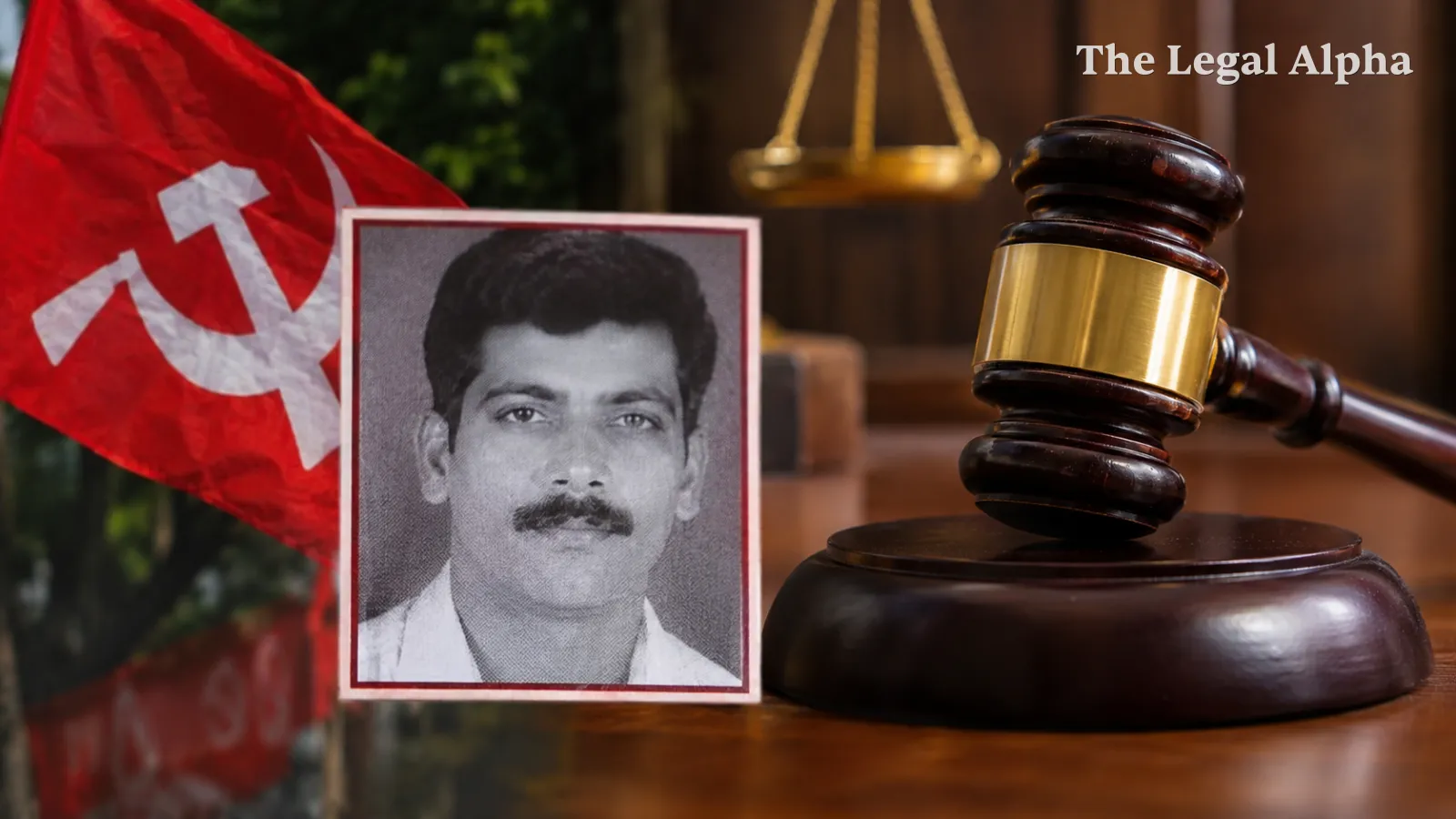
A court in Kerala has sentenced three BJP-RSS workers to life imprisonment for the 2016 murder of Communist Party of India (Marxist) leader C.V. Dhanaraj in Kannur.
The convicts, identified as T.P. Biju, M. Vipin and M. Vaishakh, were sentenced by Additional District and Sessions Judge K.N. Prasanth at the Taliparamba court on November 25, 2026.
Dhanaraj, who served as the CPI(M)'s Ezhimala branch secretary and was associated with the Democratic Youth Federation of India (DYFI), was attacked with sharp weapons near his residence at Ramanthali on July 11, 2016. The attack took place in the presence of his wife and mother.
The court had convicted the three accused on November 23, 2026, while acquitting 16 others who faced trial.
Legal Topic
Area of Law: Criminal Law
Sub-topic: Murder, Common Intention, Sentencing and Victim Compensation
Core Legal Issue
The central legal issue concerned the criminal responsibility of the accused for the murder and the appropriate punishment under the Indian Penal Code.
The sentencing proceedings also required the court to determine whether the brutality of the crime and the circumstances in which it was committed justified the death penalty under the established 'rarest of rare' doctrine.
What Did the Court Decide?
The Taliparamba Additional District and Sessions Court sentenced all three convicted persons to life imprisonment under Section 302 read with Section 34 of the IPC.
The court also imposed the following punishments:
-
Three months' imprisonment for criminal trespass under Section 447 IPC.
-
One month for wrongful restraint under Section 341 IPC.
-
One year for voluntarily causing hurt under Section 323 IPC.
-
Four years for criminal intimidation under Section 506 IPC.
The court directed that the sentences would run consecutively, requiring the convicts to serve five years and four months of imprisonment before beginning their life sentences.
Additionally, each convict was fined ₹5 lakh, taking the total fine to ₹15 lakh. The court directed that the recovered amount be paid as compensation to Dhanaraj's legal heirs.
It also recommended additional compensation through the District Legal Services Authority.
However, the court declined to impose capital punishment, holding that the case did not satisfy the legal requirements of the rarest of rare category.
Key Legal Points
-
Common intention: The three accused were convicted under Section 302 read with Section 34 IPC, establishing their criminal liability for murder committed with common intention.
-
Rarest of rare doctrine: The court considered the aggravating and mitigating circumstances but concluded that the death penalty was not justified.
-
Political violence: The court strongly criticised politically motivated killings and emphasised that political disagreements must be resolved through democratic means.
-
Victim compensation: The court directed that the fines recovered from the convicts be paid to the victim's legal heirs and recommended further compensation.
-
Investigation and evidence: The earlier conviction proceedings highlighted shortcomings in the police investigation and the importance of reliable witness testimony.
Relevant Law
Indian Penal Code, 1860
-
Section 302 – Punishment for murder.
-
Section 34 – Acts done by several persons in furtherance of common intention.
-
Section 447 – Criminal trespass.
-
Section 341 – Wrongful restraint.
-
Section 323 – Voluntarily causing hurt.
-
Section 326 – Voluntarily causing grievous hurt by dangerous weapons or means.
-
Section 506 – Criminal intimidation.
Other Relevant Legal Principles
-
Rarest of rare doctrine governing the imposition of capital punishment.
-
Aggravating and mitigating circumstances in sentencing.
-
Victim compensation under the criminal justice framework.
Arguments of the Parties
Prosecution
The prosecution sought the maximum punishment, relying on the brutal nature of the murder and the criminal antecedents of the convicted persons. It highlighted that Dhanaraj was attacked in front of his family members.
Defence
The defence requested a more lenient sentence, citing the family circumstances of the convicts and their prospects of rehabilitation.
The court considered both submissions before concluding that life imprisonment was appropriate and that the case did not warrant the death penalty.
Why Does It Matter?
The decision highlights the judiciary's approach towards politically motivated violence and the importance of accountability in cases involving serious offences.
It also reinforces the distinction between imposing a severe punishment and automatically awarding the death penalty. Even in particularly brutal murder cases, courts must independently assess aggravating and mitigating circumstances before deciding whether capital punishment is justified.
The court's direction concerning compensation is also significant because it recognises the financial and personal consequences suffered by the victim's family.
Further, the criticism of investigative lapses highlights the importance of professional and effective police investigations in ensuring that criminal proceedings are based on reliable evidence.
Legal Takeaway
The judgment demonstrates that politically motivated violence cannot be justified in a constitutional democracy and that those found guilty of murder must face appropriate criminal consequences. At the same time, the death penalty remains restricted to cases meeting the stringent rarest of rare standard.
Sources
Primary Source:
Judgment in State Represented by SHO, Payyanur Police Station v. T.P. Biju & Others, SC No. 982/2017, Additional District and Sessions Court, Taliparamba. The detailed sentencing order was awaited in the available reporting.
Additional Sources: