Judicial Leniency Cannot Shield Professional Defiance: Bombay High Court Refuses to Expunge Remarks Against Counsel, Refers Conduct to State Bar Council
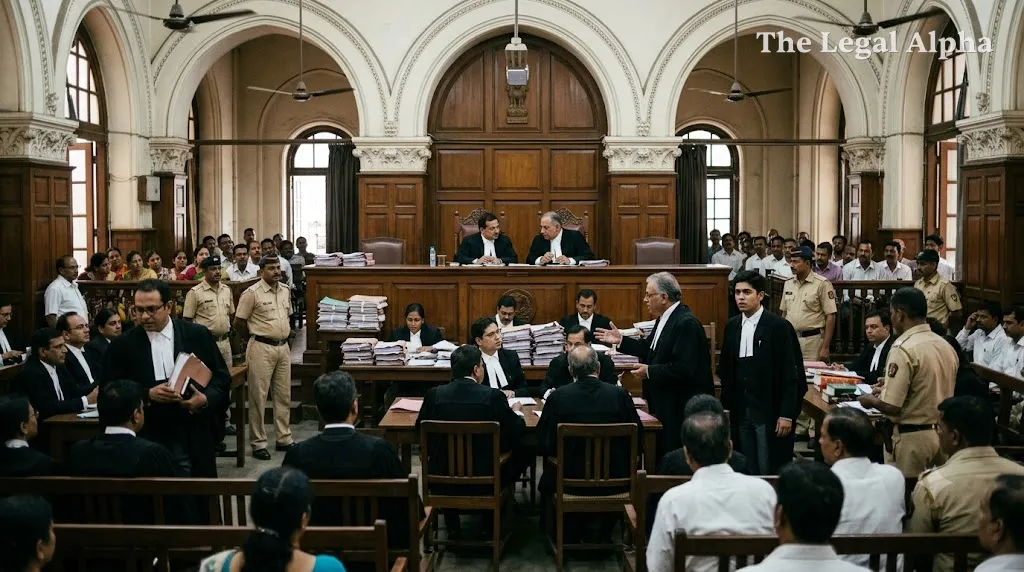
During proceedings concerning a cyber fraud petition where an individual was defrauded of ₹1.4 crore, the Bombay High Court took strong exception to the conduct of an advocate representing Kotak Mahindra Bank. A Division Bench comprising Justice A.S. Gadkari and Justice Kamal Khata had earlier observed evasive responses from counsel Mandar Lalsare during a virtual hearing and directed him to appear in person alongside a senior bank officer during the afternoon session.
Instead of complying with the directive, the advocate dispatched a newly enrolled junior proxy counsel and a deputy branch manager, offering an engagement before the Aurangabad Bench as an explanation. When senior counsel subsequently urged the court to overlook the lapse and expunge the adverse remarks from the record, the Bench rejected the plea. Observing that persistent judicial indulgence had merely fostered a culture where court mandates are treated casually, the High Court called upon the Bar Council of Maharashtra and Goa to initiate stern disciplinary proceedings.
Legal Topic
-
Area of Law: Legal Profession & Contempt of Court
-
Sub-topic: Professional Misconduct / Disobedience of Judicial Orders
Core Legal Issue
The fundamental issue before the court was whether an advocate's deliberate failure to comply with a judicial direction to appear in person—relying on proxy counsel and subsequent apologies—warrants judicial pardon, or whether it constitutes contumacious conduct requiring disciplinary action.
The court had to determine whether an unconditional apology tendered after the fact suffices to wipe away willful disregard of clear orders, particularly when such conduct disrupts proceedings and undermines judicial authority.
What Did the Court Decide?
The High Court unequivocally rejected the request to expunge its critical observations against the advocate. While the court accepted the written unconditional apology of the newly enrolled junior advocate who appeared as proxy, it declined to extend the same leniency to the arguing counsel.
The Bench reserved its right to initiate criminal contempt proceedings under Section 2(c) of the Contempt of Courts Act, 1971. Furthermore, it directed the Bar Council of Maharashtra and Goa to discharge its statutory responsibility by taking strict disciplinary measures to deter such practices across the legal profession.
Key Legal Points
-
Limits of Judicial Clemency: The court observed that historical leniency by benches has inadvertently emboldened practitioners to bypass court directions under the assumption that an apology will automatically shield them from accountability.
-
Apology as a Defensive Maneuver Rejected: An unconditional apology cannot be treated as a routine escape route when counsel blatantly disregards peremptory orders to appear.
-
Protection of Judicial Dignity: The authority of courts cannot be eroded by casual non-compliance, and trial/appellate management requires strict adherence to scheduling and personal appearances when specifically directed.
-
Statutory Role of Bar Councils: Self-regulatory bodies must actively step in to discipline errant members rather than leaving the entire burden of enforcing professional decorum on judicial contempt powers.
Relevant Law
-
Section 2(c), Contempt of Courts Act, 1971: Defines criminal contempt, including actions that scandalise courts, prejudice judicial proceedings, or obstruct the administration of justice.
-
Section 35, Advocates Act, 1961: Governs disciplinary proceedings and penalties by State Bar Councils for professional and other misconduct by advocates.
-
Standards of Professional Conduct and Etiquette (Bar Council of India Rules): Establishes an advocate’s duty to maintain a respectful attitude towards the court and comply with judicial orders.
Arguments of the Parties
-
On Behalf of the Counsel: Senior Advocate Girish Kulkarni, appearing in support of the advocate, urged the Bench to adopt a forgiving approach, accept the explanation regarding the conflicting engagement before the Aurangabad Bench, and expunge the adverse remarks from the judicial record.
-
The Stand of the Court: The Bench observed that giving evasive replies on video link and deliberately defying an order to appear in person—while substituting an inexperienced junior proxy—undermined the administration of justice and could not be excused as an inadvertent slip.
Why Does It Matter?
This development sends a clear signal across the legal profession that courts are increasingly unwilling to accept apologies as formal get-out-of-jail cards for non-compliance. Over-reliance on hybrid hearings and proxy appearances has at times led to casual attitudes toward court directives, particularly in commercial and banking litigation where institutional litigants attempt to evade immediate answers.
By directly tasking the State Bar Council to act, the Bombay High Court has placed regulatory pressure back on professional bodies to enforce ethical standards, setting an important procedural precedent for other benches handling evasive or recalcitrant appearances.
Legal Takeaway
Personal summons issued by a bench cannot be treated as optional or delegable to junior proxies. Advocates who choose convenience over compliance risk facing disciplinary action before the Bar Council alongside criminal contempt proceedings, as judicial indulgence is no longer guaranteed.
Sources
-
Primary Source: Order of the Bombay High Court in Dhiren Sushil Roy v. Cyber Police Station & Ors. (Division Bench of Justice A.S. Gadkari and Justice Kamal Khata).
-
Additional Sources: Bar & Bench reportage on High Court proceedings concerning Kotak Mahindra Bank appearance; India Today court reporting on Bombay High Court advocate misconduct directions.