High Courts Must Exercise Restraint: Supreme Court Expunges Adverse Remarks Against Trial Judge Over Typographical Slips
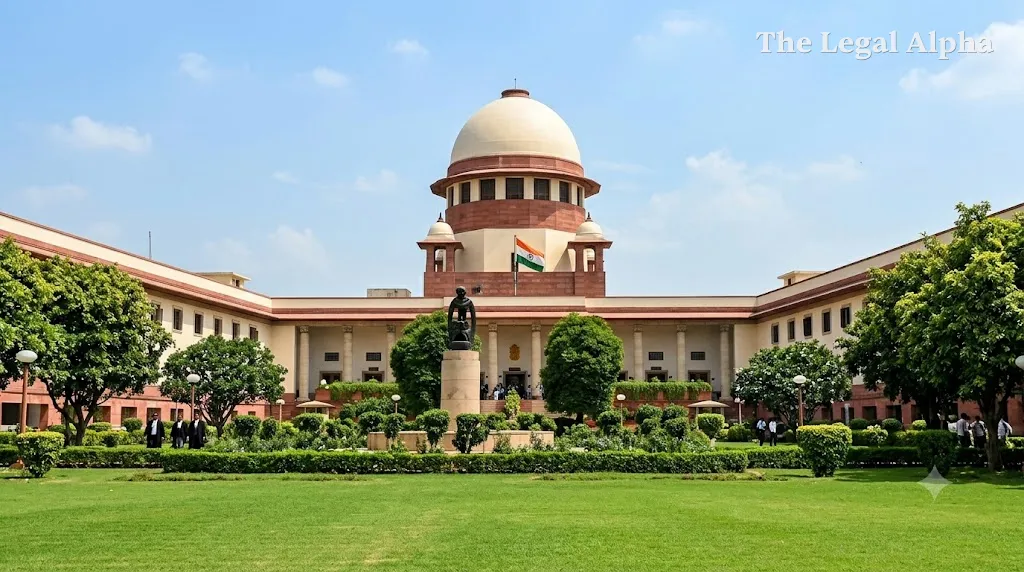
The Supreme Court of India set aside disparaging strictures passed by the Rajasthan High Court against a district cadre judicial officer presiding over a Special POCSO Court. While deciding a criminal appeal and bail application, a Single Judge of the High Court had severely criticized the trial judge, accusing her of delivering a "cut, copy, and paste" judgment drafted without reading it. The High Court had further directed that these remarks be recorded in her Annual Confidential Report (ACR) and ordered that she undergo training in judgment writing at the state judicial academy.
Accepting the judicial officer's appeal, the apex court expunged all adverse remarks, noting that the errors were unintended clerical and typographical oversights that did not alter the verdict or touch upon the officer’s integrity.
Legal Topic
Area of Law: Judicial Administration / Constitutional Law
Sub-topic: Judicial Restraint / Expunction of Adverse Strictures Against Subordinate Judges
Core Legal Issue
The fundamental legal question before the Supreme Court was whether higher courts are justified in passing harsh personal strictures and punitive administrative directions against subordinate judicial officers over clerical mistakes without providing them an opportunity to explain.
The court examined the limits of judicial propriety, natural justice, and the necessary balance between correcting drafting errors on the judicial side and disciplining officers on the administrative side.
What Did the Court / Authority Decide?
The Supreme Court allowed the judicial officer’s appeal and directed the expungement of paragraphs 9, 10, 11, 17, and 18 from the Rajasthan High Court’s order.
The Bench set aside the directions to place the disparaging observations in the officer's service record (ACR) and cancelled the mandatory training directive. The apex court clarified that higher constitutional courts must not use judicial orders to publicly humiliate subordinate judges over clerical inadvertence. The Registry was directed to transmit the judgment to the Chief Justice of the Rajasthan High Court for necessary compliance.
Key Legal Points
-
Higher courts must observe judicial restraint and temperate language when pointing out flaws or errors in trial court judgments.
-
Condemning a judge's capability or integrity without affording an opportunity to explain constitutes a violation of natural justice.
-
Honest clerical slips, typographical overlap, or ministerial errors do not warrant career-damaging administrative penalties when the core decision remains legally sound.
-
Concerns over a judicial officer’s conduct or capacity must be dealt with discreetly on the administrative side rather than through public strictures in open judicial orders.
Relevant Law
-
Constitution of India — Article 235: Administrative superintendence of High Courts over subordinate courts.
-
Code of Criminal Procedure, 1973 / Bharatiya Nagarik Suraksha Sanhita, 2023: Provisions governing trial procedure and appellate powers.
-
Protection of Children from Sexual Offences (POCSO) Act, 2012: Provisions governing trials involving child victims and separate trial procedures for adult co-accused and children in conflict with law.
-
Judicial Precedents: Settled principles laid down in landmark rulings such as K.P. Tiwari v. State of M.P. and In re: 'K' A Judicial Officer, mandating patience, moderation, and caution before passing strictures against the lower judiciary.
Arguments of the Parties
Appellant (Judicial Officer)
The appellant submitted that the typographical errors arose during two separate trials originating from the same First Information Report (FIR)—one involving an adult co-accused and the other a child in conflict with law. The evidence, witnesses, and factual framework were nearly identical. Due to heavy case volume, limited office infrastructure, and the temporary absence of a regular stenographer, inadvertent drafting overlaps occurred. The officer maintained that these clerical lapses were entirely bona fide, did not prejudice the parties, and did not affect the ultimate finding. She further argued that imposing ACR strictures without a hearing violated procedural fairness.
Opposing View / High Court's Stand
The High Court’s initial order took a severe view of the judgment’s drafting, observing that paragraphs appeared to have been copied wholesale and suggesting the presiding officer had not read or vetted the final draft prepared by ministerial staff. In the High Court's assessment, such lapses compromised judicial standards, warranting institutional retraining and negative entries in the officer's confidential service dossier.
Why Does It Matter?
District and subordinate judiciary judges work under immense caseload pressures, often with severe infrastructural and secretarial constraints. When appellate benches incorporate scathing remarks into published orders, it directly impairs a judge's reputation, morale, and promotional prospects without giving them recourse to defend themselves.
This ruling reinforces an essential institutional safeguard: while High Courts possess supervisory authority, corrective oversight must be constructive. By delineating the boundary between routine clerical human error and actionable judicial misconduct, the Supreme Court ensures that subordinate judges can discharge their duties independently without fear of personal castigation over typographical slips.
Legal Takeaway
Higher courts must exercise judicial restraint and refrain from recording career-altering strictures or ordering adverse ACR entries against trial judges over clerical errors. Administrative accountability belongs on the administrative side following due process, not as public castigation within appellate judgments.
Sources
Primary Source:
In Re: XXX, A Judicial Officer in the District Judge Cadre of Rajasthan Judicial Services (Criminal Appeal arising out of SLP (Crl.) No. 13501 of 2025; 2026 INSC 1188), Supreme Court of India.
Additional Sources:
Rajasthan High Court bail and criminal appeal proceedings; Bar & Bench and Legal Aware case reports on subordinate judiciary protections.