Punjab and Haryana High Court Issues Contempt Notice to Punjab Chief Secretary Over Withheld Dearness Allowance Arrears
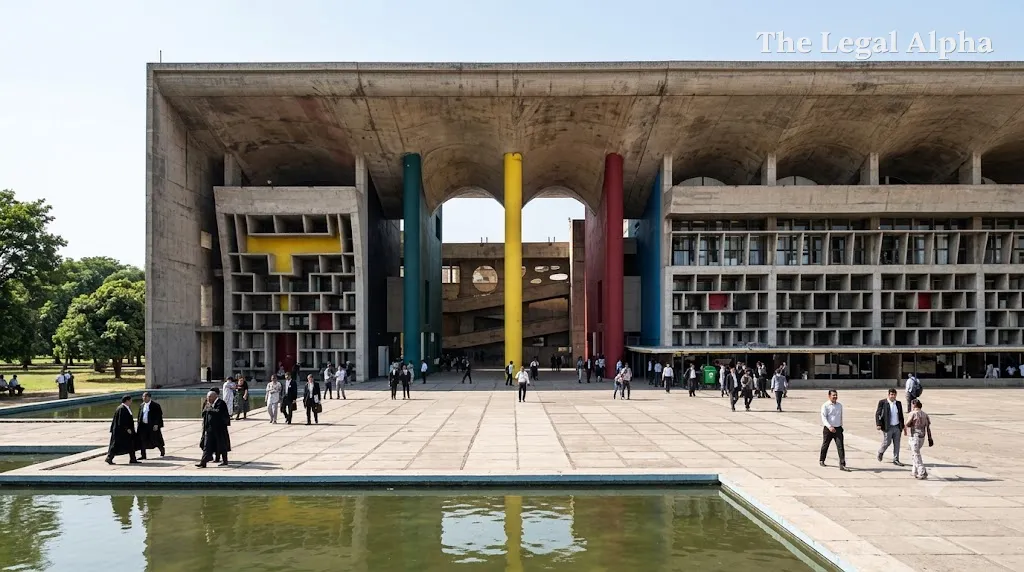
The Punjab and Haryana High Court issued a show-cause contempt notice to Punjab Chief Secretary K.A.P. Sinha after the State failed to disburse long-pending Dearness Allowance (DA) and Dearness Relief (DR) arrears to government employees and pensioners. Appearing in person following an earlier reprimand and a cost of ₹1 lakh imposed on the administration, the Chief Secretary was directed to submit a detailed compliance affidavit within 10 days.
The court took serious exception to the State using an unlisted, pending Special Leave Petition (SLP) before the Supreme Court as a shield against executing binding high court orders.
Legal Topic
Area of Law: Service Law / Civil Contempt
Sub-topic: Enforcement of Judicial Writs / Employee Retiral Dues and Dearness Allowance
Core Legal Issue
The core legal question centers on whether a state government can defer compliance with a binding high court writ order directing the release of statutory financial benefits simply by preparing or filing a Special Leave Petition before the Supreme Court without securing a formal judicial stay.
Additionally, the bench examined whether administrative foot-dragging in rectifying procedural defects in appellate filings amounts to willful disobedience under the Contempt of Courts Act.
What Did the Court / Authority Decide?
A single-judge bench presided over by Justice Harsh Bunger issued a formal notice of motion in the contempt plea, directing the Chief Secretary to explain why contempt proceedings should not proceed against him for failing to comply with the court's earlier order dated August 3.
-
The Chief Secretary, who was present in court, accepted the notice and was granted 10 days to submit a compliance affidavit (by November 13, 2026).
-
The bench scheduled the next hearing for November 17, 2026, directing the Chief Secretary to remain physically present.
-
While no conclusive finding of willful contempt has been formalized yet, the court reinforced that merely preparing an appeal cannot operate as an automatic stay against a judicial mandate.
Key Legal Points
-
No Stay, No Immunity: The mere pendency or intention to list an appeal before the Supreme Court does not stay or absolve the executive from adhering to operative High Court directions.
-
Strict Accountability of Administrative Heads: When the State acts in breach of clear timelines for statutory dues, the executive head can be called upon personally to explain defaults rather than shielding the department through routine bureaucratic delays.
-
Parity and Employee Rights: The bench previously questioned why senior administrative personnel enjoyed regular benefits while lower-cadre employees and pensioners faced persistent withholding of their Dearness Allowance dues.
-
Threshold of Willful Disobedience: Retaining an appeal on the Supreme Court's procedural defect register for months without active curing was treated as an unjustified tactic to delay court mandates.
Relevant Law
-
Section 10 and Section 12 of the Contempt of Courts Act, 1971: Power of the High Court to punish contempts of subordinate courts and enforce punishment for willful disobedience of its own orders.
-
Article 215 of the Constitution of India: Constitutional authority establishing the High Court as a court of record endowed with powers to penalize for its contempt.
-
Punjab Civil Services Rules: Provisions governing the entitlements to Dearness Allowance and Dearness Relief for serving employees and pensioners.
Arguments of the Parties
Petitioners (Employees and Pensioners):
Counsel for the petitioners submitted that the State had engaged in deliberate delay tactics. They highlighted that the August 3 compliance directions were flouted, no disbursements were initiated, and the State's SLP had lingered on the Supreme Court defect list for over two months. They also argued that unstayed appellate proceedings cannot justify non-implementation of a binding judgment, stressing that pensioners were being denied legitimate dues while public resources were allocated elsewhere.
The State of Punjab / Chief Secretary:
The State submitted that all procedural objections and defects in its Special Leave Petition had been cured and that the appeal was ready to be listed before the Supreme Court immediately following the festival recess. The State requested accommodation and extra time to place its stance on record, with the Chief Secretary undertaking to present a comprehensive response within 10 days.
Why Does It Matter?
This development sets a crucial enforcement precedent regarding public finance and administrative compliance. It signals to State administrative departments that filing defective appeals or dragging out listing dates cannot serve as a de facto moratorium on court-mandated welfare dues.
For tens of thousands of state government employees and pensioners, the court's refusal to adjourn the matter without compliance safeguards their rights to timely cost-of-living adjustments, maintaining that budgetary constraints cannot be used selectively to withhold standard employment benefits.
Legal Takeaway
A pending appeal without an explicit interim stay from a superior court offers zero legal immunity against contempt proceedings. Executive officers are legally bound to enforce High Court directives within the stipulated timeline unless an authoritative stay order is formally granted.
Sources
Primary Source:
Order of the Punjab and Haryana High Court in Nirmal Singh Dhanoa and Others v. K.A.P. Sinha, IAS and Others [COCP No. 4013 of 2026], Coram: Justice Harsh Bunger (November 3, 2026).
Additional Sources:
Proceedings and legal reports from the High Court of Punjab and Haryana at Chandigarh.