Federal Court Throws Out Donald Trump's Ten-Billion-Dollar Defamation Suit Against The Wall Street Journal With Prejudice
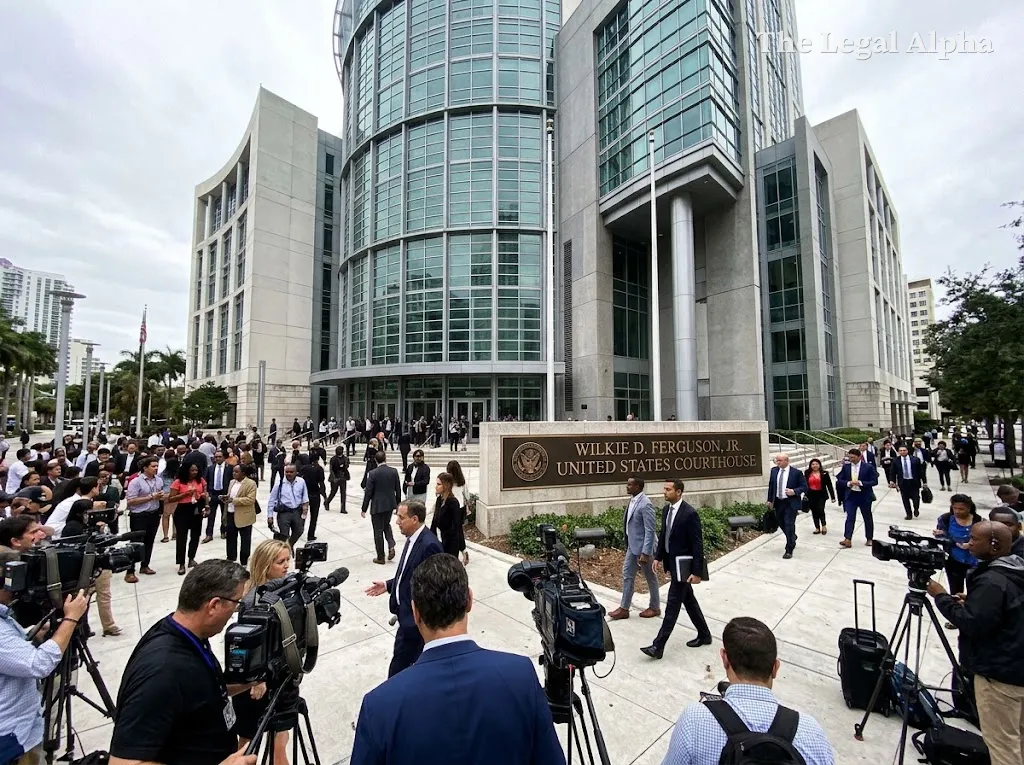
A federal judge in Miami has permanently dismissed a massive ten-billion-dollar defamation lawsuit brought by Donald Trump against The Wall Street Journal, its parent entity, and media proprietor Rupert Murdoch.
The dispute centered on an investigative report published by the newspaper detailing Trump’s historical ties to convicted sex offender Jeffrey Epstein, specifically referencing an alleged sexually suggestive birthday letter Trump supposedly sent to Epstein. Trump initiated the multi-billion-dollar action alleging that the report was fabricated, defamatory, and published with reckless intent to harm his reputation.
In a decisive order, U.S. District Judge Darrin P. Gayles dismissed Trump's amended complaint with prejudice, ruling that the legal pleading failed to meet the threshold required under constitutional defamation standards for public officials. Because the dismissal is with prejudice, Trump cannot refile the lawsuit in that court.
Legal Topic
Area of Law: Constitutional Law / Media & Defamation Law
Sub-topic: First Amendment Defamation Protections / Actual Malice Standard
Core Legal Issue
The fundamental legal question before the court was whether Trump’s amended complaint pleaded sufficient factual allegations to plausibly establish "actual malice" under First Amendment jurisprudence.
Under long-standing U.S. constitutional law, a public official or public figure claiming defamation must demonstrate not merely that an article contains alleged factual errors, but that the journalists and publisher acted with actual malice—meaning they published the challenged statement with actual knowledge that it was false or in reckless disregard of whether it was true or false. The court had to determine whether Trump provided plausible factual support showing the news organization either knew the material was fraudulent or actively harbored serious doubts about its authenticity prior to going to press.
What Did the Court Decide?
Judge Gayles granted the defendants' motion to dismiss, terminating the action with prejudice.
The court held that the plaintiff completely failed to plead plausible facts demonstrating actual malice. Rather than evidencing reckless disregard, the record demonstrated that The Wall Street Journal had carried out a thoughtful, thorough, and standard pre-publication investigation. The judge observed that the plaintiff was "grasping at straws" in trying to manufacture defects in the journalists' reporting.
Significantly, the court pointed out that the newspaper had contacted Trump and key representatives for comment prior to publication, sought clarification, and prominently included Trump’s outright denials within the published story. The judge reasoned that taking such standard journalistic measures directly negates an inference of intentional falsehood or subjective reckless disregard.
Key Legal Points
-
The High Pleading Threshold for Public Officials: To survive a Rule 12(b)(6) motion to dismiss, a public official suing for defamation must set out concrete, non-conclusory facts rendering actual malice plausible, not merely possible.
-
Pre-Publication Inquiries Negate Malice: Reaching out to the subject of an article and publishing their detailed denials constitutes strong affirmative evidence of responsible reporting, running directly counter to claims of reckless disregard.
-
Judicial Rejection of Manufactured Investigative Flaws: Courts will not permit plaintiffs to re-characterize ordinary journalistic investigative choices or disputed source vetting into actionable claims of intentional or reckless misconduct.
-
Finality of Dismissal with Prejudice: By dismissing the amended complaint with prejudice, the court concluded that further amendments could not cure the legal deficiencies, foreclosing any refiling of the claims.
Relevant Law
-
First Amendment to the United States Constitution: Guarantees freedom of speech and freedom of the press, restricting the government and courts from penalizing robust public reporting absent a showing of deliberate falsehood.
-
New York Times Co. v. Sullivan, 376 U.S. 254 (1964): The landmark U.S. Supreme Court decision establishing that a public official cannot recover damages for a defamatory falsehood relating to official conduct unless they prove actual malice.
-
Federal Rule of Civil Procedure 12(b)(6): The civil procedure mechanism governing motions to dismiss for failure to state a claim upon which relief can be granted.
-
Ashcroft v. Iqbal, 556 U.S. 662 (2009) & Bell Atlantic Corp. v. Twombly, 550 U.S. 544 (2007): Precedents requiring plaintiffs to allege sufficient factual matter to state a claim that is plausible on its face, barring speculative or conclusory assertions.
Arguments of the Parties
Petitioner
Trump contended that The Wall Street Journal knowingly relied on a fabricated, non-existent letter to smear him and generate sensationalist headlines. He maintained that he had personally notified Murdoch and editor-in-chief Emma Tucker before publication that the document was completely forged, emphasizing that the language did not reflect his manner of speech or personal habits. On that basis, Trump argued that proceeding to publish despite his personal warnings and without displaying the full physical document constituted reckless disregard and actual malice.
Respondent
The media defendants submitted that the reporting was the product of a diligent, legitimate journalistic inquiry into matters of undeniable public concern. They argued that notifying the plaintiff in advance, soliciting his perspective, and reporting his denials refuted any claim that the newsroom entertained serious doubts or acted with a subjective intent to publish untruths. Counsel argued that the complaint fell well short of the strict constitutional standard necessary to overcome First Amendment protections.
Why Does It Matter?
This ruling reaffirms the robust protections afforded to investigative journalism against retaliatory or high-stakes defamation lawsuits. High-profile figures frequently file multi-billion-dollar damages claims that risk chilling investigative reporting on matters of acute public interest.
By throwing out the complaint with prejudice at the pleading stage, the decision reinforces the durability of the Sullivan doctrine. It underscores that merely putting a publisher on notice of a denial is insufficient to manufacture actual malice; publishers remain protected when they conduct standard source inquiries and fairly report a subject's denials alongside investigative findings.
Legal Takeaway
A public figure cannot sustain a defamation claim merely by asserting that a report is false or that they warned the publication beforehand. So long as a news organization conducts a diligent inquiry and fairly includes the subject's denials, federal courts will not infer actual malice, ensuring that large-scale damage suits cannot bypass constitutional free-speech safeguards.
Sources
Primary Source
-
Trump v. Dow Jones & Co., Inc. et al., Order on Motion to Dismiss Amended Complaint, Case No. 1:24-cv (S.D. Fla. Oct. 31, 2026) (Gayles, J.).
Additional Sources
-
Associated Press, Trump's lawsuit against WSJ over Epstein birthday letter is dismissed with prejudice, Reporting on federal docket ruling (Oct. 31, 2026).
-
Reuters / LawCommentary, Trump Loses $10 Billion Defamation Lawsuit Against The Wall Street Journal Over Epstein Letter (Nov. 1, 2026).