Digital Rights Extend to Minors: Supreme Court Rules Internet Access a Fundamental Right for Children, Rejects Blanket Age Bans
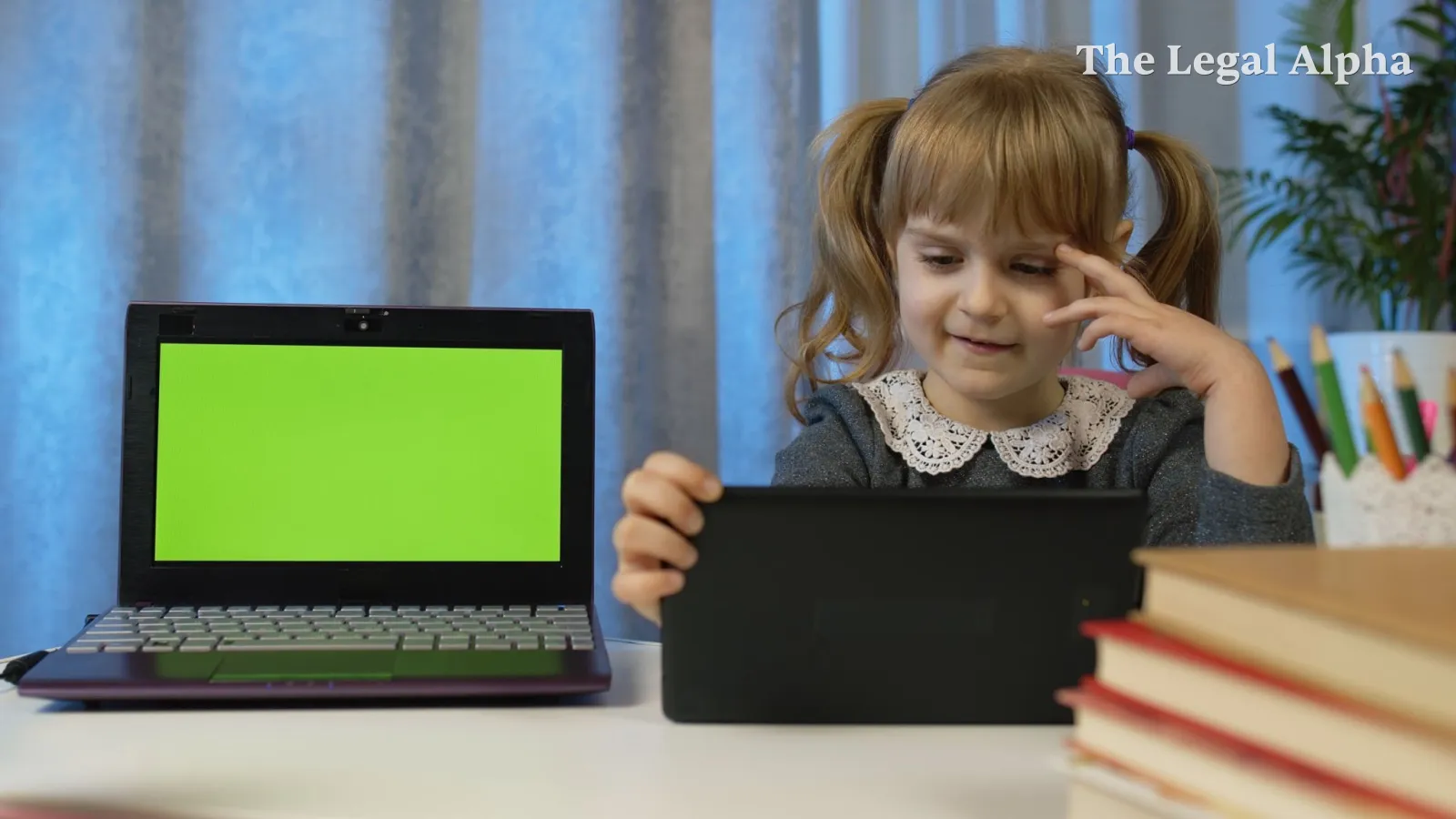
The Supreme Court of India held that access to and use of the internet is a fundamental right extending to all individuals, including children regardless of their age. A Division Bench comprising Justice J.B. Pardiwala and Justice K.V. Chandran rejected proposals for blanket, age-based bans or complete social media exclusions for minors.
The ruling came while the Court reviewed the non-implementation of its earlier directives aimed at curbing Child Sexual Abuse and Exploitation Material (CSEAM) online. Emphasising that children’s safety and their digital freedom are not mutually exclusive, the Bench observed that imposing total access bans misidentifies the victim as the problem. Instead of shutting young users out of essential educational and social spaces, the Court directed the Union Government to establish rigorous technological, legal, and educational mechanisms to target abusive content and offenders directly.
Legal Topic
-
Area of Law: Constitutional Law / Information Technology Law
-
Sub-topic: Child Rights / Fundamental Freedoms / Online Intermediary Governance
Core Legal Issue
The Bench addressed whether the State or digital platforms can implement blanket, age-based restrictions on internet and social media access for minors under the guise of child safety and cyber protection.
At the heart of the matter was the constitutional tension between the State’s duty to shield children from online exploitation (such as CSEAM) and the fundamental liberties of minors to seek information, learn, and express themselves digitally under Articles 19(1)(a) and 21 of the Constitution.
What Did the Court Decide?
The Supreme Court ruled that blanket age-based prohibitions on internet access are unproven in their efficacy and disproportionate under constitutional standards.
-
Recognition of Rights: The Court firmly extended the fundamental right to internet access to minors under Article 21 read with Article 19(1)(a).
-
Rejection of Bans: It turned down calls for total social media bans for children, observing that no jurisdiction worldwide has demonstrated that broad bans make children safer.
-
Targeting Content, Not Users: Measures must target perpetrators and abusive material rather than disenfranchising young users.
-
National Identifier Database: The Union Government was directed to create a centralized national database of digital identifiers (hashes) and URLs linked to verified CSEAM to automate prompt removal across platforms.
-
Alternative Safeguards: The Court advocated for structural mechanisms such as dedicated "child modes", calibrated parental guidance/consent, and curriculum-integrated digital safety education in schools.
-
Procedural Deadlines: The Union Government has been directed to frame necessary guidelines, standard operating procedures, and relevant statutory amendments under the Information Technology Act and Rules, filing a comprehensive compliance affidavit before December 10, 2026.
Key Legal Points
-
Constitutional Parity for Minors: Children possess the same constitutional liberties of speech, expression, and personal development as adults; protecting their welfare cannot be achieved by extinguishing their basic freedoms.
-
Doctrine of Proportionality: A total ban on digital participation fails the test of proportionality because it isolates children from educational resources, community support, and reporting channels without stopping the circulation of unlawful material.
-
Intermediary Accountability: Legal accountability for digital harm rests with offenders who generate or disseminate abusive content and platforms that fail to police their infrastructure, not with the children accessing the network.
-
Resolution of the Anuradha Bhasin Question: Building upon prior jurisprudence that recognized internet-facilitated expression, the Bench put beyond doubt that minors hold an enforceable, individual fundamental right to internet access.
Relevant Law
-
Article 19(1)(a) of the Constitution of India: Freedom of speech and expression.
-
Article 21 of the Constitution of India: Protection of life, personal liberty, and human dignity.
-
Protection of Children from Sexual Offences (POCSO) Act, 2012: Framework governing the prohibition, reporting, and penalisation of child abuse and child sexual exploitation material.
-
Information Technology Act, 2000 & IT (Intermediary Guidelines and Digital Media Ethics Code) Rules, 2021: Statutory provisions governing intermediary liability, take-down protocols, and due diligence requirements.
-
Judicial Precedent: Anuradha Bhasin v. Union of India (2020).
Arguments of the Parties
-
The Union Government / Enforcement Authorities: The Union, represented by Solicitor General Tushar Mehta, submitted that rapid proliferation of online abuse and CSEAM necessitates stringent technical barriers and robust digital mechanisms to insulate children from exposure to predatory networks and harmful online spaces.
-
Petitioners / Child Rights Interveners: The petitioners highlighted severe implementation gaps in earlier judicial orders aimed at purging abusive material, arguing that enforcement machinery and intermediaries had made insufficient progress while predatory content remained accessible.
-
On Blanket Prohibitions: The Court, examining broader regulatory proposals for complete age bans, rejected the premise that total exclusion represents a viable solution, pointing out that such restrictions erode privacy, incentivize circumvention, and suppress reporting.
Why Does It Matter?
This ruling establishes a vital precedent in Indian constitutional and digital rights jurisprudence. Globally, several jurisdictions have considered or legislated blanket social media bans for minors; the Supreme Court of India has charted a contrasting course anchored in fundamental rights, proportionality, and systemic accountability.
For tech platforms and intermediaries, this order moves the regulatory needle away from simple age gates and toward proactive content moderation, algorithmic detection via hash databases, and built-in "child-safe" architectural standards. For children—particularly those in remote locations or with marginalized backgrounds—the decision preserves their gateway to modern education, support networks, and information. Most significantly, it affirms that the State cannot bypass its duty to police cybercriminals by locking children out of the modern world.
Legal Takeaway
Internet access is a constitutionally protected fundamental right that belongs equally to children. The Supreme Court has clarified that child safety cannot be achieved through blanket digital bans; the State and digital platforms must bear the burden of removing predatory content rather than penalizing the child's freedom to participate online.
Sources
-
Primary Source: Supreme Court of India, Order dated October 15, 2026, in Just Rights for Children Alliance & Anr. v. S. Harish & Ors. (M.A. Nos. 2553–2554 of 2026 in Criminal Appeal Nos. 2161–2162 of 2024; Citation: 2026 INSC 1149), Bench of Justice J.B. Pardiwala and Justice K.V. Chandran.
-
Additional Sources: Reports by The Indian Express, Hindustan Times, and Law Trend on October 17, 2026.