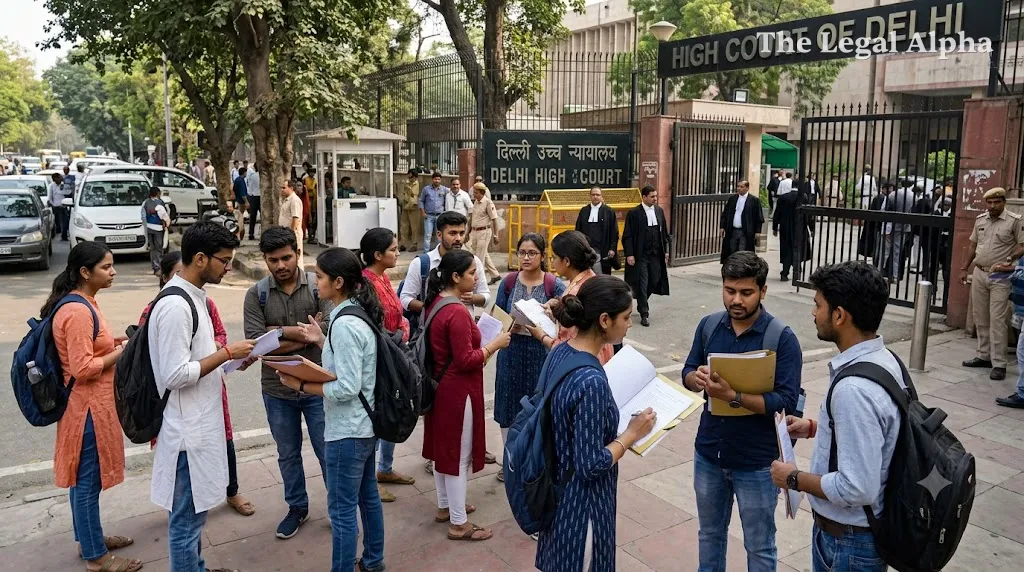
Delhi Court Halts Prosecution of Accused Diagnosed with Severe Schizophrenia Over Inability to Defend Himself

A sessions court in Saket, New Delhi, directed the suspension of criminal proceedings across two cases against Mahender Singh following medical evaluations that confirmed he suffers from severe schizophrenia with a 90% permanent mental disability.
Additional Sessions Judge Hargurvinder Singh Jaggi observed that the accused is entirely incapable of comprehending the nature of the court proceedings or mounting an effective legal defense. Recognizing that the individual's family had expressed an inability to care for him, the court ordered that he remain in residential care at a dedicated facility while receiving ongoing psychiatric treatment.
Legal Topic
-
Area of Law: Criminal Law & Procedure / Mental Health Jurisprudence
-
Sub-topic: Fitness to Stand Trial / Accused Persons of Unsound Mind
Core Legal Issue
The core legal question centers on how the criminal justice system must handle an accused individual whose profound mental illness prevents them from understanding court proceedings or actively participating in their legal defense. The court addressed whether continuing criminal prosecution can stand when the essential precondition of a fair trial—namely, the accused person's capacity to comprehend the allegations and instruct counsel—is absent.
What Did the Court / Authority Decide?
-
Suspension of Trial: The court halted criminal proceedings across two long-pending sessions cases, determining that the accused is unfit to stand trial.
-
Institutional Care and Medical Treatment: Custody was directed to Nav Chetna Home in Rohini for residential upkeep, paired with continuous psychiatric supervision and care from the Institute of Human Behaviour and Allied Sciences (IHBAS).
-
Judicial Observations: The court noted that a criminal prosecution places invisible burdens and suspicions upon an accused, which turn profoundly tragic when severe mental impairment leaves the person unable to understand the process.
-
Current Status: The prosecution remains stayed, shifting the legal focus from punitive trial proceedings to humanitarian care and psychiatric management under statutory oversight.
Key Legal Points
-
Fair Trial Prerequisite: A defendant cannot be subjected to a criminal trial if they lack the cognitive and mental fitness required to comprehend charges, follow proceedings, and instruct defense counsel.
-
Humane Statutory Application: Procedural safeguards governing an accused of unsound mind must be applied with empathy to safeguard the individual’s physical welfare and legal protections.
-
Protective Role of the Judiciary: Where chronic psychiatric disability renders an individual unfit for trial and family support is unavailable, the judicial mandate shifts from adjudication to state-supervised care and rehabilitation.
Relevant Law
-
Code of Criminal Procedure, 1973 (CrPC): Section 330(3)(b) (provisions governing the custody, care, and release of an accused incapable of making a defense due to unsoundness of mind).
-
Mental Healthcare Act, 2017: Guiding principles safeguarding the rights, dignity, and specialized treatment of persons with mental illness within the judicial framework.
Arguments of the Parties
-
Accused's Family: The wife and sons of the accused placed on record their inability to handle his severe medical condition, day-to-day supervision, or residential care.
-
Medical Board Findings: Diagnostic reports submitted by specialized institutions established a severe schizophrenic condition, a high degree of permanent disability, and a total lack of capacity to understand trial proceedings.
-
The State / Prosecution: While the original allegations involved serious offenses such as abduction and intimidation dating back several years, the prosecution remained bound by statutory provisions mandating an assessment of the accused's fitness to stand trial.
Why Does It Matter?
This ruling underscores a fundamental constitutional tenet: criminal trials must never be reduced to a mechanical formality against an individual mentally incapable of participating in their defense. It also addresses the practical reality of severe mental illness intersecting with the criminal justice system, demonstrating how courts can invoke protective statutory mechanisms to secure medical care and housing when family structures cannot cope.
Legal Takeaway
Mental fitness to stand trial is an indispensable requirement of criminal justice. When medical evidence establishes that an accused cannot understand the proceedings or mount a defense, the law requires that prosecution be paused in favor of sustained psychiatric care and state-supervised welfare.
Sources
-
Primary Source: Saket District Court (New Delhi), twin orders passed by Additional Sessions Judge Hargurvinder Singh Jaggi (October 15, 2026).
-
Additional Sources: Medical evaluation records from the Institute of Human Behaviour and Allied Sciences (IHBAS) and PGIMS Rohtak.