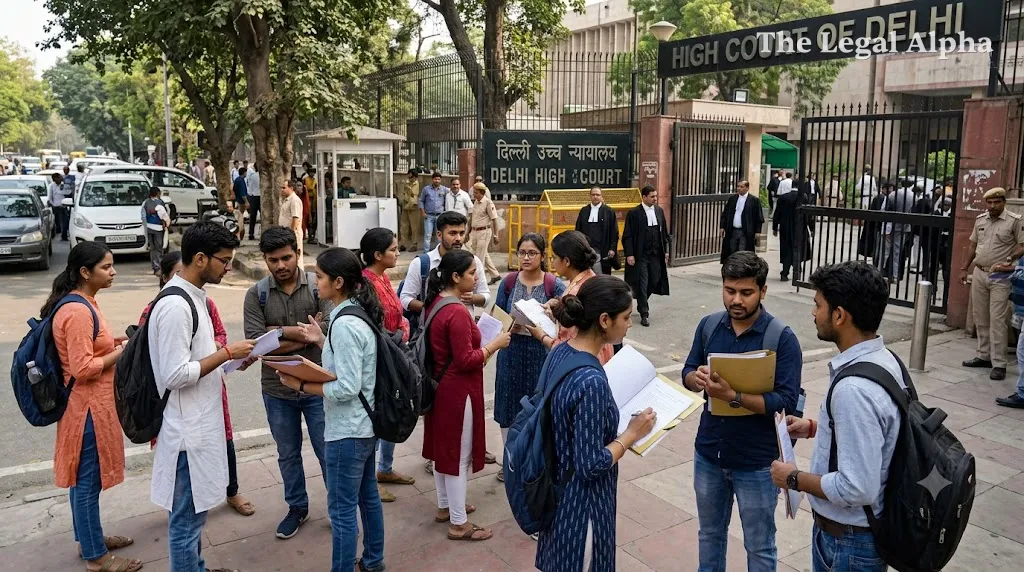
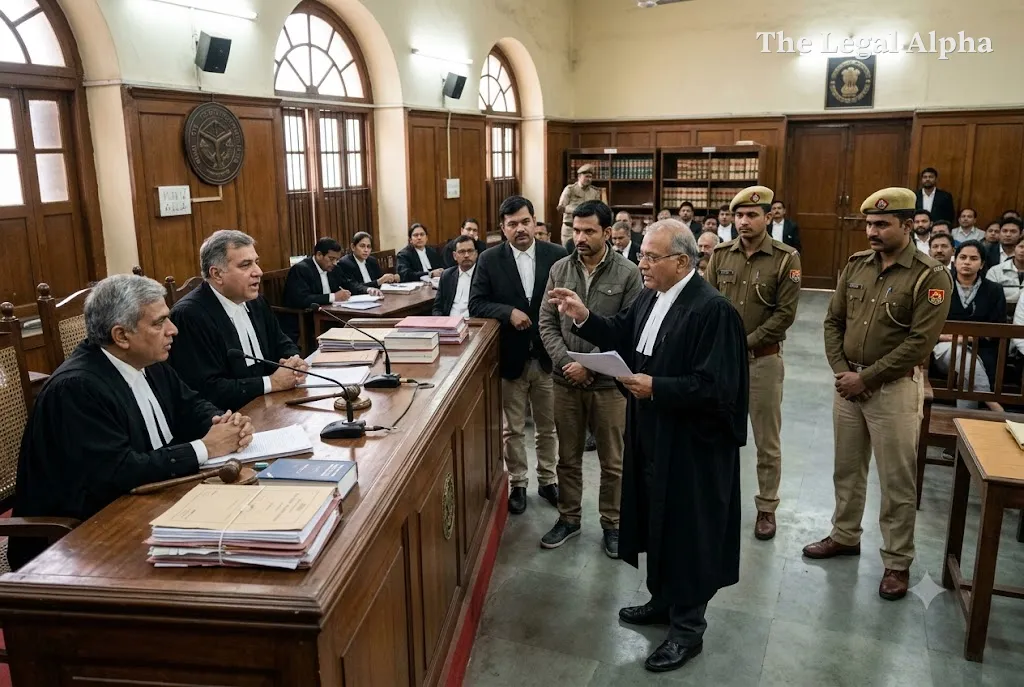
Procedural Lapses and Delayed Access to Counsel Mark Detention of Student Leader in New Delhi
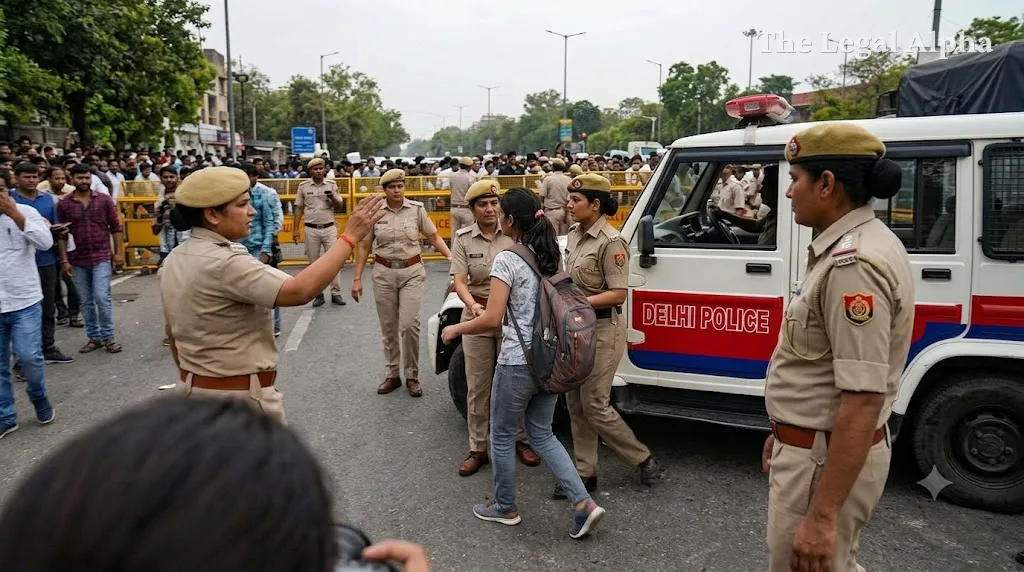
Delhi Police detained All India Students' Association (AISA) Delhi State President Neha Bora amid demonstrations in New Delhi. Following the detention, her legal counsel and political representatives raised serious objections regarding procedural non-compliance, alleging that law enforcement withheld substantive information concerning the statutory grounds for her custody, the existence of any formal First Information Report (FIR), and her physical whereabouts for over five hours.
According to her legal team, Bora was initially taken to an Anti-Narcotics Task Force facility and subsequently moved to the R.K. Puram Police Station, where advocates were granted delayed access under police supervision rather than in private consultation. Police authorities stated the preventive actions were taken to preserve law and order and manage public movement in the capital, while counsel alleged violations of statutory arrest and detention guidelines.
Legal Topic
-
Area of Law: Constitutional Law & Criminal Procedure
-
Sub-topic: Rights of Arrested and Detained Persons / Preventive Detention Safeguards
Core Legal Issue
The controversy centres on whether the conduct of law enforcement adheres to the procedural mandates governing personal liberty under the Constitution of India and the Code of Criminal Procedure / Bharatiya Nagarik Suraksha Sanhita.
Specifically, the issue involves whether detaining an individual without promptly furnishing the legal grounds of restraint, delaying notice of custody locations to legal representatives, and denying privileged, unmonitored legal consultations violates enforceable constitutional protections.
What Did the Court / Authority Decide?
The matter remains at the administrative and pre-trial enforcement stage. Law enforcement maintained that preventive custody was necessary under municipal policing powers to preempt breaches of public peace.
Bora was subsequently released from preventive detention following the conclusion of protests and medical screening. While the legal team flagged grievances concerning the denial of complaints at local police stations and late-night detention procedures, no formal judicial adjudication or writ order has been rendered by a magistrate or higher court yet.
Key Legal Points
-
Right to Legal Representation: The state is constitutionally and statutorily obliged to permit an arrested or detained individual the right to consult and be defended by a legal practitioner of their choice, which inherently includes the privilege of non-monitored, confidential consultations.
-
Prompt Communication of Grounds: Under Article 22(1) of the Constitution, no person can be detained in custody without being informed, as soon as possible, of the exact grounds for such detention.
-
Transparency of Custodial Location: Established criminal jurisprudence dictates that the place of detention and the physical condition of the detainee must be recorded and made accessible to family members or legal advisors without undue delay.
-
Special Protections for Women: Statutory procedural guidelines establish rigorous protocols regarding the custody, questioning, and overnight detention of women at police stations.
Relevant Law
-
Article 21, Constitution of India: Guarantee of the right to personal liberty, conditioned strictly upon procedure established by law.
-
Article 22(1), Constitution of India: Mandatory entitlement to be informed of the grounds of detention and to consult legal counsel.
-
Section 41D / Section 38 (BNSS) and Section 50A CrPC: Right of an arrested person to meet an advocate of their choice during interrogation, alongside the statutory duty of police to inform a nominated friend or legal representative about the custody and location.
-
Supreme Court of India Precedent (D.K. Basu v. State of West Bengal): Binding directives requiring transparent arrest memos, prompt notification of custody to relatives or counsel, and mandatory medical examinations.
Arguments of the Parties
Legal Team and Detainee's Representatives Counsel for the detainee submitted that law enforcement maintained an impermissible lack of transparency by keeping advocates "in the dark" for multiple hours regarding Bora's physical whereabouts and formal charges. They argued that refusing to register missing-person inquiries, withholding the text or existence of an FIR, and monitoring privileged conversations between the detainee and her advocates represented direct breaches of procedural safeguards. Furthermore, representatives questioned the legality of detaining a female student leader past sunset across multiple specialized police locations.
Law Enforcement and State Authorities Police officials maintained that preventive detentions were executed to prevent widespread unrest, enforce crowd control, and preserve civic order during unsanctioned public demonstrations. Authorities contended that the actions were regulatory measures rather than punitive arrests, noting that necessary administrative procedures—such as standard medical check-ups and transfer logs—were implemented before individuals were formally processed or discharged.
Why Does It Matter?
The situation underscores recurring friction between the operational requirements of urban crowd policing and fundamental safeguards designed to prevent arbitrary administrative detention. When preventive measures obscure a detainee's location and curtail prompt legal access, the boundary between lawful preventive custody and unauthorized detention blurs.
For the wider legal system, adherence to the D.K. Basu guidelines is not optional during public order operations. The incident emphasizes that even when police exercise preventive detention powers, constitutional guarantees—such as timely notification of custody and confidential legal counsel—remain immediately operational from the moment personal liberty is curtailed.
Legal Takeaway
Preventive detention does not suspend basic constitutional protections. Law enforcement agencies remain obligated to promptly notify detainees of the grounds for their custody, disclose their physical location, and ensure timely, unhindered access to legal counsel.
Sources
-
Primary Source: Statements on legal record and representations by Advocate Aditya Krishna, Advocate Supantha Sinha, and Advocate Manik Gupta; Official communications from Delhi Police administrative divisions regarding preventive security measures.
-
Additional Sources: Operational guidelines under the Supreme Court of India ruling in D.K. Basu v. State of West Bengal; Criminal Procedure Code / Bharatiya Nagarik Suraksha Sanhita statutory provisions on preventive custody and detainee rights.