Demanding a Bribe Is a Pure Criminal Act: Supreme Court Rules Section 17A Shield Does Not Protect Corrupt Solicitations
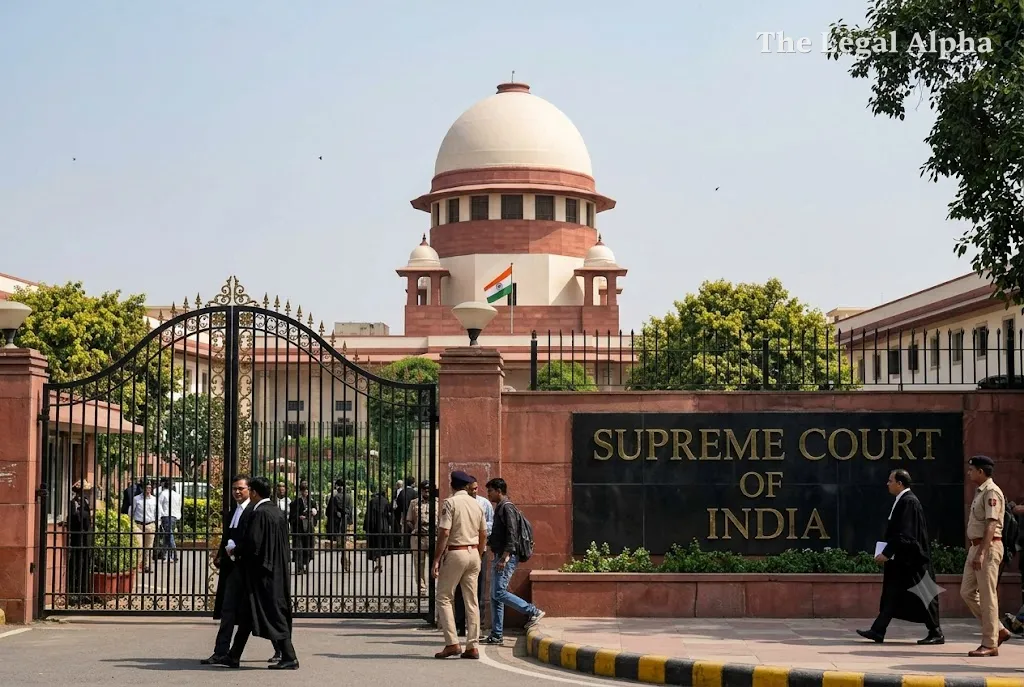
The Supreme Court of India upheld the framing of corruption charges against an accused public servant, categorically ruling that demanding an illegal gratification cannot claim the procedural immunity of prior governmental approval under Section 17A of the Prevention of Corruption Act, 1988.
The appellant, Tejaram, a police constable facing prosecution under Section 7 of the Prevention of Corruption Act for allegedly demanding a bribe, had approached the apex court challenging an order of the Rajasthan High Court. He contended that the criminal proceedings initiated against him were flawed and impermissible because investigative agencies failed to procure prior approval from the competent authority before launching the enquiry. Dismissing the appeal, a Division Bench comprising Justice S.V.N. Bhatti and Justice N.V. Anjaria held that soliciting an unlawful payoff is entirely detached from official duty, leaving no basis to stall trial proceedings.
Legal Topic
Area of Law: Criminal Law / Anti-Corruption Law
Sub-topic: Prevention of Corruption Act / Prior Sanction and Approval
Core Legal Issue
The controversy centered on the statutory scope of Section 17A of the Prevention of Corruption Act, 1988.
The primary legal question was whether an act involving an outright demand for illegal gratification qualifies as an action relatable to an official "recommendation made or decision taken" by a public servant in the discharge of official functions. Consequently, the Bench had to decide whether the statutory requirement for prior approval before launching an enquiry, inquiry, or investigation applies to allegations of bribe solicitation.
What Did the Court Decide?
The Supreme Court dismissed the appeal and affirmed the framing of charges by the trial court, ruling that the prosecution could proceed unimpeded on its merits.
The Bench observed that demanding a bribe is a "pure criminal act" that has no nexus with the bona fide discharge of official functions or duties. Because the solicitation of graft does not pertain to any legitimate administrative decision-making or official recommendations, it falls squarely outside the protective shelter of Section 17A.
The Court also addressed ancillary objections, holding that a pending reference before a larger bench regarding the broader constitutional contours of Section 17A did not impede resolving the present appeal, given that the section itself had no application to corrupt demands. Furthermore, addressing objections regarding the timing of sanction under Section 19 of the Act, the Bench held that because sanction was obtained prior to the taking of cognizance by the court, any procedural delay was at most an irregularity that did not vitiate the criminal proceedings.
Key Legal Points
-
Demands Are Not Official Acts: The solicitation or demand of a bribe is an unvarnished criminal act completely dissociated from legitimate official duty or public administration.
-
Strict Scope of Section 17A: The procedural filter of prior approval is strictly confined to actions arising out of official recommendations or administrative decisions, not corrupt personal solicitations.
-
Irrelevance of Larger Bench Reference: Because allegations of pure bribery do not attract Section 17A, proceedings need not be stayed to await pending larger bench rulings on the general scope of the provision.
-
Timing of Section 19 Sanction: Where formal prosecution sanction under Section 19 is granted before cognizance is taken, administrative delay in securing that sanction operates as a curable irregularity that cannot derail the trial.
Relevant Law
-
Section 17A, Prevention of Corruption Act, 1988: Requires prior approval from the competent authority before conducting an enquiry, inquiry, or investigation into offences relatable to any recommendation made or decision taken by a public servant.
-
Section 7, Prevention of Corruption Act, 1988: Penalizes public servants obtaining, accepting, or attempting to obtain undue advantage with an intention to perform public duties improperly or dishonestly.
-
Section 19, Prevention of Corruption Act, 1988: Mandates prior sanction by the competent authority before a court takes cognizance of an offence.
Arguments of the Parties
Appellant
The appellant submitted that the trial court erred in framing charges because the investigation suffered from an incurable jurisdictional defect. It was contended that the police initiated investigative steps without first obtaining mandatory prior approval under Section 17A. The defence further argued that delay in obtaining sanction under Section 19 vitiated the prosecution, and urged that the matter should await the outcome of the larger bench reference examining the constitutional interpretation of Section 17A.
Respondent (State of Rajasthan)
The State argued that Section 17A was conceived strictly as an institutional safeguard to protect honest officers from harassment over bona fide policy decisions, not as a blanket shield for extortion or graft. It was submitted that an illicit demand for money possesses zero relation to any lawful recommendation or duty, rendering Section 17A inapplicable at the threshold. The prosecution further maintained that all necessary statutory sanctions under Section 19 were formally in place before the court took cognizance.
Why Does It Matter?
This ruling prevents the misuse of statutory safeguards designed for administrative decision-makers. Since the introduction of Section 17A via the 2018 amendment to the Prevention of Corruption Act, accused officials have frequently invoked the requirement for prior approval to stall trap cases and initial inquiries.
By defining bribe solicitation as an isolated "pure criminal act," the Supreme Court draws a sharp line between legitimate official discretion and criminal conduct. This removes an avenue for dilatory tactics in corruption trials, ensuring anti-corruption agencies can investigate and prosecute illicit demands without protracted preliminary litigation.
Legal Takeaway
Section 17A of the Prevention of Corruption Act protects bona fide administrative decisions, not corrupt transactions. Demanding a bribe is a pure criminal act wholly separate from official duty, meaning investigating agencies do not require prior government approval before proceeding against the offending official.
Sources
Primary Source
-
Supreme Court of India, Tejaram v. State of Rajasthan, Neutral Citation: 2026 INSC 1147 (Coram: Justice S.V.N. Bhatti and Justice N.V. Anjaria).
Additional Sources
-
Prevention of Corruption Act, 1988 (Sections 7, 17A, and 19).
-
High Court of Judicature for Rajasthan appellate records in the underlying challenge.