Delhi Police Refuse Permission for CJP Demonstration at Jantar Mantar Citing Public Order Concerns
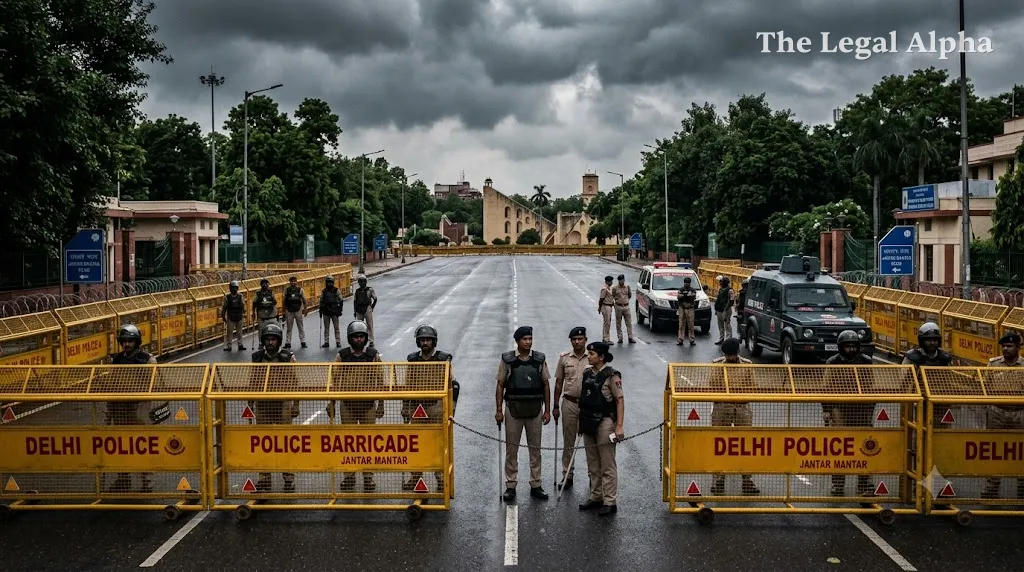
The Delhi Police formally declined permission to the Cockroach Janta Party (CJP) for holding a planned demonstration at Jantar Mantar. The political outfit had given written notice to assemble at the central Delhi site to voice demands concerning election administration, specifically calling for the resignation of Chief Election Commissioner Gyanesh Kumar and the rollback of the Special Intensive Revision (SIR) exercise.
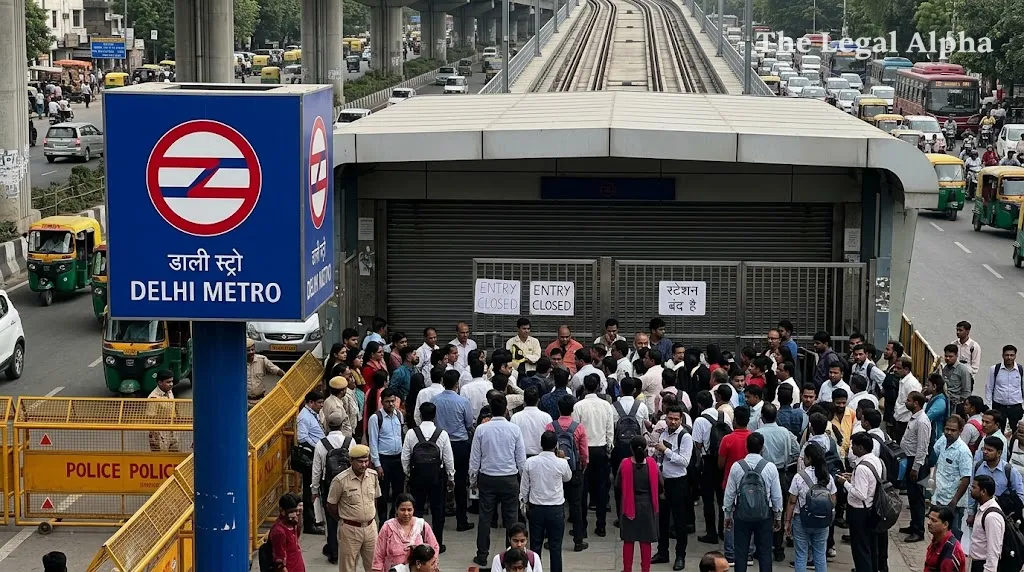
Citing grave apprehensions regarding public order, traffic dislocation, and alleged breaches of undertakings during prior agitations, the Deputy Commissioner of Police (New Delhi District) issued a formal communication rejecting the assembly request in the wider public interest. The administrative refusal triggered widespread security measures and logistical curbs across the National Capital Region.
Legal Topic
Area of Law: Constitutional and Administrative Law
Sub-topic: Freedom of Assembly vs Regulatory Police Powers / Maintenance of Public Order
Core Legal Issue
The controversy centres on the constitutional tension between an organisation’s fundamental freedom to assemble peacefully without arms and the statutory authority of law enforcement agencies to impose prior restrictions or outright prohibitions to maintain public safety and tranquility.
The legal issue is whether the denial of permission to assemble at a designated protest site meets the constitutional threshold of a "reasonable restriction" backed by concrete apprehension of disturbance, or whether the complete withholding of permission constitutes an unconstitutional suppression of democratic dissent.
What Did the Court / Authority Decide?
The Deputy Commissioner of Police (New Delhi District) formally denied the party’s request to stage the gathering at Jantar Mantar.
The police authority held that:
-
The communication submitted by the CJP operated merely as an intimation rather than a compliant, formal application for statutory clearance.
-
Granting permission would risk substantial disruption to public order, pedestrian transit, and vital urban infrastructure.
-
Prior undertakings provided by the organisers during previous demonstrations had not been complied with, disentitling the group from administrative clearance.
-
No alternative application was submitted by the organisers for other notified open spaces, such as the Ramlila Maidan.
Consequently, the gathering stands prohibited, and law enforcement agencies have initiated preventive administrative measures under statutory crowd-control powers.
Key Legal Points
-
Regulatory Oversight of Public Protest: The right to protest under Indian constitutional jurisprudence is not absolute; it is subject to reasonable administrative conditions to safeguard societal order.
-
Conditional Undertakings: Compliance with previous statutory undertakings serves as a material factor when regulatory authorities evaluate risk assessments for future gatherings.
-
Intimation vs Formal Permission: Law enforcement authorities distinguish between unilateral administrative intimation and formal statutory clearance required for managing demonstrations in sensitive urban zones.
-
Balancing Conflicting Rights: The state is mandated to weigh the fundamental rights of protestors against the collective rights of the general public to move freely, access essential public services, and avoid arbitrary urban paralysis.
Relevant Law
-
Constitution of India, Article 19(1)(b): Right to assemble peaceably and without arms.
-
Constitution of India, Article 19(3): State power to impose reasonable restrictions on assembly in the interests of sovereignty, integrity, or public order.
-
Delhi Police Act, 1978 (Section 28 to 33): Powers of the Commissioner of Police to regulate public assemblies, processions, and maintain order in streets.
-
Code of Criminal Procedure, 1973 / Bharatiya Nagarik Suraksha Sanhita, 2023: Preventive action and assembly regulation powers.
-
Himmat Lal K. Shah v. Commissioner of Police, Ahmedabad (1973): Landmark Supreme Court ruling holding that the state may regulate public meetings on streets to prevent inconvenience and disorder, provided regulation does not amount to an arbitrary veto.
-
Mazdoor Kisan Shakti Sangathan (MKSS) v. Union of India (2018): Supreme Court guidelines explicitly governing demonstrations at Jantar Mantar, requiring police authorities to frame balanced guidelines rather than enforcing blanket indefinite bans.
Arguments of the Parties
Cockroach Janta Party (Organisers)
-
The organisers argued that holding a peaceful demonstration is a constitutionally protected right under Article 19 and does not require subjective executive licensing.
-
They contended that adequate advance intimation had been provided to authorities to facilitate traffic and perimeter management rather than seek prior censorship of political dissent.
-
Representatives asserted that widespread security curbs, train cancellations, and preemptive detentions unjustifiably infringe on civic freedoms before any illegality has occurred.
Delhi Police (State Administration)
-
The authorities maintained that public safety cannot be compromised and that urban transit cannot be brought to a standstill.
-
Law enforcement submitted that previous gatherings by the group saw terms of agreed undertakings violated, resulting in law-and-order flare-ups.
-
They contended that the organisers failed to follow mandatory protocol by submitting a unilateral intimation rather than an application complying with standard safety undertakings.
Why Does It Matter?
This development highlights the ongoing friction between the statutory regulatory regime in Delhi and the constitutional exercise of collective dissent. Under the Supreme Court's MKSS framework, Jantar Mantar is designated as an institutional space specifically intended to accommodate democratic assembly without forcing citizens out of the national capital's administrative core.
When police authorities use prior non-compliance and logistical risk as grounds for outright denial, it sets an administrative precedent where previous procedural breaches can result in preventive disqualification from public spaces. For civil groups and legal practitioners, it underlines the importance of treating protest permissions not merely as political notices, but as rigorous administrative processes requiring strict procedural compliance and enforceable undertakings.
Legal Takeaway
The right to assemble peaceably under Article 19(1)(b) remains subject to administrative regulation, and law enforcement holds the statutory discretion to withhold clearance where prior breaches of undertakings or tangible threats to public order can be shown. Unilateral intimations do not bypass formal regulatory requirements, placing the burden on organising bodies to satisfy municipal safety conditions.
Sources
Primary Source:
-
Official Order/Communication by the Deputy Commissioner of Police (New Delhi District) denying assembly permission to CJP (October 2026).
Additional Sources:
-
Communications from the Delhi Police and Transport Range (Joint CP orders).
-
Mazdoor Kisan Shakti Sangathan (MKSS) v. Union of India (2018) 17 SCC 324.
-
Himmat Lal K. Shah v. Commissioner of Police, Ahmedabad (1973) 1 SCC 227.