Delhi High Court Stays Perjury Action Against Five Former CBI Officers Over Contested Filings
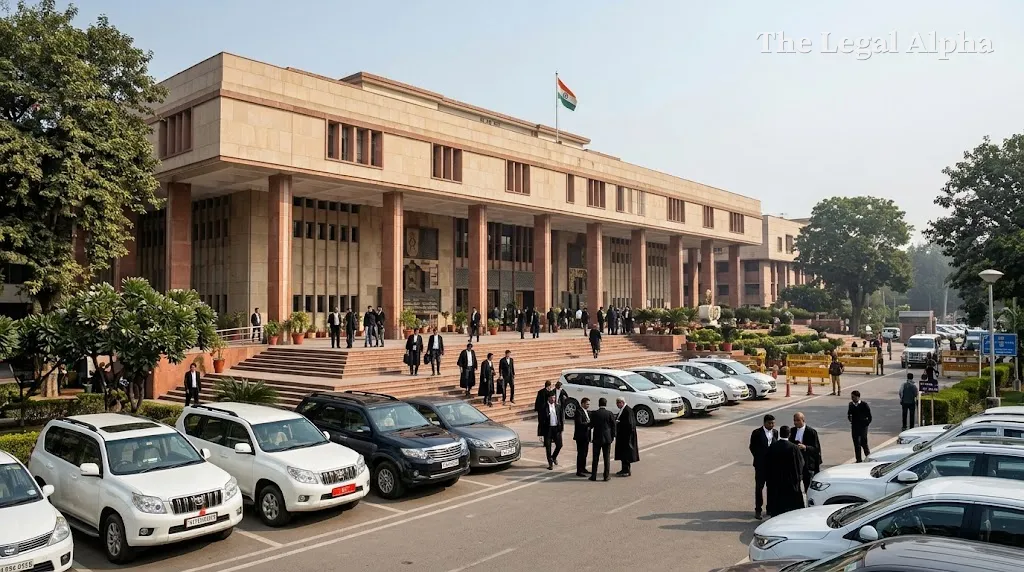
The Delhi High Court has temporarily paused the operation of its earlier directive ordering criminal perjury proceedings against five retired senior officials of the Central Bureau of Investigation (CBI). The dispute stems from an allegedly inaccurate statement filed in judicial records regarding whether official communications were actively underway with an external government ministry. Following review petitions citing procedural unfairness and lack of proper notice, the High Court put the initiation of the magisterial complaint on hold until the next substantive hearing.
Legal Topic
Area of Law: Criminal Procedure & Public Justice Administration
Sub-topic: Perjury / Prosecution for Contempt of Lawful Authority under Section 340 CrPC
Core Legal Issue
The controversy centres on the threshold required to initiate prosecution for false evidence under Section 340 read with Section 195 of the Code of Criminal Procedure (CrPC).
Specifically, the court must resolve whether internal administrative movement and draft proposals within an agency can be legally equated to actual inter-ministerial correspondence, and whether mischaracterising such internal deliberations amounts to intentional false swearing warranting a criminal complaint, or merely an imprecise administrative draft that does not justify prosecution.
What Did the Court / Authority Decide?
Hearing the recall and review applications following a roster change, Justice Mini Pushkarna ordered that paragraphs 63 and 64 of the High Court's October 6 order—which directed the filing of a formal perjury complaint before the competent Magistrate—shall remain in abeyance.
The court found that the former CBI officers had established a prima facie case, that the balance of convenience leaned in their favour, and that they risked facing irreparable harm if the punitive criminal mechanism proceeded without examining their grievances. The matter has been deferred for further hearing in February, leaving the underlying perjury complaint frozen in the interim.
Key Legal Points
-
Separation of Scrutiny from Final Guilt: Proceedings under Section 340 CrPC do not decide criminal liability; they only determine whether a prima facie case exists and whether it is expedient in the interests of justice to lodge a magisterial complaint.
-
Accuracy of Judicial Pleadings: Investigating agencies and public authorities cannot portray internal file-notings or preliminary proposals as finalized external inter-departmental communications before a court of law.
-
Interim Protection Balance: A judicial directive initiating a criminal complaint can be kept in abeyance if the affected officers show prima facie procedural irregularities, such as an inadequate opportunity of being heard prior to the adverse order.
-
Individual Attribution: When dealing with multi-tiered official replies, the court examines file movements to establish whether signatories, vetting officers, and drafters shared common knowledge of the statement's factual inaccuracy.
Relevant Law
-
Section 340, Code of Criminal Procedure, 1973 (CrPC): Procedure for cases mentioned in Section 195, governing court-directed inquiries into offences affecting the administration of justice.
-
Section 195, Code of Criminal Procedure, 1973 (CrPC): Bars courts from taking cognizance of contempt of lawful authority, perjury, and offences against public justice except on a complaint by the concerned public servant or court.
-
Section 191 & Section 193, Indian Penal Code, 1860 (IPC): Giving false evidence and the prescribed punishment for intentional fabrication of statements in judicial proceedings.
Arguments of the Parties
Applicants (Former CBI Officers):
Counsel for the retired officials contended that the October 6 directive suffered from procedural lapses, maintaining that they were subjected to adverse directions without adequate notice and full opportunity to explain the drafting context. They argued that the discrepancy resulted from an imprecise choice of language in the affidavit rather than an intentional attempt to deceive the court, which would make criminal prosecution neither warranted nor expedient in the interests of justice.
Original Complainant / State:
The opposing party submitted that public agencies owe the highest standard of candour to judicial forums. It was argued that internal draft movements revealed that the officials were fully aware no external correspondence existed at the material time, and conflating internal deliberations with formal external communication materially distorted the record presented before the court.
Why Does It Matter?
This development highlights the delicate threshold between administrative drafting errors and deliberate perjury in government litigation. For investigating agencies and state bodies, it serves as a strict reminder that inaccurate averments in affidavits can expose vetting officials and signatories to personal criminal liability. Concurrently, the High Court's willingness to stay its own complaint mechanism reinforces that courts must balance accountability with procedural safeguards, ensuring officers are not burdened by reputational and legal distress before their objections are fully heard.
Legal Takeaway
A perjury inquiry under Section 340 CrPC demands clear evidence of deliberate deceit affecting the administration of justice, not just ambiguous administrative phrasing. When faced with potential procedural prejudice or denial of natural justice, courts retain the power to keep directed complaints in abeyance to ensure fairness.
Sources
Primary Source:
Delhi High Court Order dated November 3, 2026 (Justice Mini Pushkarna) in review/abeyance applications arising from Criminal Appeal judgment dated October 6, 2026.
Additional Sources:
-
Press Trust of India (PTI) court reportage on the abeyance order against former CBI officers.
-
The Pioneer, Delhi HC stays perjury action against 5 ex-CBI officers, November 2026.