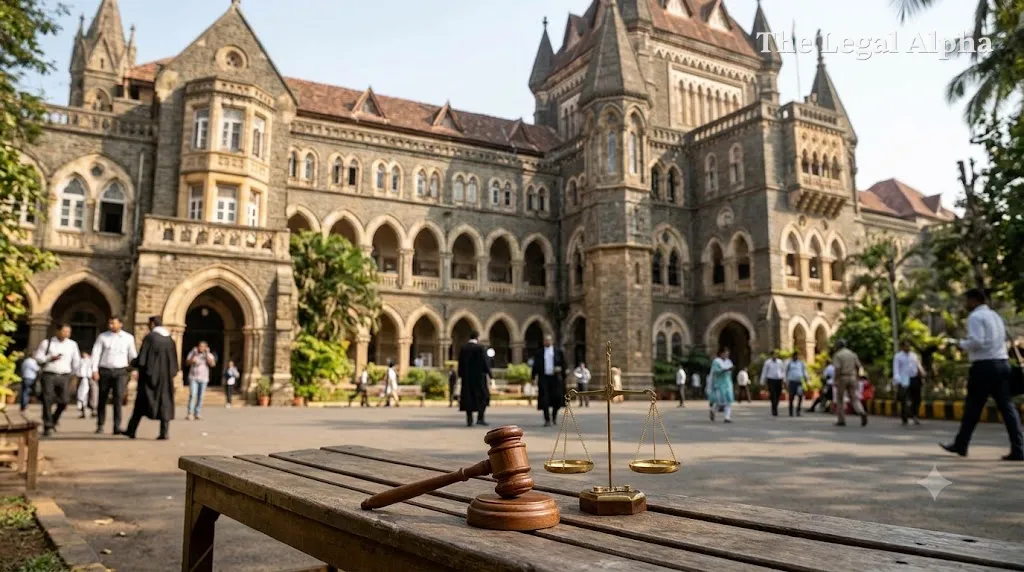
Delhi High Court Refuses Interim Stay on Entry Ban for Non-Delhi Pre-BS-VI Vehicles
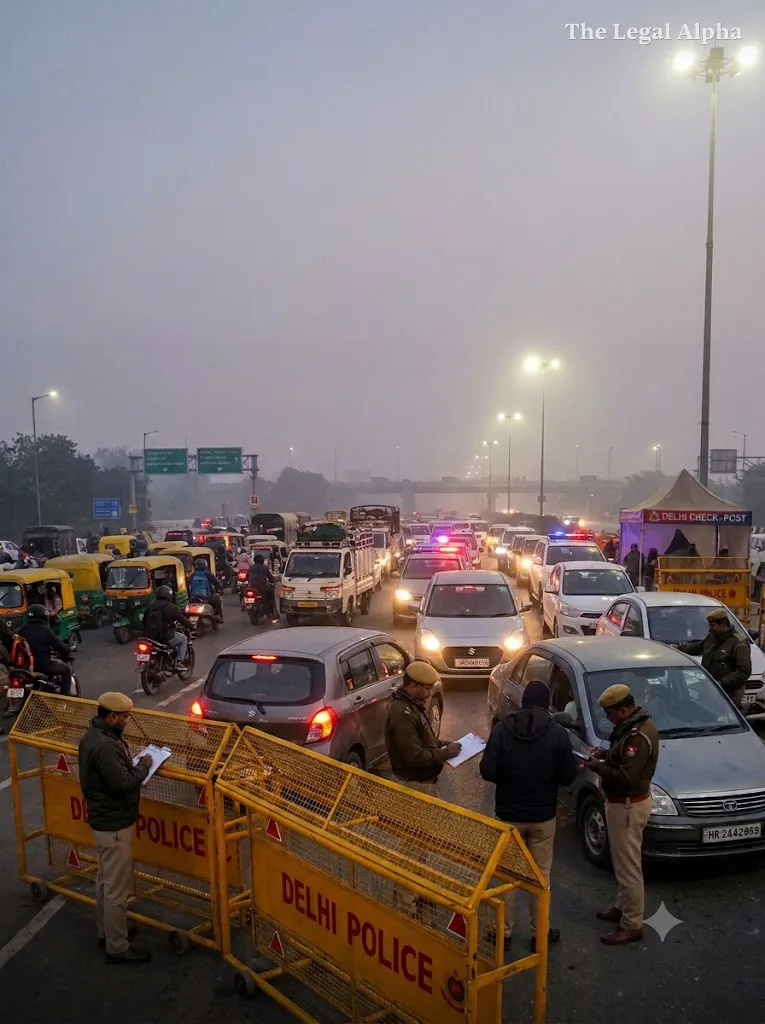
The Delhi High Court declined to grant an urgent interim stay against the Delhi government’s three-month ban on the entry of non-Delhi-registered vehicles that do not meet Bharat Stage VI (BS-VI) emission norms.
A Division Bench comprising Acting Chief Justice Nitin Wasudeo Sambre and Justice Sanjay Sharma issued notice to the authorities on a writ petition challenging the restrictions. While refusing to suspend the policy at this threshold stage, the court tagged the matter with an existing related petition and listed both for a detailed hearing on November 27. The dispute has triggered significant commuter disruption across border check-posts connecting Delhi with Haryana and Uttar Pradesh, where strict enforcement began on November 1.
Legal Topic
Area of Law: Environmental Law / Constitutional Law
Sub-topic: Administrative Action / Right to Equality & Inter-State Mobility
Core Legal Issue
The primary legal controversy centers on whether creating an emission-control classification based strictly on the geographical registration of a vehicle—rather than its intrinsic emission profile—violates Article 14 of the Constitution of India.
Specifically, the court is examining whether exempting Delhi-registered pre-BS-VI vehicles while simultaneously barring identically polluting pre-BS-VI vehicles registered in neighbouring National Capital Region (NCR) states constitutes an arbitrary classification lacking an intelligible differentia and a rational nexus to the objective of curbing winter air pollution.
What Did the Court Decide?
-
Refusal of Interim Relief: The High Court declined to halt or stay the enforcement of the Department of Environment and Forests’ notification dated June 23.
-
Notice Issued: Formal notice was issued to the Delhi government and relevant respondents to file their counter-affidavits.
-
Next Date of Hearing: The petition has been tagged alongside a related pending matter and scheduled for hearing on November 27.
-
Operational Status: The three-month restriction remains fully operative and en route to enforceability through January 31.
Key Legal Points
-
Presumption of Policy Validity: The court observed restraint at the preliminary stage, maintaining the status quo of executive environmental measures aimed at public health emergencies over interim suspension.
-
Scrutiny Under Article 14: The challenge fundamentally questions the constitutionality of geographical exemptions when addressing an indivisible airshed problem.
-
Scientific Basis and Regulatory Alignment: The petitioner raised legal questions over whether individual states can introduce isolated border bans that are not contemplated under the Commission for Air Quality Management (CAQM) Graded Response Action Plan (GRAP) framework.
-
Proportionality and Inter-State Commuting: The restriction directly impacts the freedom of movement under Article 19(1)(d) for thousands of regular NCR commuters, including legal practitioners and essential service providers.
Relevant Law
-
Constitution of India:
-
Article 14 (Equality before the law and protection against arbitrary state action)
-
Article 19(1)(d) (Right to move freely throughout the territory of India)
-
Article 21 (Protection of life and personal liberty, including clean air and environment)
-
-
Motor Vehicles Act, 1988: Provisions governing emission norms, fitness certification, and inter-state movement of motor vehicles.
-
Commission for Air Quality Management in National Capital Region and Adjoining Areas Act, 2021: Statutory provisions governing unified regional air quality policies and the Graded Response Action Plan (GRAP).
-
Notification: Delhi Department of Environment and Forests Notification dated June 23.
Arguments of the Parties
Petitioner
-
The petitioner, a Faridabad-based lawyer represented by advocates Anurag Saxena and Sonica Ghosh, argued that the notification is arbitrary, unscientific, and discriminatory under Article 14.
-
Counsel submitted that a pre-BS-VI vehicle registered in Haryana or Uttar Pradesh emits the exact same pollutants as an identical pre-BS-VI vehicle bearing a Delhi registration number, making the geographical distinction baseless.
-
It was further contended that the revised GRAP issued by the CAQM does not prescribe such piecemeal, unilateral state-level entry bans, and that the measure imposes severe, disproportionate hardship on NCR professionals who commute daily into the capital.
Respondent / State
-
The authorities maintained that the three-month curb from November 1 to January 31 is an indispensable emergency intervention designed to prevent severe air quality degradation during the peak winter inversion window.
-
The State emphasized that executive environmental policy intended to safeguard public health and lower vehicular congestion at high-density borders should not be stayed through interim judicial orders.
Why Does It Matter?
This development highlights the ongoing legal friction between localized municipal bans and cohesive regional governance across the integrated National Capital Region. By declining an interim stay, the High Court has reinforced the high bar required for courts to halt executive environmental safeguards mid-implementation, even when valid constitutional questions on equal treatment are raised.
For businesses, commercial fleets, logistics operators, and cross-border daily commuters across Haryana and Uttar Pradesh, the decision leaves immediate compliance hurdles in place through January 31. More broadly, the eventual ruling on November 27 will likely set an important precedent on whether state governments possess the legal authority to enact registration-based border closures independently of CAQM regional mandates.
Legal Takeaway
The refusal of an interim stay underscores that courts will generally accord wide latitude to emergency executive measures designed to combat seasonal environmental crises. However, the core question of whether differentiating vehicles by state registration rather than emission output passes the test of reasonable classification under Article 14 remains open for judicial determination on November 27.
Sources
Primary Source:
-
High Court of Delhi: Gurmukh Dass Kohli v. Government of NCT of Delhi & Ors. (Bench: Acting Chief Justice Nitin Wasudeo Sambre & Justice Sanjay Sharma, order dated November 2; next hearing November 27).
-
Delhi Department of Environment and Forests Notification dated June 23.
Additional Sources:
-
Commission for Air Quality Management (CAQM) Graded Response Action Plan (GRAP) Guidelines.
-
Proceedings and reports recorded across national legal and transport press digests.