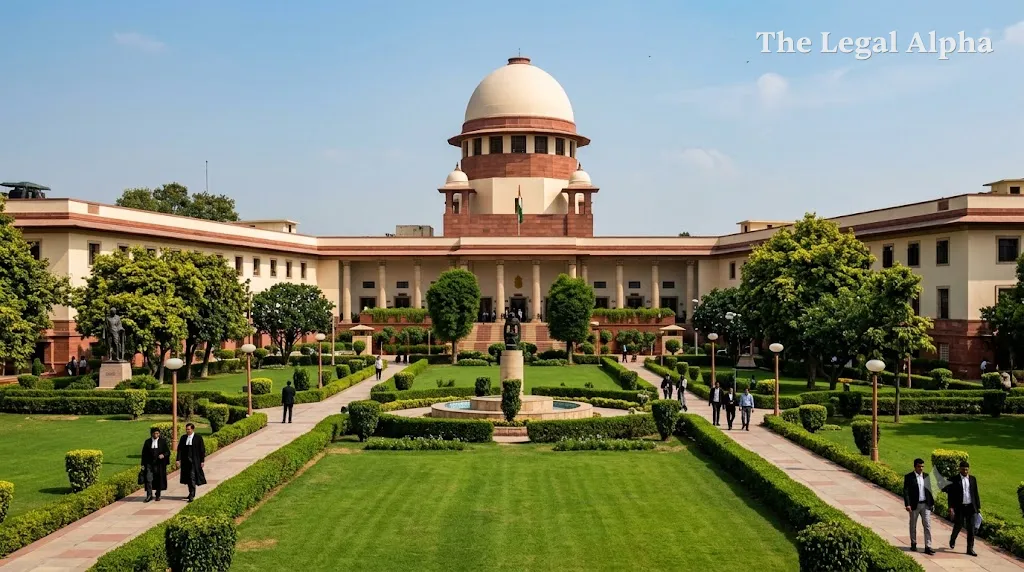
Delhi High Court Directs Advocates to File Formal Plea Over Suspended Police Officer’s Alleged Derogatory Remarks, Declines Suo Motu Action
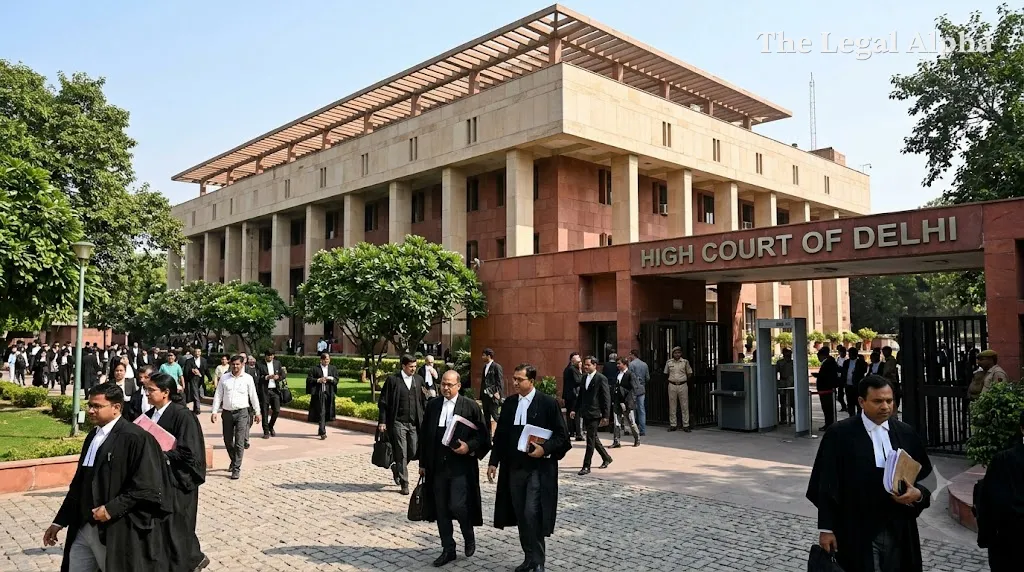
The Delhi High Court declined an oral plea by a group of advocates urging the court to initiate suo motu contempt or judicial proceedings against suspended Assistant Commissioner of Police (ACP) Manasvi Vashishtha. The controversy stems from viral video recordings in which the officer allegedly referred to advocates as "goons in black coats" and issued threatening statements during a police protest outside the Delhi Police Headquarters.
A Division Bench comprising Acting Chief Justice Nitin Wasudeo Sambre and Justice Sanjay Sharma heard the oral mentioning by advocates representing district bar bodies. While refusing to take cognizance on its own motion based solely on oral submissions, the Bench instructed the lawyers to draft and submit a formal writ or contempt petition, assuring them that the registry would list the matter for hearing once properly instituted.
Legal Topic
Area of Law: Constitutional Law & Judicial Administration
Sub-topic: Exercise of Suo Motu Jurisdiction / Contempt of Court / Bar-Bench-Police Relations
Core Legal Issue
The primary legal question is whether the High Court should invoke its discretionary suo motu powers under Article 226 of the Constitution or Section 15 of the Contempt of Courts Act, 1971, to act on oral complaints regarding derogatory remarks against advocates, or whether aggrieved parties must adhere to established procedural remedies by placing verified pleadings and evidentiary material on record.
The court had to balance expeditious judicial oversight against the need for procedural discipline, ensuring that serious allegations involving law enforcement personnel are evaluated on sworn affidavits and authentic records rather than unverified verbal submissions.
What Did the Court Decide?
The High Court refused to initiate suo motu proceedings on the basis of an oral mentioning.
The Bench directed the lawyers to file a formal petition supported by appropriate documentation and serve an advance copy on the Standing Counsel (Criminal) for the Delhi Government. The Acting Chief Justice clarified that the court was neither dismissing the concerns nor ignoring the gravity of the incident; rather, judicial scrutiny requires an established procedural foundation before orders can be passed.
The underlying issues remain entirely open for judicial review once a formal petition is submitted and listed before the court.
Key Legal Points
-
Prudential Limits of Suo Motu Jurisdiction: The High Court reaffirmed that suo motu powers are discretionary and exceptional, typically reserved for situations where affected parties lack the means to approach the court or when systemic failures demand urgent intervention.
-
Requirement of Verifiable Pleadings: When legal professionals themselves seek judicial action against third parties or public officials, the court expects documented petitions with verified electronic or testimonial evidence on record rather than informal oral submissions.
-
Fair Hearing and State Notice: Directing service of an advance copy on the State Standing Counsel ensures adherence to the principles of natural justice and enables administrative authorities to respond on instruction.
-
Separation of Administrative and Judicial Remedies: The decision reflects judicial restraint, allowing administrative and disciplinary processes—including the suspension already ordered by the Union Ministry of Home Affairs—to run alongside any prospective judicial proceedings.
Relevant Law
-
Article 226, Constitution of India: Confers wide discretionary jurisdiction on High Courts to issue directions, orders, or writs for the enforcement of fundamental rights and for any other purpose.
-
Contempt of Courts Act, 1971 (Section 15): Governs the initiation of criminal contempt of court, either suo motu or upon motion by designated law officers or authorized petitioners.
-
Delhi High Court Rules & Practice Directions: Governing the presentation and listing of urgent public interest litigation, criminal writ petitions, and mentioning procedures before the Division Bench.
Arguments of the Parties
Submissions on Behalf of the Advocates: The mentioning advocates submitted that a senior police officer had openly made disparaging and intimidating statements against the legal fraternity, reportedly invoking weapons and labeling practitioners as criminals. They argued that the remarks degraded the status of legal practitioners as officers of the court and undermined public trust in the administration of justice. They urged the Acting Chief Justice, as head of the judicial administration in the capital, to intervene directly through suo motu cognizance to safeguard the dignity of the bar.
Stance of the Court and the State: Standing Counsel for the State received advance notice under the court's instructions. The Bench observed that while the concerns raised by the bar would be examined, institutional propriety demands a properly structured petition detailing the exact material, date, and transcript of the alleged statements so that judicial process can proceed fairly and methodically.
Why Does It Matter?
Tensions between law enforcement officials and members of the bar are recurring points of friction in urban administration. When disputes spill outside courtrooms into public demonstrations and vitriolic exchanges, institutional lines can blur rapidly.
This decision reinforces procedural rigor. Even when court officers—advocates—are the aggrieved group, courts will not dispense with regular procedural safeguards or convert informal oral mentions into sweeping inquiries without pleadings. For practicing lawyers, this serves as a clear reminder that judicial remedies against executive misconduct must be pursued through formal legal filings accompanied by demonstrable proof, maintaining parity between lawyers and ordinary litigants.
Legal Takeaway
The High Court will not substitute suo motu cognizance for standard legal procedures when litigants—including advocates—possess full capacity to file a regular petition. Remedying alleged institutional intimidation requires verified factual records and procedural compliance before the court exercises its supervisory jurisdiction.
Sources
Primary Source:
-
Oral Proceedings and Listing Directions, Division Bench of Acting Chief Justice Nitin Wasudeo Sambre and Justice Sanjay Sharma, High Court of Delhi (November 3, 2026).
Additional Sources:
-
Bar & Bench, "File a petition: Delhi High Court refuses suo motu case against ACP Manasvi Vashishtha for threats to lawyers," November 3, 2026.
-
Asian News International (ANI), "Delhi HC asks lawyers to file petition over ACP Manasvi Vashishtha’s alleged remarks against advocates; declines suo motu cognisance," November 3, 2026.