Cruelty Against Specially-Abled Spouse: Madras High Court Dissolves 2013 Marriage After Wife Admits Lack of Intention to Cohabit

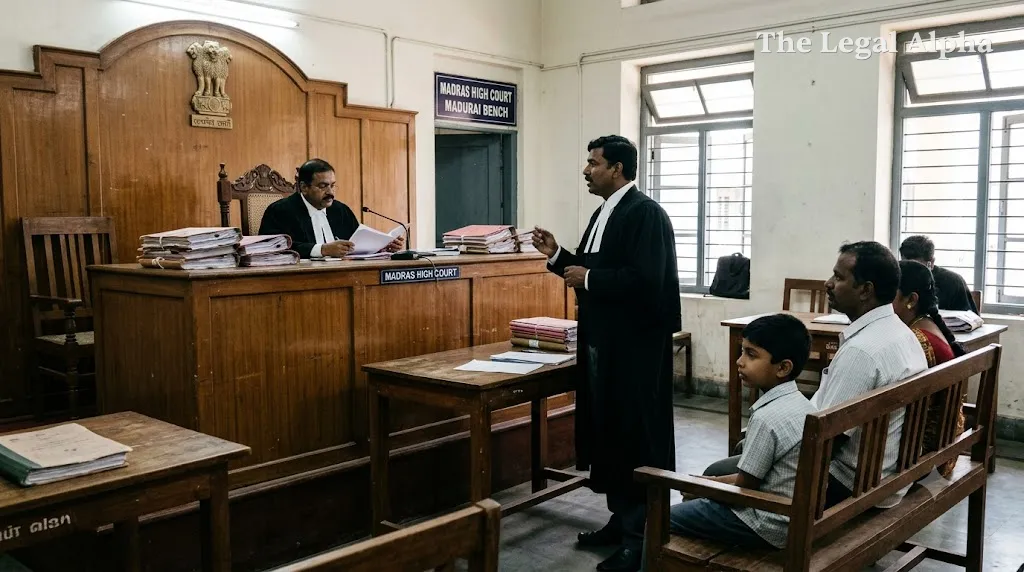
The Madras High Court set aside an order of the Family Court in Karaikal, granting a decree of divorce to a speech- and hearing-impaired man who had been subjected to mental and physical mistreatment by his wife.
The parties solemnised their marriage according to Hindu rites and customs in September 2013. Matrimonial discord led the husband to initiate divorce proceedings in 2017 on the grounds of cruelty, highlighting incidents where his vulnerability as a person with disabilities was exploited, including instances where he was locked inside a bathroom. The Karaikal Family Court dismissed his petition in May 2020, prompting him to appeal to the High Court. A Division Bench comprising Justice M. Dhandapani and Justice A.D. Maria Clete overturned the lower court’s ruling, characterising it as perverse for ignoring evidence and unequivocal admissions.
Legal Topic
Area of Law: Family Law / Matrimonial Law
Sub-topic: Dissolution of Marriage / Cruelty / Evaluation of Matrimonial Conduct Involving Vulnerable Spouses
Core Legal Issue
The primary legal question before the High Court was whether the Family Court committed a serious error by dismissing a petition for dissolution under Section 13(1)(ia) of the Hindu Marriage Act, 1955, despite evidence of ill-treatment against a spouse with disabilities and an explicit admission during cross-examination by the respondent-wife indicating that she harboured no genuine intention of resuming matrimonial cohabitation.
What Did the Court Decide?
The Division Bench allowed the husband’s civil miscellaneous appeal and formally dissolved the marriage.
The High Court held that the trial court's dismissal of the divorce plea was perverse and liable to be set aside. The Bench observed that the appellant’s physical vulnerability as a hearing- and speech-impaired individual compounded the gravity of the mistreatment he experienced. Critically, the judges pointed out that the wife had unambiguously conceded in her cross-examination before the trial court that she had no desire to sustain or resume marital life. The Court ruled that such a direct admission conclusively demonstrated that the marital bond had broken down completely, leaving no reasonable justification to compel the appellant to remain wedded.
Key Legal Points
-
Evidentiary Weight of Party Admissions: Clear admissions made during cross-examination regarding an unwillingness to cohabit cannot be brushed aside as casual remarks; they constitute vital evidence of the death of the marital bond.
-
Perversity in Trial Court Appraisals: An appellate court is justified in setting aside a family court decree when the subordinate court overlooks glaring evidence of cruelty and hostile conduct toward a vulnerable spouse.
-
Cruelty Involving Vulnerable Persons: Mistreatment, confinement, or neglect targeting a partner's physical impairments directly impairs matrimonial safety, establishing cruelty under matrimonial jurisprudence.
Relevant Law
-
Section 13(1)(ia) of the Hindu Marriage Act, 1955: Pertains to dissolution of marriage on the ground that the petitioner has been treated with cruelty by the other spouse.
-
Section 19 of the Family Courts Act, 1984: Appeals against judgments and decrees passed by a Family Court to the High Court.
-
Sections 17 and 58 of the Indian Evidence Act, 1872 / Bharatiya Sakshya Adhiniyam, 2023: Legal provisions governing the binding nature and admissibility of judicial admissions.
Arguments of the Parties
Appellant (Husband) Counsel for the appellant argued that the husband, being speech- and hearing-impaired, was subjected to targeted mental and physical cruelty, including being confined in the bathroom. It was submitted that he had even expressed a willingness to live separately from his mother and sister to save the marriage, but the respondent remained hostile. Counsel laid significant emphasis on the wife’s cross-examination records, where she categorically conceded that she did not wish to live with him, establishing that the union was unsalvageable.
Respondent (Wife) Counsel for the respondent contended that the husband failed to meet the statutory threshold of legal cruelty required to dissolve the union. Regarding her statements during cross-examination, counsel argued that an isolated admission expressing a lack of interest in continuing matrimonial life should not be mechanically construed as a formal ground for divorce or an absolute abandonment of the conjugal relationship.
Why Does It Matter?
This ruling underlines the duty of matrimonial courts to examine cruelty claims through a contextual lens, particularly when one spouse lives with disabilities. Matrimonial abuse often manifests in subtle or asymmetric ways when a partner possesses reduced physical capacity to resist or seek immediate help.
Furthermore, the judgment delivers clear practical guidance on how courts should treat explicit admissions made during cross-examination. Where an estranged spouse goes on record to confirm an absence of desire to cohabit, trial courts cannot adopt an overly paternalistic approach by dismissing divorce pleas and trapping the parties in a non-functioning marriage against the weight of the evidentiary record.
Legal Takeaway
Unambiguous statements made during cross-examination rejecting matrimonial cohabitation provide cogent proof that a marriage cannot be sustained. When coupled with mistreatment directed at a spouse’s physical disability, family courts cannot ignore such admissions, and compelling the vulnerable partner to stay in the union amounts to a perverse exercise of judicial discretion.
Sources
Primary Source:
-
Madras High Court, Division Bench of Justice M. Dhandapani and Justice A.D. Maria Clete, Judgment in Matrimonial Civil Miscellaneous Appeal arising out of Family Court, Karaikal.
Additional Sources:
-
The New Indian Express, Court Reporting on Madras High Court Matrimonial Rulings (October 2026).