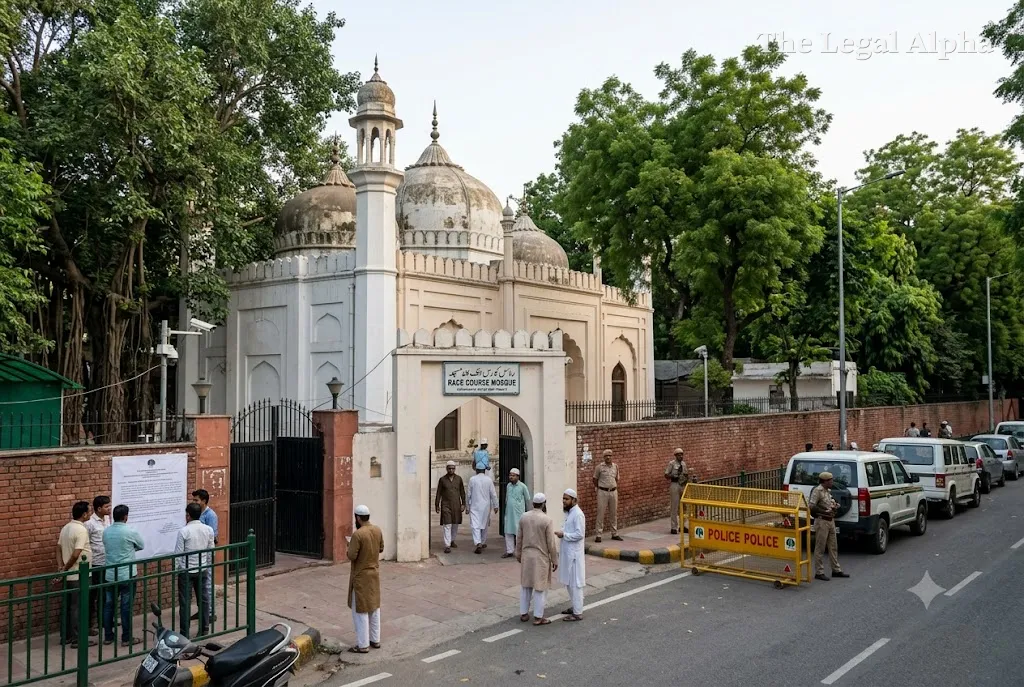
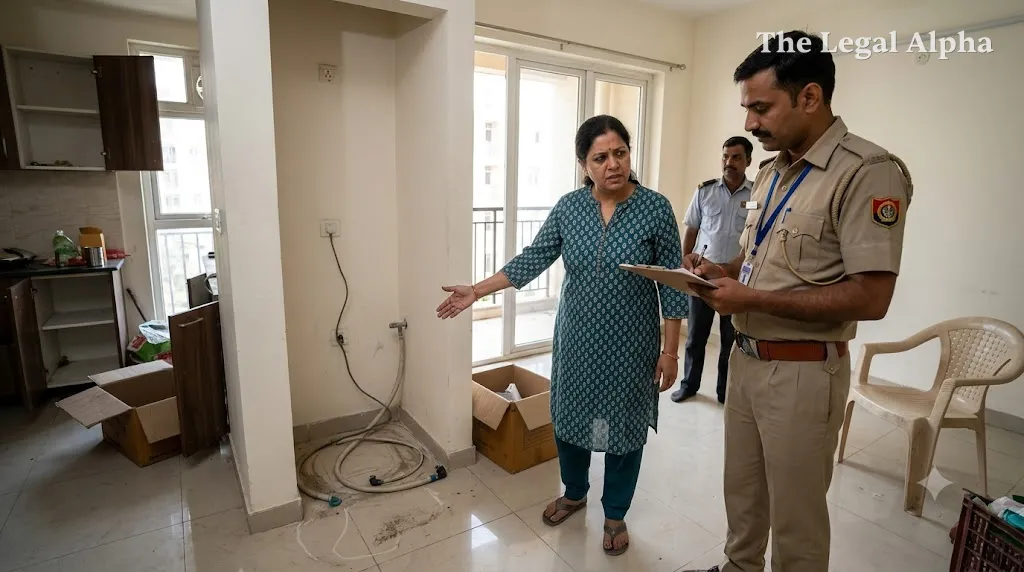
Calcutta High Court Declines Protection to CPI(M) Festive Bookstall Over Lack of Police Permission
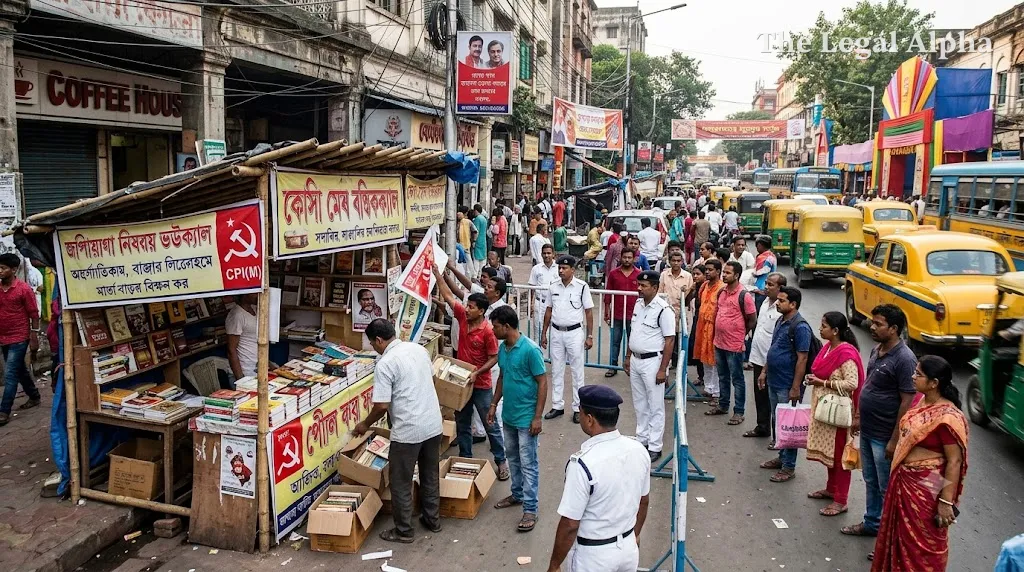
The Calcutta High Court dismissed a writ petition filed by the Communist Party of India (Marxist) seeking judicial protection against the municipal removal of its temporary Durga Puja bookstall near Kolkata's Jadavpur Coffee House.
The political outfit had erected the seasonal stall and deposited a requisite fee with the local civic body. However, the local municipal corporation issued the payment receipt explicitly conditional on obtaining police clearance, which was never granted. Apprehending imminent administrative demolition or seizure, the party approached the High Court seeking an order restraining authorities from dismantling the structure without due process, along with a mandate compelling the corporation to issue a reasoned administrative order. Justice Partha Pratim Roy rejected the plea, ruling that invoking judicial protection over public spaces fundamentally requires showing a valid, subsisting legal permission.
Legal Topic
Area of Law: Administrative and Constitutional Law Sub-topic: Public Space Regulation / Writ Jurisdiction
Core Legal Issue
The controversy centered on whether an applicant can invoke the extraordinary writ jurisdiction of a High Court under Article 226 of the Constitution of India to restrain statutory authorities from removing an encroachment or temporary construction on public land when the applicant lacks prior statutory approval or police clearance.
The court had to evaluate whether the deposit of fees with a municipal body creates an enforceable legal right to occupy public road space when that receipt expressly depends on police permission that was never granted.
What Did the Court Decide?
Justice Partha Pratim Roy dismissed the CPI(M)'s petition in its entirety, refusing to grant interim protection or issue directions to the civic administration.
The bench ruled that:
-
A petitioner seeking equitable relief to maintain an installation in a public area must establish an enforceable legal right backed by valid statutory permission.
-
Because the municipal fee receipt was expressly conditional upon police authorization, the payment alone conferred no right to occupy the site.
-
In the absence of police clearance, the stall amounted to an unauthorized structure, and the court declined to restrict the police or municipal authorities from taking lawful action to clear the space.
Key Legal Points
-
No Enforceable Right Without Requisite Permits: Depositing fees with an urban local body does not create a vested right of occupation if the acceptance is explicitly contingent upon approvals from other regulatory agencies, such as law enforcement.
-
Pre-condition for Equitable Writ Relief: A litigant invoking extraordinary jurisdiction under Article 226 cannot seek protective orders against eviction or removal from public land without proving prior, valid permissions from all required authorities.
-
Application of Division Bench Precedent: Reaffirmed the Division Bench standard in The Superintendent of Police, Bongaon Police District & Anr. v. Communist Party of India (Marxist) & Ors., which held that authorities must verify valid permission before permitting temporary roadside structures and swiftly clear unapproved installations.
-
Encroachment Cannot Rely on Convention: Customary practice or longstanding traditions during public festivals do not bypass statutory municipal regulations and public safety requirements.
Relevant Law
-
Constitution of India – Article 226: Extraordinary writ jurisdiction of the High Court to enforce legal and fundamental rights.
-
Kolkata Municipal Corporation Act, 1980 / West Bengal Police Regulations: Provisions governing permissions, temporary structural licenses, and public street encroachments.
-
Precedent: The Superintendent of Police, Bongaon Police District & Anr. v. Communist Party of India (Marxist) & Ors. (Calcutta High Court, MAT 1868 of 2026), governing administrative authority over unauthorized roadside structures.
Arguments of the Parties
Petitioner (CPI(M))
The petitioner argued that it had taken steps toward compliance by depositing a fee of ₹3,208 with the municipal corporation for setting up the temporary stall. It contended that the authorities could not act summarily or arbitrarily dismantle the installation without following due process. Alternatively, the party urged the court to mandate that civic authorities consider its pending request and issue a formal, reasoned decision if permission remained in question.
Respondent (State and Civic Administration)
The State submitted that paying a provisional fee created no legal entitlement, as the receipt was expressly subject to police clearance. The administration contended that the site was unauthorized because law enforcement had withheld permission on traffic, public safety, and regulatory grounds. Consequently, the State argued that the petitioner could not seek judicial protection for an unpermitted installation in a public thoroughfare.
Why Does It Matter?
This ruling underscores the limits of writ jurisdiction regarding public street regulations during major festivals. While political parties and cultural organizations in West Bengal have a long-standing tradition of setting up temporary kiosks during Durga Puja, the order establishes that customary practices do not override multi-agency administrative clearances.
It offers clear guidance to municipal and police authorities across urban jurisdictions: conditional fee collections do not bind the administration to tolerate obstructions if law enforcement withholds clearance. For political entities and civil society organizers, the judgment makes clear that approaching the courts without full regulatory approvals will not stall municipal enforcement.
Legal Takeaway
Judicial protection under writ jurisdiction cannot be claimed to maintain temporary stalls or structures on public land without full, unconditional permission from both municipal and police authorities. Mere fee payments or conditional receipts do not confer a legal right against eviction when mandatory clearances are absent.
Sources
Primary Source:
-
High Court at Calcutta, Single Bench of Justice Partha Pratim Roy, Order dated October 20, 2026, in the writ petition concerning CPI(M) Durga Puja Bookstall (Jadavpur).
-
High Court at Calcutta, Division Bench Order in The Superintendent of Police, Bongaon Police District & Anr. v. Communist Party of India (Marxist) & Ors. (MAT 1868 of 2026, decided October 16, 2026).
Additional Sources:
-
LiveLaw, "Calcutta High Court Dismisses CPIM's Plea Against Removal Of Durga Puja Bookstall In Jadavpur Over Lack Of Permission" (October 20, 2026).
-
India Today, "No permission, no protection: Calcutta HC rejects CPI(M)'s plea to stop bookstall removal" (October 20, 2026).