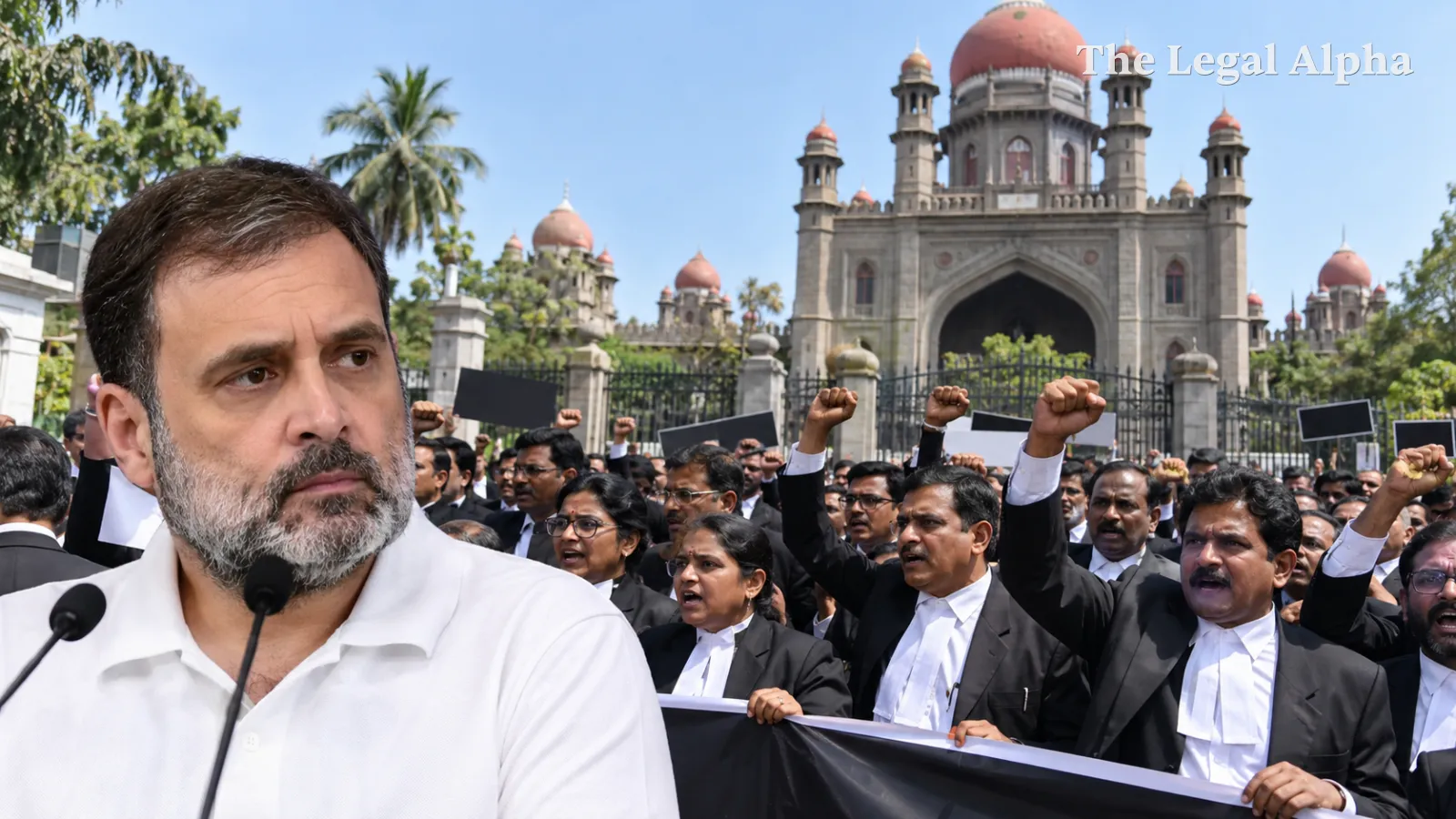
Constitution Under Scrutiny: Legal Fraternity Unites Following Allegations of Delhi Police Excesses Against Advocates
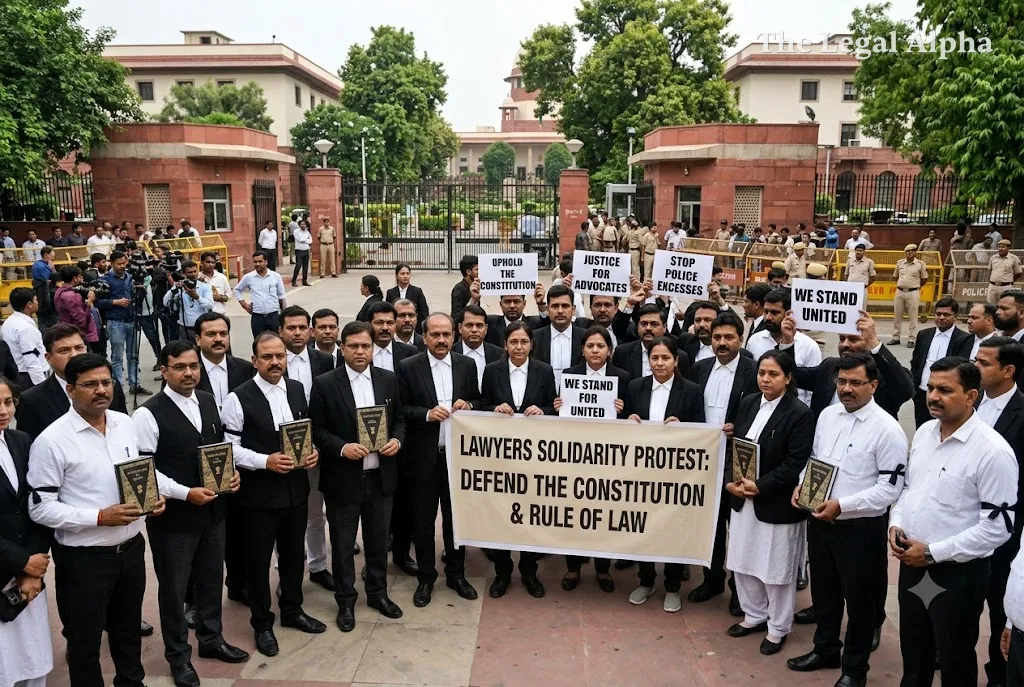
Members of the legal community across the Supreme Court and the Delhi High Court assembled to demonstrate against the alleged physical assault and unlawful detention of practicing advocates by Delhi Police personnel. The confrontation arose during demonstrations held in the national capital over the weekend of October 10–11, 2026, where several lawyers who were present during public protests were reportedly restrained, forcibly removed, and detained.
In response, advocates organized symbolic protests inside court complexes—donning black ribbons and holding public readings of the Preamble to the Constitution of India—to emphasize civil liberties and the protection of legal practitioners. Concurrently, legal bodies including the Supreme Court Advocates-on-Record Association (SCAORA) and the Lawyers Association for Constitution have brought formal petitions before the apex court seeking judicial intervention and accountability.
Legal Topic
Area of Law: Constitutional Law & Criminal Procedure
Sub-topic: Police Powers, Personal Liberty, and the Right to Peaceful Assembly
Core Legal Issue
The controversy turns on the boundaries of state police power when enforcing public order curbs against peaceful assemblies, and whether law enforcement violated fundamental protections by detaining practicing advocates without due process.
At its center is the tension between law enforcement's authority to maintain peace under local police regulations and the constitutionally protected rights of legal practitioners and citizens to gather peaceably without arms, move freely, and provide legal aid to demonstrators without state harassment.
What Did the Court / Authority Decide?
Following urgent interventions sought by bar representatives:
-
Judicial Intervention: In an extraordinary sitting, the Supreme Court directed Delhi authorities to ensure that advocates, media personnel, and professional individuals are not hindered from performing their lawful duties or accessing legal venues.
-
Release of Detainees: Detained advocates were released after bar leadership engaged with senior judicial authorities.
-
Pending Writs: Substantive petitions filed by bar associations seeking a court-monitored, time-bound investigation into alleged police excesses, the preservation of CCTV and audio-visual recordings, and disciplinary action against errant officers remain pending before the Supreme Court.
Key Legal Points
-
Protection of Legal Functionaries: Advocates perform an indispensable role in safeguarding due process; subjecting lawyers to summary detention while monitoring protests impairs an individual's right to legal representation.
-
Proportionality in Crowd Control: Police power to disperse gatherings must adhere strictly to statutory procedures, ensuring minimum force is applied rather than punitive or disproportionate measures.
-
Preservation of Electronic Evidence: Bar associations have specifically moved for the judicial preservation of digital materials, including police body-cam and street CCTV footage, to enable objective fact-finding.
-
Accountability for Arbitrary Detention: The matter brings scrutiny to procedural non-compliance under preventive arrest provisions and the guidelines governing arrest and detention laid down in landmark jurisprudence.
Relevant Law
-
Constitution of India:
-
Article 19(1)(a) & 19(1)(b) (Freedom of speech, expression, and peaceful assembly)
-
Article 21 (Protection of life and personal liberty)
-
Article 22 (Protection against arbitrary arrest and detention)
-
Article 32 (Right to constitutional remedies before the Supreme Court)
-
-
Bharatiya Nagarik Suraksha Sanhita, 2023 / Code of Criminal Procedure, 1973: Statutory safeguards governing preventive detentions, dispersal of assemblies, and procedures regulating arrest.
-
Judicial Precedents:
-
D.K. Basu v. State of West Bengal (laying down binding guidelines to prevent custodial violence and unauthorized detention).
-
Anita Thakur v. Govt. of J&K (mandating that police force against peaceful protestors must remain strictly proportionate and necessary).
-
Arguments of the Parties
Petitioners / Legal Associations
Counsel representing the advocate associations contended that police personnel acted with excessive and unlawful force, arbitrarily detaining lawyers and tearing copies of constitutional texts. They submitted that lawyers acting either as peaceful citizens or as legal observers have a constitutional mandate to ensure due process, and targeting them constitutes an assault on the rule of law and personal liberty.
State / Police Authorities
While formal counter-affidavits are being submitted in the pending writ petitions, state authorities maintain that police personnel were deployed to enforce public order restrictions and maintain perimeter security amidst volatile demonstrations. Law enforcement contended that regulatory measures were enacted without bias to prevent disruptions to essential services and protect government infrastructure.
Why Does It Matter?
When officers of the court face arbitrary detention while attempting to monitor rights or assemble peacefully, it signals a systemic friction point between law enforcement and the administration of justice. This matter transcends an intra-fraternity grievance; it directly tests the enforceability of constitutional restraints on police discretion in public spaces.
Should the Supreme Court order an independent inquiry and mandate stricter protocols regarding how law enforcement engages with legal observers and peaceful assemblies, it could set a critical procedural precedent for policing protests across India.
Legal Takeaway
The right to peaceful protest and personal liberty under Articles 19 and 21 cannot be superseded by arbitrary police discretion without statutory authority and proportionate cause. The legal fraternity's unified stance underscores that accountability mechanisms—from preserving electronic evidence to enforcing arrest guidelines—remain essential shields against state overreach.
Sources
Primary Source:
-
Resolutions and Writ Petitions filed by the Supreme Court Advocates-on-Record Association (SCAORA) and the Lawyers Association for Constitution under Article 32 before the Supreme Court of India.
Additional Sources:
-
Bar Council & Bar Association Resolutions (Supreme Court Bar Association & Delhi High Court Bar Association, October 10–13, 2026).
-
Verified legal reporting on the demonstration proceedings and special bench directions.