Cheque Bounce Row: Supreme Court Refers Rajpal Yadav’s Dispute to Mediation, Clears Way for Foreign Travel
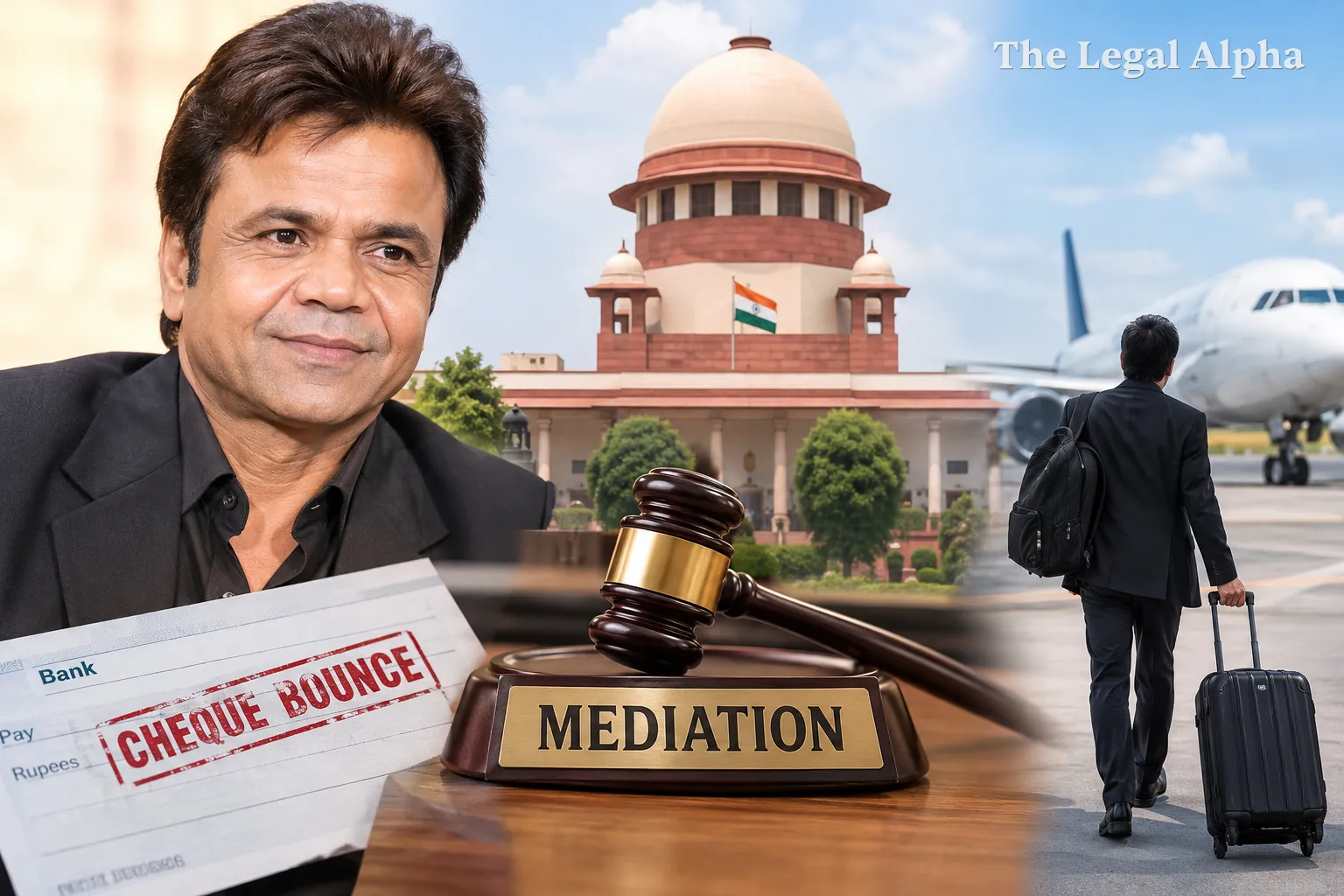
The Supreme Court of India referred a long-standing cheque dishonour dispute involving Bollywood actor Rajpal Yadav and his creditor to court-mandated mediation. Yadav had approached the top court challenging his conviction and a three-month sentence across seven cheque dishonour cases.
Taking note of a 2 crore rupees deposit made by Yadav to demonstrate bona fide intent, a bench led by Chief Justice Surya Kant and Justice Joymalya Bagchi directed the trial court to release his impounded passport, allowing him to travel to Canada for scheduled film commitments so he can generate professional income.
Legal Topic
Area of Law: Criminal Law / Commercial Negotiable Instruments
Sub-topic: Cheque Dishonour, Compounding of Offences, and Mediation under the Negotiable Instruments Act
Core Legal Issue
The core legal question centers on whether quasi-criminal proceedings stemming from cheque bounce convictions can be channelled into alternative dispute resolution (ADR) post-conviction, balancing the creditor’s interest in recovering commercial debt with the debtor’s liberty and capacity to earn.
Specifically, the court examined whether conditional release of a convict's travel documents is appropriate during appellate review when the applicant deposits substantial security to demonstrate good faith and preserve their livelihood.
What Did the Court Decide?
The Supreme Court passed the following key directions:
-
Reference to Mediation: The bench appointed a sole mediator to facilitate an amicable settlement between Yadav and the complainant, M/s Murli Projects Pvt Ltd. Parties are permitted to participate in the proceedings either virtually or in person.
-
Conditional Passport Release: The apex court directed the trial court to release Yadav’s passport under strict terms, requiring him to report back to the trial court immediately upon returning from Canada.
-
Acknowledgment of Security: The court noted that 2 crore rupees deposited by Yadav into the Supreme Court Registry stands secured, creating an equitable cushion to aid genuine negotiations.
-
Current Status: While travel relief was granted, the substantive appeals against conviction remain pending and will depend directly on the outcome of the mediation process.
Key Legal Points
-
Restorative Focus in Commercial Defaults: Section 138 proceedings are predominantly civil wrongs clothed in criminal clothing, where the overarching judicial objective is financial restitution rather than purely retributive punishment.
-
Liberty to Preserve Earning Capacity: Courts may relax bail or travel constraints if curtailing mobility prevents a judgment debtor from generating the revenue needed to satisfy the underlying liability.
-
Post-Conviction Compounding: Even after concurrent findings of guilt, appellate courts retain broad equitable discretion to refer cheque dishonour disputes to mediation if there is a realistic prospect of full settlement.
Relevant Law
-
Section 138 of the Negotiable Instruments Act, 1881: Governs criminal liability and penalties for dishonour of cheques for insufficiency of funds.
-
Section 147 of the Negotiable Instruments Act, 1881: Provides that every offence punishable under the Act is compoundable, enabling settlement at trial, appellate, or revisional stages.
-
Section 89 of the Code of Civil Procedure, 1908 / Mediation Act: Guides judicial referral of commercial and monetary conflicts to structured mediation.
Arguments of the Parties
Petitioner (Rajpal Yadav)
Counsel for the actor submitted that Yadav had complied in full with earlier deposit conditions by depositing 2 crore rupees into the court registry, partly arranged by liquidating ancestral assets. The defense argued that Yadav had contracted acting commitments in Canada and needed his passport released to earn funds necessary to resolve his remaining debts. Yadav also sought a merit-based hearing on his challenge against the conviction and sentencing.
Respondent (Complainant / Murli Projects)
The complainant firm maintained that the financial dispute originated from an unpaid loan agreement dating back to 2010, where seven repayment cheques bounced back in 2013. The creditor pressed for complete discharge of the adjudicated dues, pointing to previous delays in satisfaction and concurrent findings of guilt upheld by the trial court, sessions court, and High Court.
Why Does It Matter?
This development highlights the pragmatic approach higher courts take in Section 138 litigation. By allowing a convicted party to travel abroad specifically to earn money, the Supreme Court recognized that rigid confinement often destroys a debtor’s financial capacity to settle claims, ultimately working against the creditor’s recovery prospects.
Furthermore, the decision underscores the active use of Section 147 of the Negotiable Instruments Act to divert protracted, multi-tier litigation toward mediation. For commercial litigators and individuals facing financial prosecution, it confirms that demonstrating bona fide intent through interim deposits can open pathways to procedural relief and out-of-court dispute resolution.
Legal Takeaway
Conviction under Section 138 of the Negotiable Instruments Act does not permanently bar alternative dispute resolution. If a party demonstrates good faith through financial deposits, appellate courts are willing to permit cross-border movement for livelihood while encouraging a mediated settlement in place of incarceration.
Sources
Primary Source:
-
Supreme Court of India, Record of Proceedings / Order dated October 15, 2026, in Rajpal Naurang Yadav & Anr. v. M/s Murli Projects Pvt. Ltd. & Anr., SLP (Crl.) Nos. 16923–16974/2026 (Coram: CJI Surya Kant and Justice Joymalya Bagchi).
Additional Sources:
-
High Court / Trial Court Record of Conviction under Section 138, Negotiable Instruments Act, 1881.
-
Reference reportage and verified court filings regarding the October 15, 2026 Supreme Court proceedings.