Allahabad High Court Mandates Unbroken 24x7 CCTV Coverage in Police Stations, Rules Missing Footage Creates Presumption of Unlawful Detention
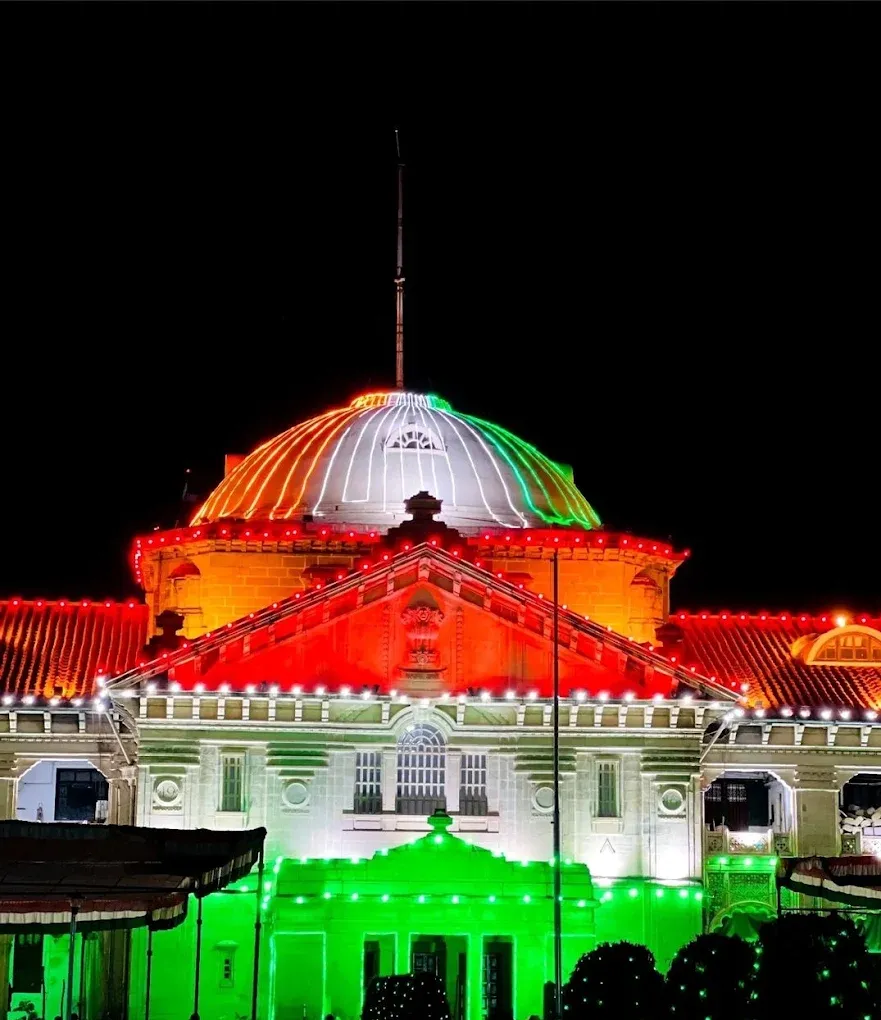
The Allahabad High Court took a firm stance against custodial opacity after discovering that a Uttar Pradesh police station had detained four citizens without working surveillance cameras or contemporaneous paperwork.
The matter came before a Division Bench comprising Justice Atul Sreedharan and Justice Divesh Chandra Samant upon a petition alleging that four individuals were unlawfully confined by police personnel at Gauri Bazar in Deoria district. When the court called for the records, the Superintendent of Police admitted that video footage from the relevant date could not be retrieved. The Station House Officer had neither logged the mechanical outage, informed senior leadership, nor taken measures to restore power supply.
Treating the lapse as an instance of administrative high-handedness rather than a minor administrative oversight, the High Court held the officer liable, ordered monetary restitution for the victims, and laid down strict operating protocols for surveillance across all police stations in the state.
Legal Topic
-
Area of Law: Constitutional Law / Criminal Procedure
-
Sub-topic: Police Accountability, Custodial Rights, and Evidentiary Presumptions
Core Legal Issue
The central legal question before the High Court was whether law enforcement agencies can escape scrutiny for alleged illegal detention when station surveillance equipment is inoperative, and whether the absence of both electronic footage and custody records triggers a legal presumption of unlawful confinement against the police.
What Did the Court Decide?
The High Court laid down clear compliance guidelines and imposed specific punitive measures:
-
Mandatory Continuous Surveillance: Surveillance cameras installed across police stations must run twenty-four hours a day, every day of the year. Any downtime must be kept to an absolute minimum, addressed immediately, and reported up the chain of command if technical faults persist.
-
Compulsory Paper Backup: If surveillance hardware fails, officers must revert to manual documentation. The precise time and date of a suspect’s entry for questioning must be recorded in the General Diary (GD), followed by an equally explicit departure entry.
-
Receipts of Voluntary Release: Under the doctrine of abundant caution (abundans cautela), officers must obtain an endorsement or signed acknowledgement from the individual or their immediate family verifying that they were permitted to leave freely, noting the exact hour of release.
-
Adverse Inference of Detention: When neither electronic records nor manual departure entries exist, the court will invoke statutory presumptions against the police and treat the complainant’s claim of unlawful detention as true.
-
Financial Compensation and Personal Liability: The Court directed the State of Uttar Pradesh to pay ₹20,000 each to three petitioners who endured unrecorded detention, and ₹5,000 to a fourth petitioner detained for two days. Crucially, the bench ordered the State to recover these funds directly from the salary of the responsible officers following an internal inquiry, alongside an adverse endorsement in the SHO’s service record.
Key Legal Points
-
Surveillance as a Dual Safeguard: CCTV systems serve both to shield law enforcement against malicious accusations of misconduct and to prevent officers from employing extrajudicial measures that undermine constitutional liberties.
-
Statutory Evidentiary Presumption: Under Section 119 (Illustration [g]) of the Bharatiya Sakshya Adhiniyam, 2023 (BSA), withholding vital evidence that an authority is reasonably expected to produce entitles the court to presume that such evidence, if brought forward, would be adverse to that authority.
-
Individual Financial Accountability: Public servants found guilty of executive overreach cannot shelter behind sovereign immunity when fundamental rights are infringed; compensation may be recovered directly from their pay.
-
Standard of Procedural Documentation: Arrest memos must be prepared without delay for formal arrests, while individuals brought in solely for questioning require verifiable release receipts to rule out covert confinement.
Relevant Law
-
Constitution of India: Article 21 (Protection of life and personal liberty) and Article 22 (Protection against arbitrary arrest and detention).
-
Bharatiya Sakshya Adhiniyam, 2023 (BSA): Section 119, Illustration (g) (Drawing adverse inference when available material evidence is withheld by a party; corresponding to Section 114(g) of the erstwhile Indian Evidence Act, 1872).
-
Supreme Court Directives: The compliance framework broadens the mandate established by the Supreme Court of India in Paramvir Singh Saini v. Baljit Singh (2020), which directed comprehensive CCTV coverage with audio recording across all police stations and investigative agencies.
Arguments of the Parties
Petitioner
Advocates Archit Kumar Srivastava and Preete Chaudhary, representing the petitioners, submitted that the four individuals had been picked up without legal justification and subjected to unlawful custody by the local station personnel at Gauri Bazar. They argued that their detention had neither been formally logged nor justified under statutory arrest requirements, violating their fundamental personal liberty.
Respondent / State
The State submitted a report prepared by the Superintendent of Police confirming that surveillance video for the period in question was unavailable. The implicated Station House Officer, Dr. Mahendra Kumar, tendered an apology to the court, categorizing the missing footage and absence of written escalations as an inadvertent procedural oversight rather than a deliberate wrongdoing.
Why It Matters
This ruling provides teeth to judicial directives on custodial transparency. While higher courts have repeatedly mandated camera installations inside police stations, stations frequently cite technical failures or power cuts whenever allegations of custodial torture or unrecorded confinement arise.
By applying Section 119 Illustration (g) of the Bharatiya Sakshya Adhiniyam, the Allahabad High Court has shifted the legal burden: malfunctioning cameras no longer provide police officers with plausible deniability. Instead, technical lapses combined with shoddy diary maintenance will lead courts to presume the citizen's account of unlawful detention is accurate.
Moreover, directing the State to deduct compensation directly from the officer's salary creates direct personal accountability, sending a deterrent signal against arbitrary detention.
Legal Takeaway
Law enforcement agencies cannot rely on missing or broken CCTV footage to brush aside claims of custodial detention. In the absence of contemporaneous station diary entries and release endorsements, the court will legally presume that unrecorded detentions were unlawful and enforce personal financial liability against the offending officers.
Sources
Primary Source:
-
Mahendra Gaur and 3 Others v. State of UP and 2 Others, Division Bench of the High Court of Judicature at Allahabad (Coram: Justice Atul Sreedharan and Justice Divesh Chandra Samant).
Additional Sources:
-
Directives of the Supreme Court of India in Paramvir Singh Saini v. Baljit Singh & Others (2020) on audio-video surveillance systems in police stations.
-
Statutory provisions of the Bharatiya Sakshya Adhiniyam, 2023.