Uttarakhand High Court Bars State From Recovering Rs 23.08 Lakh in Excess Salary From Retired Police Constable
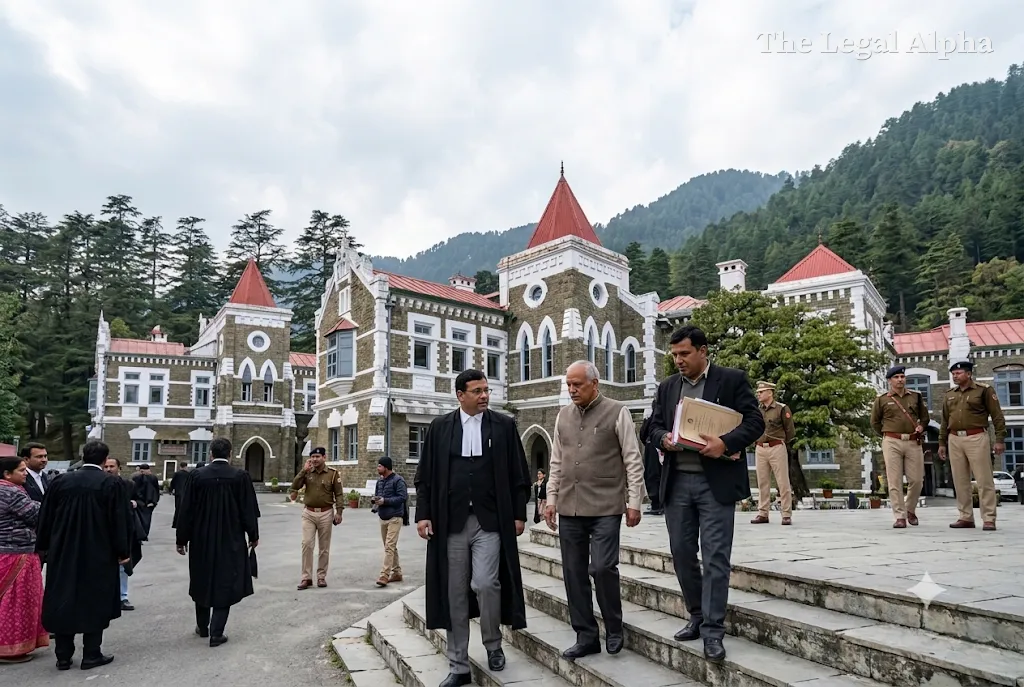
The Uttarakhand High Court has prevented the state government from clawing back Rs 23,08,264 in alleged excess salary payments from a retired police constable, Gokulanand Pathak. Pathak retired from the Uttarakhand Police on December 31, 2022. Following his retirement, state authorities withheld his pension and other terminal benefits, issuing an order on June 1, 2023, that demanded he either deposit the excess amount or authorize its deduction from his gratuity.
Pathak challenged the recovery before the Uttarakhand Public Services Tribunal, which ruled in his favor on December 20, 2024, quashing the demand and ordering the release of his dues. The State of Uttarakhand then filed a writ petition challenging the tribunal's decision. On November 17, 2026, a Division Bench of Acting Chief Justice Manoj Kumar Tiwari and Justice Subhash Upadhyay dismissed the state's challenge, protecting the retired officer's terminal benefits while allowing authorities to correct his future pension calculations.
Legal Topic
Area of Law: Service and Administrative Law
Sub-topic: Post-Retirement Recovery of Excess Pay / Pensionary Benefits
Core Legal Issue
The central question before the High Court was whether a state employer can withhold retirement benefits and recover alleged salary overpayments made over several years from a retired Group-C employee when the overpayment resulted from the department's own administrative error rather than any fraud, misrepresentation, or refund undertaking on the part of the employee.
What Did the Court Decide?
The Division Bench disposed of the state government's writ petition and refused to interfere with the Uttarakhand Public Services Tribunal's order setting aside the Rs 23.08 lakh recovery demand.
Key outcomes and directions from the judgment include:
-
Recovery Blocked: The state cannot deduct or recover the Rs 23,08,264 paid during Pathak's active service from his gratuity or other retirement dues.
-
Prospective Refixation Allowed: Because Pathak's counsel raised no objection to correcting the calculation moving forward, the court permitted the competent authority to prospectively refix his pay and pension in accordance with applicable rules.
-
Timeline for Release: The authorities were directed to release all withheld retirement benefits to Pathak within ten weeks of receiving a certified copy of the High Court's order.
Key Legal Points
-
Absence of Fraud or Misrepresentation: An employer cannot recover excess salary from a retired employee unless it specifically pleads and proves that the employee obtained the higher pay through fraud, misrepresentation, or active manipulation.
-
Role of Refund Undertakings: Post-retirement recovery is generally barred unless the employee had previously executed an explicit undertaking agreeing to refund excess amounts if an error was later detected.
-
Employer's Administrative Error: Mere silence by a subordinate employee who receives salary calculated by the department does not equate to culpability or shift the financial burden of an administrative pay-fixation mistake onto the retiree.
-
Distinction Between Past Recovery and Future Correction: While retrospective clawbacks from terminal dues are impermissible in such cases, departments retain the administrative right to prospectively correct erroneous pay scales so that future pension payouts align with actual entitlement.
Relevant Law
-
State of Punjab v. Rafiq Masih (White Washer), (2015) 4 SCC 334: The landmark Supreme Court precedent establishing categories where recovery of excess payments by employers is impermissible in law, specifically protecting Class-III and Class-IV employees, retired employees, and cases where overpayments occurred without employee fraud or misrepresentation.
Arguments of the Parties
Petitioner (State of Uttarakhand)
Represented by Additional Advocate General Ganesh Datt Kandpal, the state contended that Pathak had been subjected to 19 disciplinary punishments between 1997 and 2003, which affected his pay entitlement. The state argued that the constable was fully aware he was drawing a higher salary than he was legally entitled to, yet he failed to alert departmental authorities, making the recovery from his gratuity justified.
Respondent (Gokulanand Pathak)
Pathak maintained that he had neither misrepresented any facts nor played any role in fixing or releasing the excess salary during his tenure. Before the High Court, his counsel clarified that while he opposed the retrospective recovery of Rs 23.08 lakh from his retirement funds, he had no objection to the department prospectively refixing his pay and pension correctly.
Why Does It Matter?
Pay-fixation errors uncovered during post-retirement audits are a recurring source of litigation across Indian government departments and public sector undertakings. Often, administrative branches fail to adjust pay scales following minor penalties or increments, only to issue massive recovery notices decades later when an employee's pension papers are processed.
This ruling reinforces the settled balance in Indian service jurisprudence: financial hardship to retired lower- and middle-tier employees outweighs the state's interest in recovering money lost through its own accounting oversights. At the same time, by permitting prospective refixation, the court ensures the public exchequer is not bound to continue paying an inflated pension indefinitely. For government departments, the decision underscores the need to conduct timely pay audits during active service and obtain formal undertakings when provisional pay fixations are granted.
Legal Takeaway
Government employers cannot withhold a retired employee's gratuity or pension to recover years of overpaid salary caused by the department's own accounting mistakes. Unless the state proves the employee committed fraud, actively engineered the overpayment, or signed a prior refund undertaking, its remedy is limited to correcting the pension amount prospectively—not clawing back past wages.
Sources
Primary Source:
-
Judgment of the High Court of Uttarakhand in State of Uttarakhand v. Gokulanand Pathak, Writ Petition (S/B) No. 713 of 2026 (Decided November 17, 2026)
-
Order of the Uttarakhand Public Services Tribunal in Claim Petition No. 94/NB/DB/2023 (Decided December 20, 2024)
Additional Sources:
-
Supreme Court of India judgment in State of Punjab v. Rafiq Masih (White Washer), (2015) 4 SCC 334