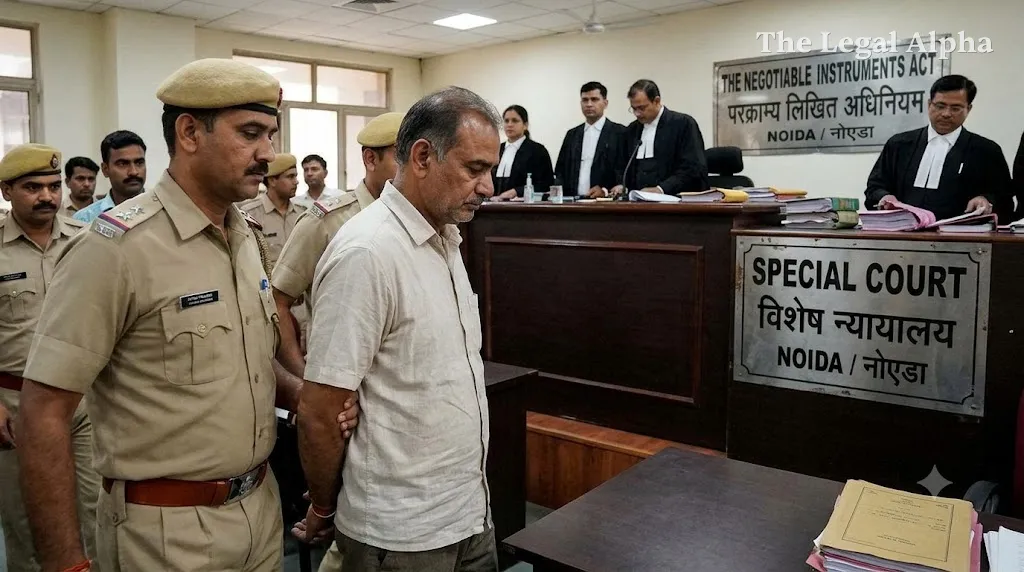
Unexecuted Lease and Unpaid Dues Lapsed Land Allotment to Sonam Wangchuk’s Institute, Ladakh Administration Tells High Court
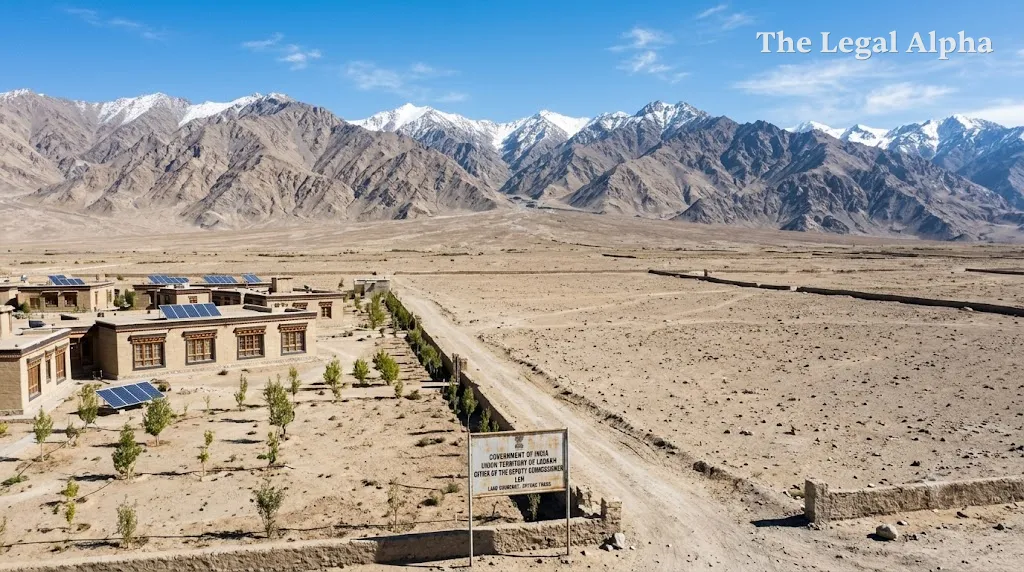
The Union Territory Administration of Ladakh has filed a response before the High Court of Jammu & Kashmir and Ladakh justifying its cancellation of a major land allotment made to the Himalayan Institute of Alternatives, Ladakh (HIAL), founded by climate activist Sonam Wangchuk.
The administration told the High Court that the grant of over 1,076 kanals of land at Phyang Thang had automatically lapsed because the institute failed to execute the requisite lease deed and did not deposit outstanding government dues. The dispute reached the court after HIAL challenged the cancellation order issued by local revenue authorities, alleging executive arbitrariness and political retribution amid ongoing civic and environmental protests in the region.
Legal Topic
Area of Law: Administrative Law / Land and Property Law
Sub-topic: State Lease Agreements / Revocation of Land Allotments
Core Legal Issue
The fundamental legal question before the High Court is whether an administrative grant of government land creates an enforceable possessory or leasehold right in favour of an allottee prior to the formal execution and registration of a statutory lease deed.
Additionally, the court is examining whether an administrative authority is legally justified in treating a land allotment as forfeited or automatically lapsed when the grantee defaults on pre-conditions, such as paying prescribed dues and concluding the formal conveyance, or whether administrative fairness requires a renewed opportunity to cure procedural defaults before cancellation.
What Did the Court / Authority Decide?
The underlying litigation remains pending final adjudication, but the High Court previously granted interim protection to preserve the status of the land.
Justice Sanjay Dhar, while issuing notice on HIAL’s writ petition, restrained the Ladakh administration from creating any third-party rights, titles, or interests in the subject property (comprising 1,076 Kanals and 1 Marla at Phyang Thang). In response, the Ladakh administration through the Deputy Commissioner submitted its formal counter-affidavit defending the validity of the cancellation order. The court has kept the interim restraint in place pending further hearings.
Key Legal Points
-
Doctrine of Inchoate Rights: The administration contends that a conditional land sanction or in-principle approval does not confer vested legal title or indefeasible leasehold rights until the contract is executed in the form mandated by public law.
-
Breach of Mandatory Conditions: Failure to deposit assessed government dues and failure to formalise the statutory lease agreement within the stipulated period operate as grounds for the automatic lapse of the allotment.
-
Scope of Writ Review in Contractual Matters: Constitutional courts exercising jurisdiction under Article 226 of the Constitution typically evaluate whether state revocation of allotment orders is marred by malice in law, procedural unfairness, or arbitrariness.
-
Interim Injunction against Third-Party Creation: To prevent alienation of public land during ongoing litigation, the High Court applied standard equitable principles to maintain status quo on title disposition.
Relevant Law
-
Article 226 of the Constitution of India: Confers extraordinary writ jurisdiction on the High Court to examine arbitrary state actions and enforce fundamental and statutory rights.
-
Transfer of Property Act, 1882 (Sections 105 and 107): Governs leases of immovable property, establishing that leases for extended terms or reserving yearly rent must be executed through registered instruments.
-
Jammu and Kashmir Land Revenue Act / Local Land Grant Rules: Govern the disposal, lease, conditions, and resumption of government land within the Union Territory.
Arguments of the Parties
The Petitioner (HIAL / Sonam Wangchuk's Representatives)
The petitioner contended that the cancellation of the land allotment was arbitrary, disproportionate, and retaliatory, stemming from civic and democratic activism led by Wangchuk. It was submitted that the institute had undertaken developmental activities and aimed to establish an alternative university of regional and ecological significance. The institute argued that procedural delays in lease formalisation or fee assessments did not warrant the cancellation of a previously approved allotment without proper accommodation.
The Respondent (Ladakh UT Administration)
The administration maintained that the revocation of the allotment was grounded strictly in administrative and legal non-compliance. In its counter-affidavit, the administration submitted that the allotment automatically lapsed because the institute never executed the required formal lease deed and repeatedly defaulted on depositing mandatory financial dues. The UT authorities further submitted that the applicant showed clear disregard for standard legal processes and statutory conditions governing public land administration.
Why Does It Matter?
This dispute underscores the critical boundary between administrative governance of public property and allegations of political victimisation against prominent civil society figures. Legally, it serves as an important test case on whether institutional grantees can rely on administrative estoppel or legitimate expectation when substantive formalities—such as formal lease execution and timely payment—remain unfulfilled. For non-governmental organizations, academic institutions, and statutory bodies, the ruling will provide guidance on the extent to which public authorities must strictly enforce pre-conditions of land grants or afford administrative leeway before initiating forfeiture.
Legal Takeaway
An allotment order from the government remains conditional and vulnerable to forfeiture unless converted into an executed, binding lease deed in accordance with law. Grantees cannot safely rely on in-principle administrative sanctions if they fail to clear assessed statutory dues and execute the prescribed contractual instruments.
Sources
Primary Source:
-
Pleadings and Counter-Affidavit filed by the Union Territory Administration of Ladakh, through the Deputy Commissioner, Leh, in Himalayan Institute of Alternatives, Ladakh (HIAL) v. Union Territory of Ladakh & Ors. [WP(C) No. 2906/2026], High Court of Jammu & Kashmir and Ladakh.
-
Interim Order dated September 14, 2026, passed by Justice Sanjay Dhar, High Court of Jammu & Kashmir and Ladakh.
Additional Sources:
-
High Court Proceedings and Case Reporting, Daily Excelsior (October 2026).
-
Legal & Policy Reports, The Indian Express and Press Trust of India (October 2026).