Telangana Bar Federation Opposes Evening Courts, Urges High Court to Reconsider Proposal
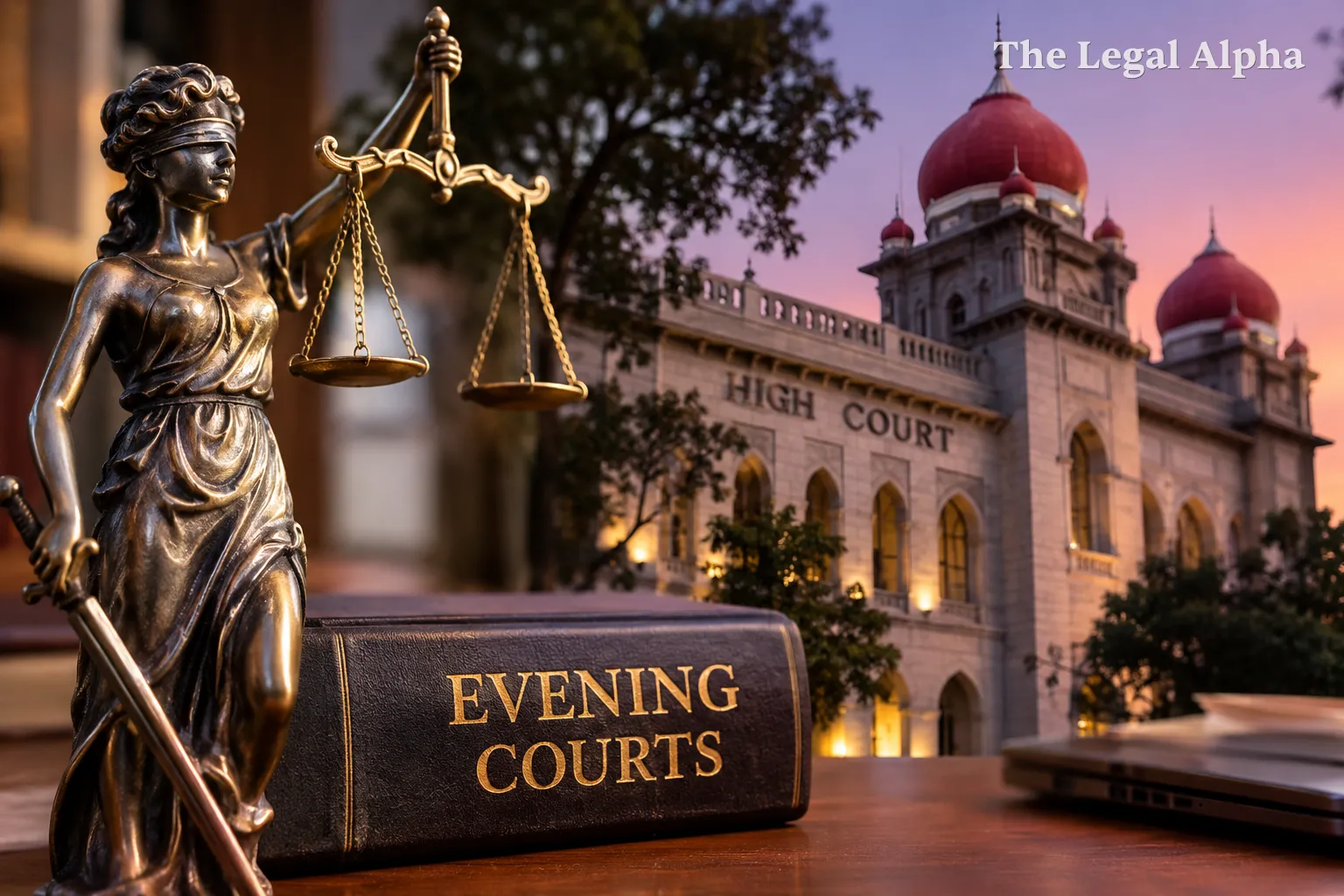
The Federation of Bar Associations for the State of Telangana has formally opposed the proposal to introduce evening courts in the state, asking the Telangana High Court to reconsider and withdraw the plan.
A delegation led by newly elected federation president Goli Viplav Reddy submitted a representation to Acting Chief Justice P. Sam Koshy on November 28, 2026. The federation also submitted a separate representation to Telangana Bar Council Chairman S. Ram Reddy.
The federation stated that bar associations across several districts were opposed to extending court proceedings into evening hours. It argued that the proposal could create additional difficulties for advocates, litigants and court staff rather than address the underlying problems affecting the judicial system.
The development comes amid efforts to reduce the backlog of pending cases through additional court sittings and other judicial reforms.
Legal Topic
Area of Law: Judicial Administration
Sub-topic: Court Administration, Working Hours and Access to Justice
Core Legal Issue
The central issue concerns whether introducing evening court sessions is an appropriate administrative measure to reduce case pendency without placing an unreasonable additional burden on advocates, litigants and judicial support staff.
It also raises questions about the practical arrangements required to operate courts beyond regular working hours, including staffing, transportation, security and infrastructure.
What Did the Court / Authority Decide?
There is no reported judicial order deciding the dispute or formally rejecting the evening courts proposal.
The development presently concerns the representations submitted by the Federation of Bar Associations to the Acting Chief Justice and the Telangana Bar Council Chairman.
The federation has requested the High Court to:
-
Withdraw the proposal for introducing evening courts in Telangana.
-
Consider the objections and resolutions adopted by bar associations across the state.
-
Address the shortage of basic infrastructure in district and subordinate courts.
-
Fill vacant sanctioned posts of judicial officers in trial courts and junior civil judge courts.
The High Court's response to these representations has not been reported. Therefore, the evening courts proposal should be treated as a matter under consideration rather than a decision that has been formally reversed.
Key Legal Points
- Workload of Advocates: The federation contends that extending court hours would increase professional pressure on lawyers who already spend substantial time attending hearings, preparing cases and meeting clients.
- Concerns of Women Advocates: The representation highlights additional difficulties for women lawyers and advocates with family responsibilities.
- Judicial Infrastructure: The federation argues that improving existing court facilities should receive priority over extending working hours.
- Vacancies in Judicial Posts: Filling vacant positions in trial courts and junior civil judge courts has been identified as an important step towards reducing delays.
- Practical E-Filing Requirements: The federation has also sought exemptions from mandatory e-filing for routine and urgent applications, while supporting the broader digitalisation of the judiciary.
Relevant Law
The issue primarily concerns judicial administration and the institutional functioning of courts.
-
Article 21 of the Constitution of India: Guarantees the right to life and personal liberty, which has been interpreted to include the right to a speedy trial.
-
Article 39A of the Constitution: Directs the State to ensure equal justice and provide free legal aid.
-
Advocates Act, 1961: Provides the statutory framework governing the legal profession and Bar Councils in India.
These provisions provide broader legal context. The reported representation does not identify any specific statutory provision as the basis for challenging evening courts.
Arguments of the Parties
Federation of Bar Associations, Telangana
The federation has argued that introducing evening courts would create additional hardship for advocates, particularly women lawyers, senior advocates and those with family responsibilities.
It has also raised concerns about the availability of court staff, transportation, security and adequate infrastructure for evening proceedings.
The federation maintains that the government and judiciary should first address existing vacancies, improve court facilities and resolve operational difficulties.
High Court / Authorities
No detailed response from the Telangana High Court or the government to the federation's objections has been reported.
The underlying proposal is intended to address judicial pendency by increasing the number of available court hours. However, the final position of the High Court on the representations remains unreported.
Why Does It Matter?
The opposition to evening courts highlights an important question in judicial reform: whether increasing court working hours is sufficient to address the problem of delayed justice.
Reducing case pendency requires more than additional hearing sessions. Courts also need adequate judicial officers, trained staff, functional infrastructure and efficient case-management systems.
The concerns raised by the Telangana Bar Federation also highlight the importance of consulting stakeholders who directly participate in the justice delivery process.
For litigants, the effectiveness of any reform should ultimately be measured by whether it improves access to justice and reduces unnecessary delays without creating additional procedural difficulties.
The debate also brings attention to the working conditions of advocates and the practical challenges of extending judicial proceedings beyond regular hours.
Legal Takeaway
The introduction of evening courts may offer an additional mechanism for addressing judicial pendency, but its implementation requires proper infrastructure, staffing and consultation with the Bar. The Telangana Bar Federation's representation places the focus on improving the existing judicial system rather than relying exclusively on extended court timings.
Sources
Primary Source: No official court order or copy of the federation's representation was available in the reported material.
Additional Sources: