Supreme Court Suspends Sentences of Two Bilkis Bano Convicts After 17 Years in Jail
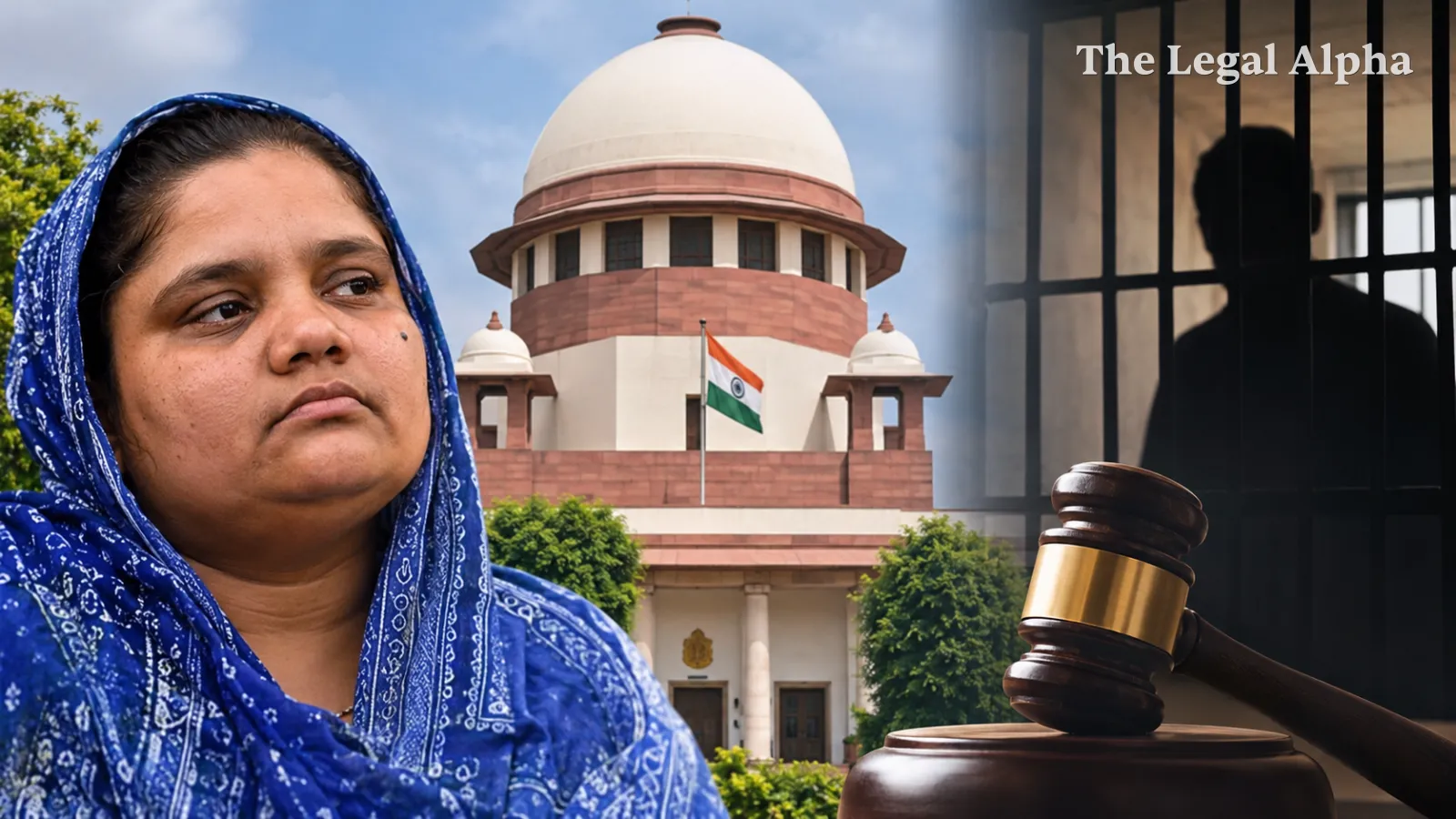
The Supreme Court’s decision to suspend the life sentences of two convicts in the Bilkis Bano gang rape and murder case has brought renewed attention to the legal principles governing bail during pending criminal appeals. The ruling raises important questions about prolonged incarceration, medical disability, victims’ participation and the balance between individual liberty and the seriousness of an offence.
What Happened?
The Supreme Court has suspended the life sentences of two convicts, Bipinchand Kanaiyalal Joshi and Pradip Ramanlal Modhiya, in the Bilkis Bano case and granted them bail pending the hearing of their appeals.
The order was passed on October 28, 2026, by a Bench comprising Justices M.M. Sundresh and Prasanna B. Varale.
Both men were among the eleven accused convicted in connection with the 2002 Gujarat violence, during which Bilkis Bano was gang-raped and members of her family were murdered.
The Court took note of their incarceration exceeding seventeen years, the severe physical disability of one appellant and the legal and factual questions that remain to be examined in the pending appeals.
Area of Law
Area of Law: Criminal Law
Sub-topic: Suspension of Sentence, Bail Pending Appeal and Criminal Appellate Jurisdiction
Core Legal Issue
The central legal question is whether a court can suspend the life sentences of convicted persons and grant bail while their appeals against conviction remain pending, particularly when they have undergone prolonged imprisonment and present individual medical or other circumstances.
The matter also highlights the need to balance the seriousness of the offence, the findings of the trial and appellate courts, the constitutional protection of personal liberty and the right of victims to be informed about relevant proceedings.
What Did the Supreme Court Decide?
The Supreme Court considered the submissions made by both sides and ordered suspension of the sentences of the two appellants.
The Bench relied on three significant considerations: more than seventeen years of incarceration, the severe handicap of one appellant and the existence of questions of fact and law requiring consideration in the appeals.
The Court left the terms and conditions of bail to the concerned trial court and directed that the appeals be listed for hearing in due course.
Importantly, the order does not overturn the convictions or declare either appellant innocent. The appeals against conviction remain to be decided.
Key Legal Points
-
Prolonged incarceration: The Court considered the appellants' imprisonment exceeding seventeen years while their appeals remained pending.
-
Medical condition: The severe physical disability of one appellant was an important consideration.
-
Pending appellate examination: The Court acknowledged that questions of fact and law still required adjudication.
-
Prosecution's opposition: The State opposed bail, relying on the seriousness of the offences and the findings of the lower courts.
-
Suspension is not acquittal: The convictions remain in force unless overturned in the pending appeals.
Relevant Legal Provisions
Indian Penal Code, 1860
-
Section 143 – Punishment for unlawful assembly.
-
Section 147 – Punishment for rioting.
-
Section 302 – Punishment for murder.
-
Section 149 – Liability of members of an unlawful assembly.
-
Sections 376(2)(e) and 376(2)(g) – Aggravated rape offences under the applicable IPC provisions.
Bharatiya Nagarik Suraksha Sanhita, 2023
- Section 430 – Suspension of sentence pending appeal and release of the convicted person on bail.
The corresponding provision under the former Code of Criminal Procedure, 1973, was Section 389. The Supreme Court's October 28 order does not expressly identify the statutory provision under which relief was granted.
Arguments of the Parties
Appellants
The appellants, represented by Senior Advocate Siddharth Luthra, submitted that they had spent more than seventeen years in custody. Their counsel also argued that one appellant had not been named in the original FIR and was implicated nearly three years after the incident. The severe physical disability of one appellant was also brought to the Court's attention.
State of Gujarat
Additional Solicitor General Raja Thakre strongly opposed the applications. The State argued that the trial court and Bombay High Court had already examined the relevant evidence and circumstances, particularly considering the gravity of the offences.
The Supreme Court granted relief after hearing both sides and considering the material placed before it.
Why Does It Matter?
The decision brings an important distinction between suspension of sentence and remission into focus.
In January 2024, the Supreme Court had quashed the Gujarat Government's remission orders concerning all eleven convicts and directed them to return to prison. The present proceedings involve a different legal remedy: judicial suspension of sentence while an appeal against conviction is pending.
The distinction matters because remission involves the exercise of executive power, whereas suspension of sentence is a judicial decision connected with pending appellate proceedings.
The development also raises questions about the participation of victims in proceedings seeking suspension of sentence. Bilkis Bano's reported reaction that she had not been informed about the proceedings has brought this procedural concern into public discussion.
There is a strong case for ensuring that identifiable victims are appropriately informed about relevant bail or sentence-suspension applications, while maintaining the distinction between their right to be heard and the court's responsibility to decide applications according to law.
The pending appeals will ultimately determine whether the convictions are upheld or disturbed.
Legal Takeaway
Suspension of sentence during an appeal does not erase a conviction or amount to an acquittal. Courts must examine the individual circumstances of the convicted person, the period of incarceration and the issues involved in the appeal. The case also highlights the importance of meaningful victim participation in appropriate criminal proceedings.
Sources
Primary Source: Supreme Court of India, Bipinchand Kanaiyalal Joshi @ Lala Doctor & Others v. State of Gujarat & Another, SLP (Crl.) Nos. 5265–5266 of 2026, order dated October 28, 2026.
Read the Supreme Court order (PDF)
Additional Sources: