Former CJI DY Chandrachud Says AI Cannot Decide Bail, Assess Witness Credibility or Replace Judicial Mind
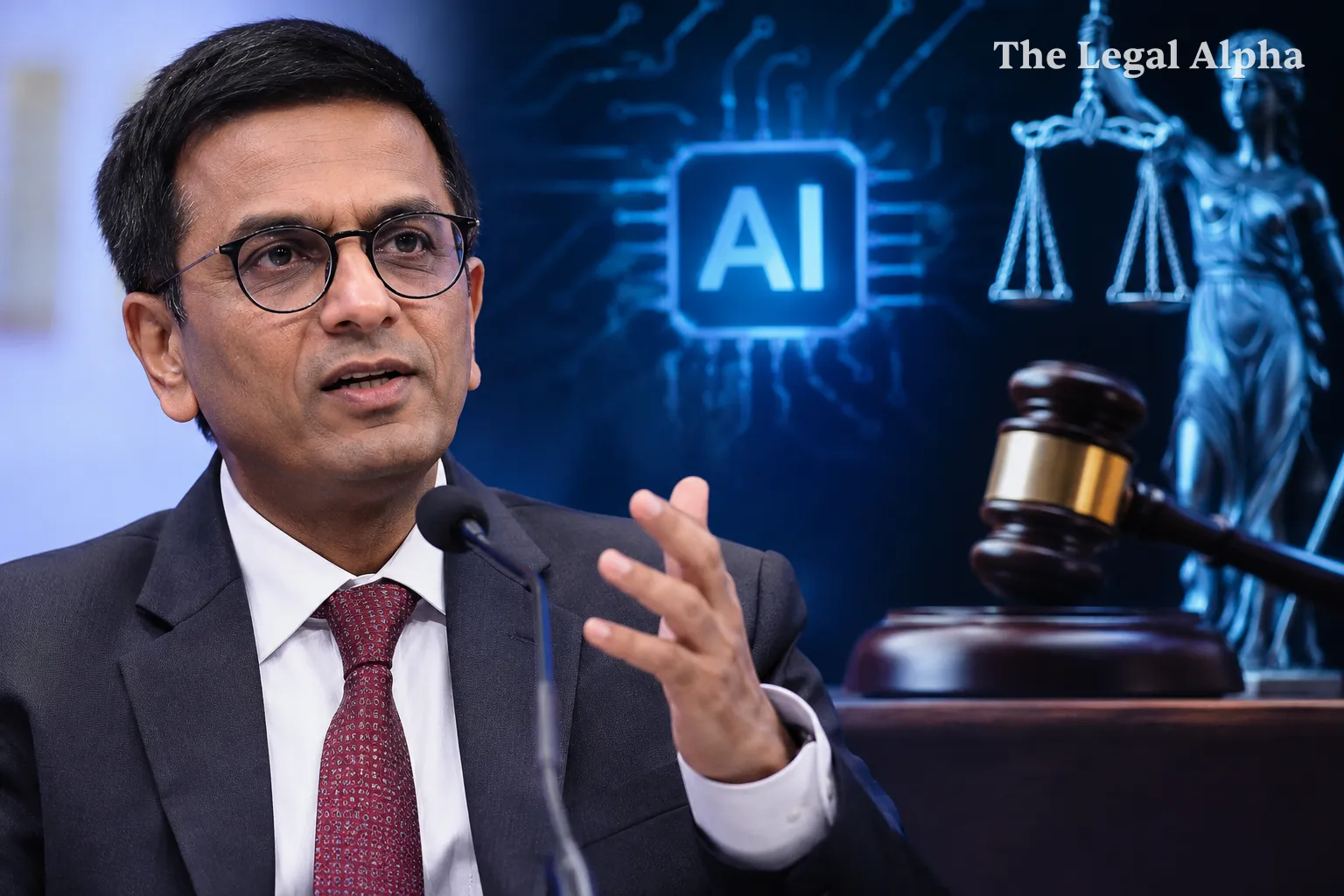
Former Chief Justice of India Dr. D.Y. Chandrachud has cautioned against allowing Artificial Intelligence (AI) to take over sensitive judicial functions, particularly decisions concerning bail, personal liberty and the credibility of witnesses.
Speaking at the India Law, AI & Tech Summit and Awards 2026 (ILATS 2026) in New Delhi on November 28, 2026, Chandrachud emphasised that AI should remain a supporting tool for the judiciary rather than become a substitute for human judicial reasoning.
He stressed that decisions affecting an individual's liberty require independent judicial assessment, constitutional scrutiny and accountability. An algorithm cannot replace a judge's responsibility to examine the facts and provide reasons for a judicial decision.
His address also highlighted the potential of AI to reduce court delays, improve legal research, facilitate translation and make judicial services more accessible.
Area of Law: Constitutional Law and Technology Law
Sub-topic: Artificial Intelligence in Judicial Decision-Making, Bail Jurisprudence and Right to Personal Liberty
The central legal question concerns the extent to which Artificial Intelligence can be used in judicial proceedings without compromising judicial independence, individual liberty and the constitutional responsibility of courts.
A particularly important concern is whether algorithm-generated probability scores should influence decisions on bail, the likelihood of future criminal behaviour or the credibility of witnesses. Such assessments involve individual circumstances and judicial application of mind, making them unsuitable for automated determination.
Chandrachud maintained that judicial decisions must remain under human control, particularly where personal liberty is involved.
He cautioned that AI-generated risk assessments cannot replace a judge's independent consideration of the allegations, evidence and circumstances of an individual case.
He also highlighted the Supreme Court AI Committee's draft Regulations for the Use of Artificial Intelligence in Courts. The proposed framework seeks to permit AI-assisted administrative and research functions while restricting its use in sensitive adjudicatory matters.
The former CJI identified the need for safeguards that would allow litigants to challenge inaccurate AI-generated translations or transcriptions, ensure adequate technological training for district judges and introduce independent audits of judicial AI systems.
These remarks were made in the context of the proposed regulatory framework and should not be mistaken for a separate judicial order or a final ruling of the Supreme Court.
While cautioning against excessive dependence on AI, Chandrachud acknowledged that the technology can significantly improve the functioning of Indian courts.
He identified several areas where AI can provide meaningful assistance:
-
Transcription of court proceedings and witness depositions.
-
Translation of judgments into regional languages.
-
Legal research and examination of court documents.
-
Case management and preparation of cause lists.
-
Identification of procedural defects in court filings.
He referred to the Supreme Court's SUVAS translation system, which helps make judgments available in Indian languages, and other technology-driven initiatives aimed at reducing repetitive administrative work.
According to Chandrachud, automating routine tasks would allow judges to devote more time to substantive legal questions.
The Supreme Court's Artificial Intelligence Committee published the draft Regulations for Use of Artificial Intelligence in Courts, 2026, on June 3, 2026, inviting suggestions from stakeholders and members of the public.
The proposed regulations establish human primacy, judicial independence, transparency, accountability and data protection as foundational principles for using AI in courts.
Regulation 4 provides that AI systems must operate in an assistive capacity and cannot replace the independent exercise of judicial authority.
The draft also identifies prohibited applications of AI, including algorithmic decision-making in matters affecting individual rights and liberty.
The framework proposes institutional oversight, AI registers, audits and mechanisms for reporting incidents involving AI systems.
Importantly, these are proposed regulations and should not be treated as an already enforced final regulatory framework.
Chandrachud also drew attention to the growing problem of fabricated judicial citations and incorrect legal references generated by AI tools.
He referred to instances where courts and tribunals encountered non-existent judicial precedents or fabricated passages attributed to genuine Supreme Court judgments.
Such incidents demonstrate the risks of relying on AI-generated legal research without independently checking the original judgments.
The concern is particularly significant for advocates, who must ensure that the authorities cited in their pleadings and submissions actually exist and accurately reflect the law.
He also highlighted the risks of uploading confidential client documents onto publicly available AI platforms without adequate safeguards concerning data retention, confidentiality and access.
Chandrachud's observations place particular emphasis on Article 21 of the Constitution, which protects life and personal liberty.
A bail decision can directly affect an individual's freedom. Therefore, such decisions must be based on judicial consideration of the allegations, material available on record and circumstances of the individual case.
An automated risk score cannot independently determine whether someone should remain in custody or be released on bail.
He also referred to Article 39A, which directs the State to promote equal justice and provide free legal aid, highlighting the importance of making technology accessible to people who face financial, linguistic or digital barriers.
The privacy principles recognised by the Supreme Court in Justice K.S. Puttaswamy (Retd.) v. Union of India also remain relevant when courts handle sensitive personal and judicial information.
Chandrachud outlined five important safeguards that should guide the adoption of AI in the judicial system:
-
Human control: Every judicial decision must remain the responsibility of a human judge.
-
Protection of personal liberty: Bail and other decisions affecting liberty must not be determined by algorithmic probability scores.
-
Transparency: Litigants should be informed when AI tools are used in their cases and should have an opportunity to challenge errors.
-
Inclusive access: Technology should improve access to justice regardless of a person's language, location or digital literacy.
-
Data security: Judicial records and sensitive personal information must be protected through secure systems and appropriate data governance.
These principles seek to ensure that technological efficiency does not come at the cost of fairness, accountability or constitutional rights.
The discussion comes at a time when Indian courts are increasingly exploring AI-based solutions to address case backlogs, improve legal research and make judicial services more accessible.
However, the use of AI in judicial decision-making raises serious questions about accountability and the protection of fundamental rights.
If an algorithm produces an incorrect risk assessment or an inaccurate interpretation of evidence, determining responsibility and providing an effective remedy could become difficult.
The distinction between administrative assistance and judicial decision-making is therefore particularly important. AI can help courts process information more efficiently, but decisions affecting liberty, rights and legal responsibility must remain subject to independent judicial scrutiny.
For lawyers and law firms, the discussion also highlights the importance of verifying AI-generated citations and protecting privileged client information while using technology.
The central message from former CJI D.Y. Chandrachud is that Artificial Intelligence should strengthen the justice delivery system without replacing the independent judgment of courts. Technology may assist with research, translation and administration, but decisions concerning bail, personal liberty and witness credibility must remain within the domain of accountable human judges.
Primary Source:
- Supreme Court of India, Artificial Intelligence Committee – Draft Regulations for Use of Artificial Intelligence in Courts, 2026.
Additional Sources: