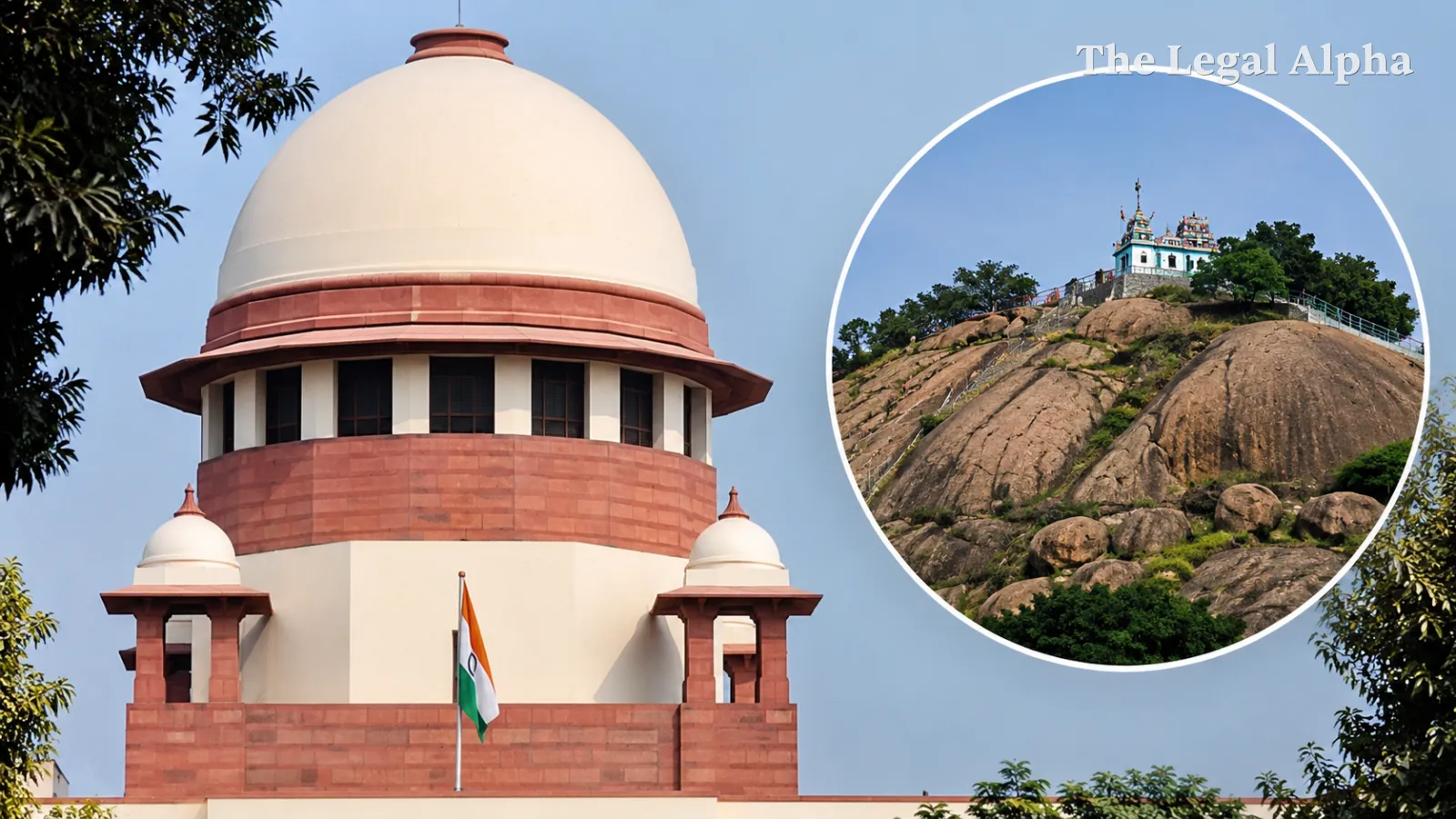
Tamil Nadu Moves Supreme Court to Reconsider Thiruparankundram Deepam Order
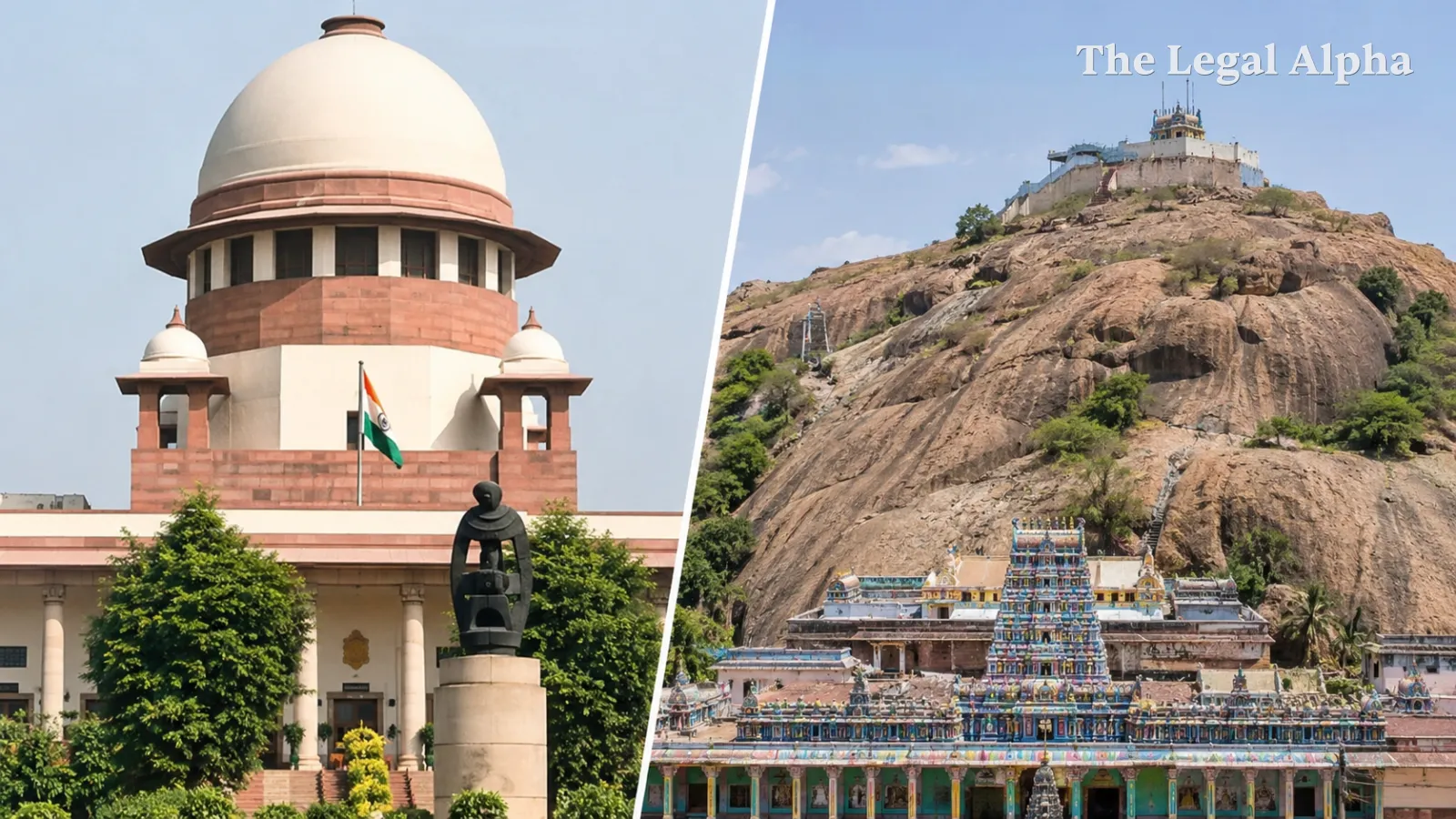
The Tamil Nadu government has approached the Supreme Court seeking a review of its November 20, 2026 interim order permitting the lighting of the Karthigai Deepam at a disputed stone pillar on Thiruparankundram Hill in Madurai.
The review petition was filed late on November 21 by the Commissioner of the Hindu Religious and Charitable Endowments (HR&CE) Department. The challenge comes just a day after the Supreme Court permitted a temple team to conduct the ceremony at the disputed location as a one-time measure.
The dispute involves the nature and ownership of the stone pillar situated near the Sikandar Badusha Dargah. It has raised questions concerning religious customs, temple property, access rights and the historical character of the site.
Legal Topic
Area of Law: Constitutional Law and Religious Endowments Law
Sub-topic: Religious Worship Rights, Temple Property Disputes and Judicial Review
Core Legal Issue
The central legal question concerns whether the disputed stone pillar qualifies as a traditional Deepathoon (lamp-lighting pillar) associated with the temple and whether the temple authorities can be directed to conduct the Karthigai Deepam ceremony at that location.
Another important issue is whether permitting the ceremony affects the competing claims concerning ownership of the land, customary religious practices and access to the adjoining dargah.
What Did the Supreme Court Decide?
The Supreme Court Bench comprising Justices Aravind Kumar and Vipul M Pancholi permitted the temple to light the Karthigai Deepam at the disputed pillar on November 24, 2026, as a one-time arrangement.
The Court made it clear that the permission should not be treated as recognition of an established religious custom or a permanent right to access the location.
It also stayed the Madras High Court's findings concerning the character of the pillar and the ownership of the land on which it stands.
The Court further directed that access to the pillar remain restricted to the authorised temple team and officials responsible for security and supervision.
The Madurai District Collector was tasked with determining the team's size, composition, timing and route in consultation with the temple's Executive Officer, the Archaeological Survey of India (ASI) and the Police Commissioner.
The Court also prohibited public gatherings, demonstrations, processions and slogan-raising at the location. Excavation, construction and structural changes at the disputed site were prohibited.
At the same time, worship at customary locations and lawful access to the dargah and mosque were required to continue without interference.
Key Legal Points
-
One-time permission: The lamp-lighting arrangement is limited to the 2026 ceremony and does not establish a permanent right.
-
Status of the property: The Supreme Court stayed the High Court's findings regarding the pillar's character and the land beneath it.
-
Restricted access: Only an authorised temple team and necessary officials can access the disputed pillar for the ceremony.
-
Protection of religious practices: Existing worship arrangements and lawful access to the dargah and mosque must remain undisturbed.
-
Preservation of the site: Excavation, construction and structural alterations are prohibited.
Relevant Law
The dispute primarily concerns the legal interpretation of religious customs, rights of worship and competing claims over religious property.
The relevant legal framework includes:
-
Constitution of India – Article 25: Freedom of conscience and the right to freely profess, practise and propagate religion, subject to constitutional limitations.
-
Constitution of India – Article 26: Rights of religious denominations to manage their religious affairs, subject to public order, morality and health.
-
Civil appellate jurisdiction: The Supreme Court is examining appeals arising from the Madras High Court proceedings.
The available reporting does not identify a specific statutory provision as the basis of the HR&CE Commissioner's review petition.
Arguments of the Parties
Tamil Nadu Government
The State's position before the Supreme Court included reliance on historical survey records suggesting that the disputed pillar was a survey marker rather than a traditional religious lamp pillar.
The HR&CE Commissioner's subsequent review petition challenges the Supreme Court's November 20 interim order. The precise grounds of the review petition are not detailed in the available report.
Dargah Committee
The Dargah Committee argued that the Madras High Court had interpreted a 1923 decree concerning the hill too narrowly. It also questioned the manner in which the earlier judicial inspection of the disputed location had been conducted.
Devotee Rama Ravikumar
Ravikumar's side relied on the hollow structure at the top of the pillar and photographs of similar pillars at other temples in Tamil Nadu to support its claim that the structure was a Deepathoon.
The competing positions concern the historical character of the pillar, religious practices and the legal status of the surrounding property.
Why Does It Matter?
The development is significant because it demonstrates how courts may balance competing religious claims while dealing with disputed places of worship.
The Supreme Court has permitted a limited religious ceremony without conclusively determining the ownership of the land or the historical identity of the pillar. This distinction is important because an interim arrangement cannot automatically create a permanent religious entitlement.
The case also highlights the importance of protecting the rights of different religious communities. By requiring existing worship arrangements and lawful access to the dargah and mosque to continue, the Court has attempted to prevent the interim permission from disrupting established practices.
The Tamil Nadu government's review petition adds another procedural dimension to the dispute. The Supreme Court will now have to consider the challenge while the main appeals remain pending.
Legal Takeaway
The Supreme Court's permission to light the Karthigai Deepam at the disputed pillar is strictly a one-time interim arrangement and does not establish ownership, customary rights or permanent access. The underlying dispute over the pillar's identity and the land remains unresolved and is scheduled for further hearing in January 2027.
Sources
Primary Source:
- Supreme Court interim order dated November 20, 2026. Order and case report (the order is linked as an attachment in the report).
Additional Sources: