Supreme Court’s Bail Relief to Two Bilkis Bano Convicts Raises Questions Over Victim’s Right to Be Heard
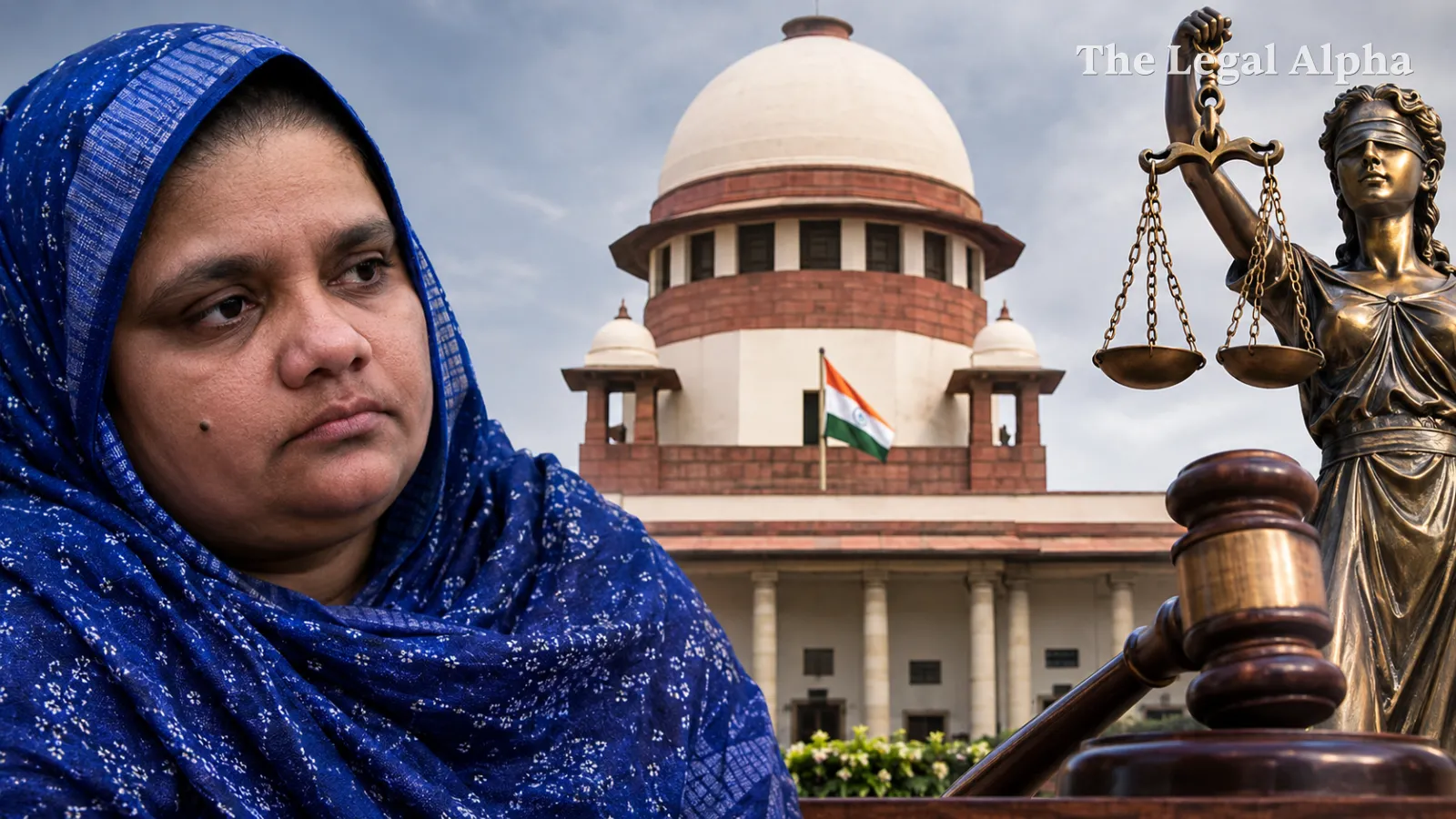
The Supreme Court’s decision to suspend the life sentences of two convicts in the Bilkis Bano gangrape and murder case has brought renewed attention to the legal safeguards available to victims during bail and sentence suspension proceedings. The development raises important questions about the victim’s right to participate in criminal proceedings and the judicial standards governing the suspension of sentences in serious offences.
What Happened in the Bilkis Bano Case?
On October 28, 2026, a Supreme Court bench comprising Justice M.M. Sundresh and Justice Prasanna B. Varale suspended the life sentences of two convicts, Bipinchand Kanaiyalal Joshi and Pradip Ramanlal Modhiya, and granted them bail.
The relief was granted after the Court considered that both convicts had spent more than 17 years in prison and that one of them was severely physically handicapped. The Court also noted that their appeals raised questions of fact and law requiring consideration.
The two men were among the 11 persons convicted in the case involving the gangrape of Bilkis Bano and the murder of members of her family during the 2002 Gujarat riots.
The latest order concerns only the suspension of their sentences during the pendency of their appeals. It does not overturn their convictions.
Legal Topic
Area of Law: Criminal Law
Sub-topic: Suspension of Sentence, Bail Pending Appeal and Victims' Rights in Criminal Proceedings.
The Core Legal Issue: Can a Convict Receive Suspension of Sentence Without Hearing the Victim?
The central legal concern is whether a victim should be afforded an opportunity to participate in proceedings seeking suspension of a sentence, particularly when the underlying conviction involves serious offences such as gangrape and multiple murders.
The issue also concerns the extent to which courts must consider the nature of the offence, the period of incarceration, the circumstances of the accused and the interests of the victim before granting relief under the law governing suspension of sentences.
The Supreme Court has previously recognised that victims are not merely spectators in criminal proceedings. Their right to participate and receive a fair hearing has been recognised as an important part of criminal justice.
What Did the Supreme Court Decide?
In its October 28 order, the Supreme Court suspended the life sentences of the two appellants and directed that they be released on bail subject to conditions imposed by the concerned trial court.
The Court relied on the period of incarceration exceeding 17 years, the severe physical disability of one appellant and the existence of questions of fact and law in their pending appeals.
The order did not acquit the convicts or set aside the findings of the trial court and Bombay High Court. Their appeals against conviction remain pending.
An important concern raised in the subsequent legal discussion is that Bilkis Bano was reportedly not issued notice or afforded an opportunity to present her position before the suspension order was passed.
Victim's Right to Participate in Criminal Proceedings
The Supreme Court's judgment in Jagjeet Singh & Others v. Ashish Mishra @ Monu & Another (2022) is particularly relevant to this issue.
In that case, a three-judge bench recognised that victims have substantive and enforceable rights to participate in criminal proceedings. The Court held that victims who come forward to participate must receive a fair and effective hearing, including in proceedings concerning bail.
The judgment also clarified that the presence of the State in a criminal proceeding does not automatically satisfy the victim's independent right to be heard.
This principle assumes particular importance in cases involving serious offences, where the victim's interests may not necessarily be fully represented by the prosecution.
Legal Standards Governing Suspension of Sentence
Section 389 of the Code of Criminal Procedure, 1973, deals with suspension of sentence pending appeal and release of the convicted person on bail.
The power under this provision must be exercised judicially, with appropriate consideration of the circumstances of each case.
In Bhagwan Rama Shinde Gosai v. State of Gujarat (1999), the Supreme Court discussed the principles governing suspension of sentences during the pendency of appeals.
In Shivani Tyagi v. State of Uttar Pradesh (2024), the Supreme Court also highlighted the distinction between suspension of short-term sentences and sentences imposed for serious offences.
The mere fact that a convict has spent a considerable period in prison cannot automatically become sufficient justification for suspending a life sentence.
Courts must consider the seriousness of the offence and the applicable judicial principles before granting such relief.
Important Legal Developments in the Bilkis Bano Case
The latest development must also be understood against the background of the earlier remission proceedings.
In August 2022, the Gujarat Government granted remission to all 11 convicts, resulting in their release from prison.
However, on January 8, 2024, the Supreme Court quashed the remission orders, holding that the Gujarat Government was not the appropriate government to decide the remission applications. Since the trial had been transferred to Maharashtra, the Maharashtra Government was the competent authority.
The Supreme Court also criticised the manner in which the remission process had been undertaken and directed the convicts to surrender.
The latest suspension order involving two convicts is a separate legal development arising from their appeals against conviction. It should not be confused with the earlier remission proceedings.
Arguments Raised by the Convicts and the State
Convicts' Arguments
The two appellants sought suspension of their life sentences, relying on their prolonged incarceration of more than 17 years.
Their counsel also pointed out that one appellant was severely physically handicapped. They further raised questions concerning their involvement in the incident and the evidence supporting their convictions.
State's Opposition
The State opposed the request, emphasising that the trial court and Bombay High Court had already examined the relevant evidence and upheld the convictions.
The seriousness of the offences was also highlighted as a relevant consideration while deciding whether the sentences should be suspended.
Why Does This Development Matter?
The case raises an important question about balancing the personal liberty of convicted persons against the rights and interests of victims.
The right to seek suspension of sentence during an appeal is recognised under criminal law. However, the exercise of this power must remain consistent with established judicial principles, particularly where the conviction concerns exceptionally serious offences.
The judgment in Jagjeet Singh provides an important legal framework for understanding victims' participatory rights. It establishes that the victim's presence cannot simply be replaced by the State's representation.
The concerns surrounding the latest order therefore extend beyond the two appellants. They raise broader questions about procedural fairness, judicial discretion and the meaningful participation of victims in proceedings that may directly affect their interests.
At the same time, the suspension of a sentence must be distinguished from acquittal or remission. The original convictions remain in force unless overturned through the appropriate judicial process.
Legal Takeaway
The suspension of a sentence during an appeal requires careful judicial consideration, especially in cases involving serious offences such as gangrape and murder. Equally important is the victim's right to meaningful participation in criminal proceedings. The balance between individual liberty, procedural fairness and victims' rights remains a significant aspect of India's criminal justice system.
Sources
Primary Sources:
-
Supreme Court judgment in Jagjeet Singh & Others v. Ashish Mishra @ Monu & Another (2022).
-
Supreme Court judgment dated January 8, 2024, concerning remission in the Bilkis Bano case.
-
Supreme Court order dated October 28, 2026, in SLP (Crl.) Nos. 5265–5266/2026 (order details as reported; complete primary order not independently verified).
Additional Sources:
-
LiveLaw – Reporting on the suspension of sentences of two Bilkis Bano case convicts.
-
LiveLaw – Legal discussion concerning victims' rights and suspension of sentences.