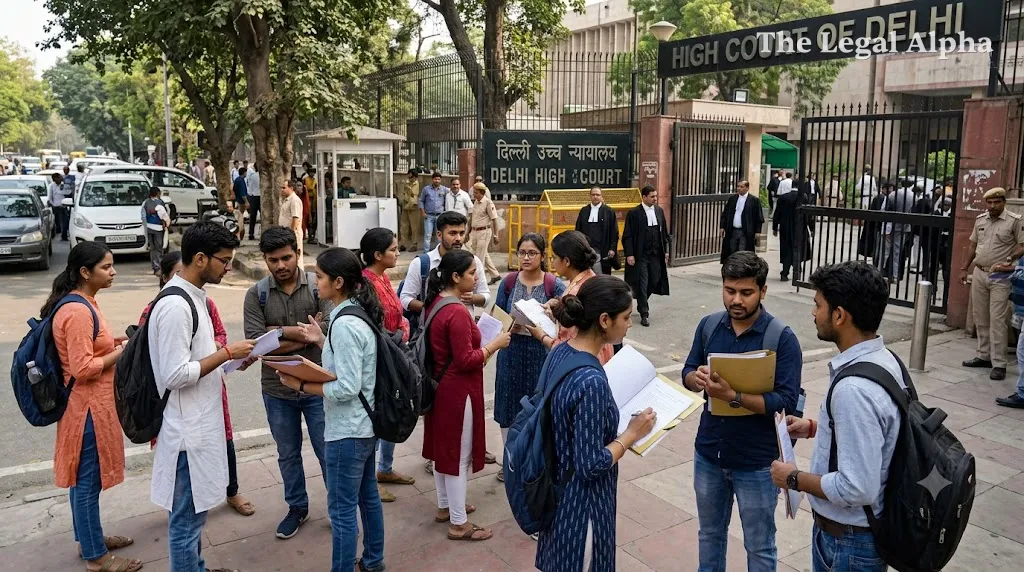
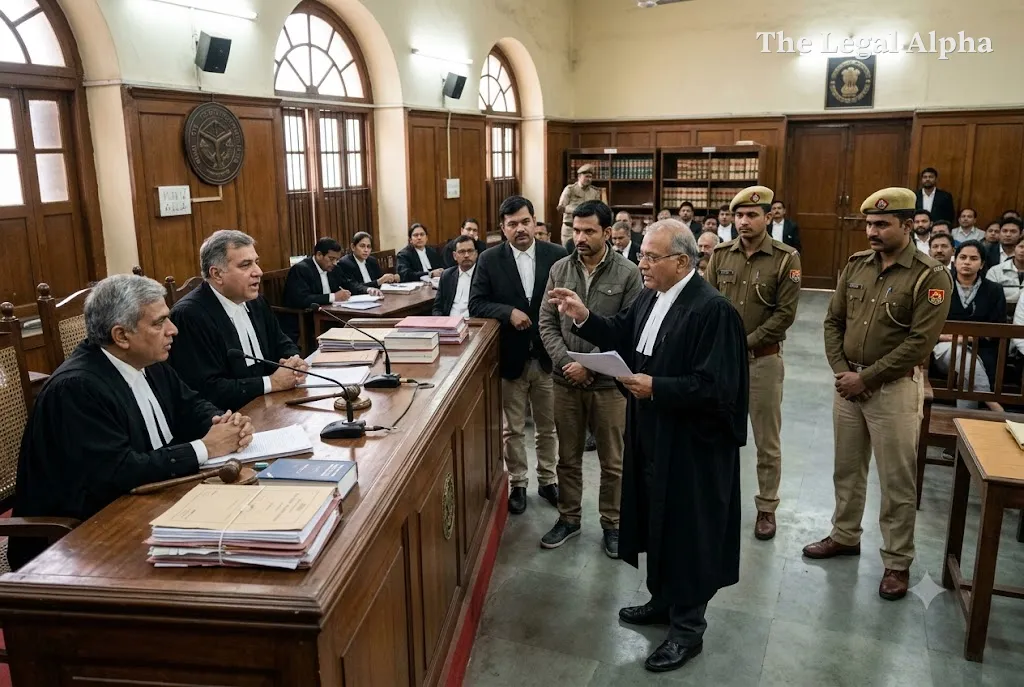
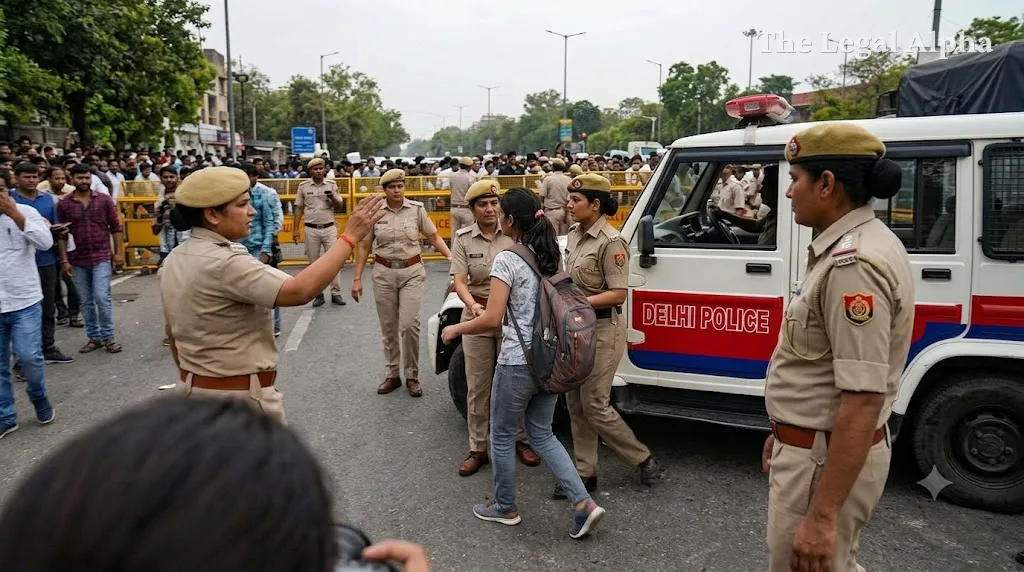
Supreme Court Warns of Protest Over Stalled Pedestrian Crossing Outside Delhi High Court
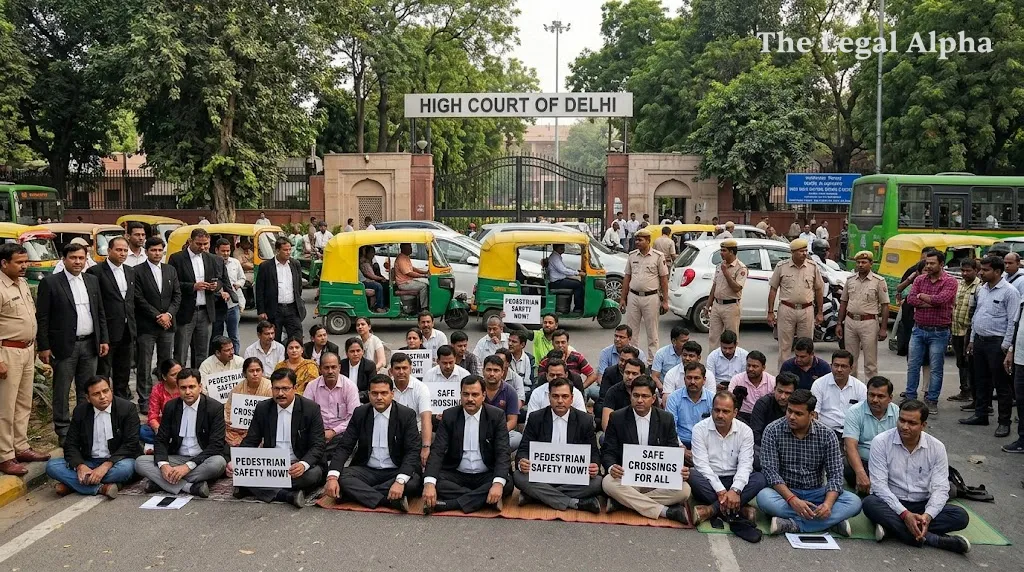
The Supreme Court of India voiced sharp frustration over persistent administrative delays in setting up functional pedestrian safety infrastructure outside the Delhi High Court and near the National Zoological Park along Mathura Road. A bench comprising Justices J.B. Pardiwala and K.V. Viswanathan made an unusual oral observation, remarking that if tangible steps are not taken on the ground before the next date of hearing on November 25, the judges themselves would sit on a dharna at the High Court's main gate.
The matter arose during the monitoring of road safety measures and the implementation of motor accident compensation mechanisms across the country. The bench warned that procedural delays and committee meetings without physical execution would no longer be tolerated, cautioning that the Chief Secretary of the Delhi Government could be summoned in person if compliance is not demonstrated.
Legal Topic
Area of Law: Constitutional Law / Public Interest Litigation
Sub-topic: Right to Life and Safe Public Infrastructure / Enforcement of Judicial Directions
Core Legal Issue
The core issue concerns the state's constitutional obligation to ensure safe civic infrastructure for pedestrians under the right to life, balanced against chronic administrative and inter-agency inertia.
The proceedings also addressed the accountability of executive authorities under statutory mandates, specifically examining whether executive notifications concerning accident relief schemes under Section 164A and publication obligations under Section 212 of the Motor Vehicles Act, 1988, are being effectively implemented and made accessible to the public rather than languishing as internal administrative drafts.
What Did the Court Decide?
The Supreme Court set a firm deadline of November 25 for authorities to demonstrate concrete physical measures on the ground rather than relying on committee formations or bureaucratic deliberations.
The bench:
-
Warned that failure to implement traffic-calming measures, synchronized signals, and safe crossing points would compel the court to summon top bureaucratic officers, including the Chief Secretary.
-
Emphasized that speed-calming mechanisms, such as rumble strips and speed breakers, must accompany any signaling to ensure actual pedestrian safety along Mathura Road.
-
Questioned the Union Government over the transparency and gazette notification of an interim compensation scheme framed under Section 164A of the Motor Vehicles Act, stressing that laws and beneficial schemes cannot remain unnotified or kept secret.
-
Issued notice on contempt petitions concerning delayed annual road safety reports and directed the Ministry of Road Transport and Highways (MoRTH) to submit a formal response.
The substantive issues remain pending for compliance reporting on November 25.
Key Legal Points
-
Pedestrian Safety as a Fundamental Right: The court reinforced that unhindered, safe passage on demarcated public infrastructure is an intrinsic component of the right to movement and life under the Constitution.
-
Rejection of Bureaucratic Dilution: The bench highlighted that forming committees cannot substitute actual ground execution of judicial orders addressing public safety hazards.
-
Publicity of Beneficial Schemes: The judiciary noted that administrative schemes framed under statutory mandates must be properly published in the official gazette to attain legal effect, observing that law cannot operate in secrecy.
-
Judicial Enforcement through Contempt: The bench exercised coercive oversight to ensure compliance with past road safety directives, underscoring administrative accountability for missed statutory timelines.
Relevant Law
-
Article 21 and Article 19(1)(d) of the Constitution of India: Guaranteeing the fundamental right to life, personal liberty, and the right to move freely throughout the territory of India.
-
Section 164A of the Motor Vehicles Act, 1988: Mandating schemes for interim relief and treatment for road accident victims.
-
Section 212 of the Motor Vehicles Act, 1988: Requiring rules and official schemes to be formally published in the Official Gazette and placed before the public.
-
Judicial Precedent: Dr. S. Rajaseekaran v. Union of India & Ors. (W.P.(C) No. 295/2012), governing continuous judicial oversight on road safety implementation and accident reduction in India.
Arguments of the Parties
Amicus Curiae Senior Advocate Gaurav Agrawal, assisting the court, submitted that while a traffic signal had been installed at the crossing following earlier directions, it remained frequently non-functional and insufficient to manage the heavy vehicular flow on Mathura Road. The amicus highlighted that synchronized lights, speed breakers, and rumble strips were necessary to compel motorists to slow down. The amicus also noted that the Centre's scheme for interim relief under Section 164A of the Motor Vehicles Act had not been shared or publicly notified despite previous judicial deadlines.
The Union of India and Respondent Authorities Additional Solicitor General Vikramjit Banerjee, appearing for the authorities, submitted that administrative steps were underway and that an interim compensation scheme had been drafted by the authorities on February 23. The respondents maintained that traffic coordination plans were being formulated, and sought time to report back on the execution of road safety measures and reporting compliances.
Why Does It Matter?
This development highlights the top court's increasing intolerance for inter-agency buck-passing between civic bodies and transport ministries when public safety is on the line. Mathura Road is one of the capital's busiest arterial routes, handling thousands of litigants, court staff, lawyers, and zoo visitors daily. By treating a missing pedestrian crossing outside a premier High Court as a matter of urgent constitutional oversight, the Supreme Court has signaled that infrastructural neglect cannot be excused through routine bureaucratic paperwork.
On a broader regulatory level, the court's scrutiny of unnotified compensation schemes under Section 164A reminds administrative bodies that safety legislation and statutory relief remain hollow until properly gazetted, publicized, and made accessible to road accident victims nationwide.
Legal Takeaway
Administrative convenience or repetitive committee formations cannot replace the state's legal duty to maintain safe, walkable civic infrastructure. Furthermore, beneficial statutory schemes under the Motor Vehicles Act must be formally notified and published to hold legal validity and benefit the general public.
Sources
Primary Source:
-
Proceedings of the Supreme Court of India in Dr. S. Rajaseekaran v. Union of India & Ors. [Writ Petition (Civil) No. 295 of 2012], Bench comprising Justice J.B. Pardiwala and Justice K.V. Viswanathan (Hearings dated October 16, 2026, and earlier proceedings of September–October 2026).
Additional Sources:
-
The Motor Vehicles Act, 1988 (Sections 164A and 212).
-
LiveLaw, "If No Concrete Steps Taken, We Will Sit On Dharna: Supreme Court To Centre On Lack Of Pedestrian Crossing Near Delhi HC".
-
The New Indian Express, "SC warns Centre of dharna outside Delhi HC if pedestrian crossing not built by November 25".