Supreme Court Upholds Relief to Azam Khan in Birth Certificate Case; Akhilesh Yadav Says Justice Will Prevail
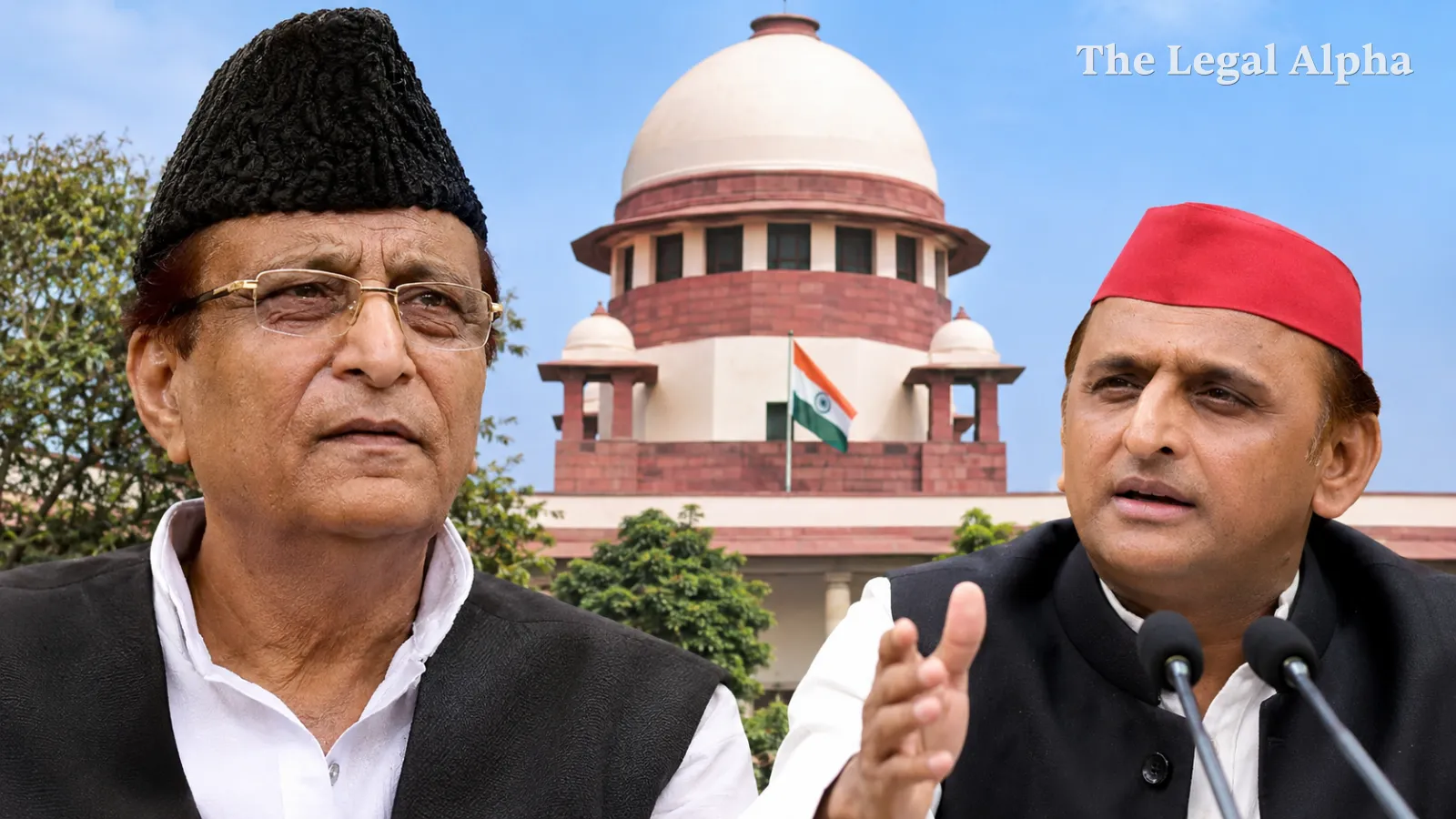
Samajwadi Party leader Mohammed Azam Khan has received significant relief from the Supreme Court in the fake birth certificate case involving his son, Abdullah Azam Khan. The Supreme Court dismissed the Uttar Pradesh government's challenge to an Allahabad High Court order that had stayed Azam Khan's conviction in the matter.
The Supreme Court also extended similar relief to Azam Khan's wife, Tazeen Fatima, and son, Abdullah Azam Khan, whose convictions had not received the same protection from the High Court.
Following the development, Samajwadi Party president Akhilesh Yadav welcomed the Supreme Court's decision, expressing confidence that Azam Khan would ultimately receive justice.
The ruling was delivered by a Bench comprising Justice Dipankar Datta and Justice Sheel Nagu on November 17, 2026.
Legal Topic
Area of Law: Criminal Law
Sub-topic: Forgery, Cheating, Criminal Conspiracy and Suspension of Conviction
Background of the Case
The controversy originated from allegations that Azam Khan and his wife had obtained two separate birth certificates for their son, Abdullah Azam Khan, showing different dates of birth.
One certificate recorded his date of birth as January 1, 1993, while the other mentioned September 30, 1990. The prosecution alleged that the certificates were used for different official purposes, including establishing Abdullah's eligibility to contest the 2017 Uttar Pradesh Assembly elections.
A complaint was lodged by Akash Saxena, who is now a BJP MLA from Rampur, on January 3, 2019.
On October 18, 2023, a trial court in Rampur convicted Azam Khan, Tazeen Fatima and Abdullah Azam Khan, sentencing each of them to seven years' imprisonment for offences relating to cheating, forgery and criminal conspiracy.
What Did the Allahabad High Court Decide?
On May 24, 2024, the Allahabad High Court granted relief to the three convicts by suspending their sentences and granting them bail during the pendency of their criminal proceedings.
However, the High Court treated Azam Khan differently from his wife and son when considering suspension of conviction.
It stayed Azam Khan's conviction but declined to extend the same protection to Tazeen Fatima and Abdullah Azam Khan.
The High Court's observations included the absence of material indicating that Azam Khan had supplied the information used to obtain the disputed second birth certificate.
This difference in treatment led to separate appeals before the Supreme Court.
What Did the Supreme Court Decide?
The Supreme Court dismissed the Uttar Pradesh government's appeal challenging the suspension of Azam Khan's conviction.
At the same time, it allowed the appeals filed by Tazeen Fatima and Abdullah Azam Khan, granting them the benefit of suspension of conviction as well.
The Bench of Justice Dipankar Datta and Justice Sheel Nagu therefore maintained the relief previously granted to Azam Khan while extending comparable protection to his wife and son.
The Supreme Court's decision addressed the competing challenges to the Allahabad High Court's May 24, 2024 order.
Core Legal Issue
The central legal question concerned whether the conviction of an accused person could remain suspended during the pendency of criminal proceedings and whether different treatment could be justified among co-accused convicted in the same case.
The proceedings also raised questions about the circumstances in which an appellate court may grant suspension of conviction, rather than merely suspending the sentence.
Key Legal Points
-
The suspension of a conviction is distinct from the suspension of a sentence. It can have consequences beyond immediate imprisonment.
-
The Uttar Pradesh government challenged the relief granted to Azam Khan by the Allahabad High Court.
-
Azam Khan's wife and son sought equivalent protection after the High Court declined to suspend their convictions.
-
The Supreme Court dismissed the State's appeal and allowed the appeals filed by Tazeen Fatima and Abdullah Azam Khan.
-
The Supreme Court's order does not amount to an acquittal or a final determination of innocence.
Relevant Legal Provisions
The prosecution involved provisions of the Indian Penal Code, 1860, including:
-
Section 420: Cheating and dishonestly inducing delivery of property.
-
Section 467: Forgery of valuable security and certain other documents.
-
Section 468: Forgery for the purpose of cheating.
-
Section 471: Using a forged document as genuine.
-
Section 472: Making or possessing a counterfeit seal with intent to commit forgery.
-
Section 120B: Criminal conspiracy.
The appellate proceedings concerning suspension of conviction also involve the principles governing appellate jurisdiction and interim criminal relief.
Arguments of the Parties
Uttar Pradesh Government
The State challenged the Allahabad High Court's decision to stay Azam Khan's conviction, seeking to have that relief overturned.
Tazeen Fatima and Abdullah Azam Khan
They approached the Supreme Court against the High Court's refusal to suspend their convictions. Their appeals sought similar protection to that already granted to Azam Khan.
The Supreme Court ultimately dismissed the State's challenge and allowed the appeals filed by the wife and son.
Akhilesh Yadav Welcomes Supreme Court's Decision
Reacting to the Supreme Court's ruling, Samajwadi Party president Akhilesh Yadav welcomed the development and expressed confidence that Azam Khan would receive justice.
The decision is politically significant for the Samajwadi Party, given Azam Khan's prominent position in the party and the prolonged legal proceedings involving his family.
However, the Supreme Court's order should be understood in its proper legal context. Suspension of conviction does not erase the trial court's judgment or amount to a final acquittal.
Why Does It Matter?
The development highlights the importance of suspension of conviction as a distinct form of relief in criminal appellate proceedings.
Unlike suspension of sentence, which primarily concerns the execution of punishment, suspension of conviction can have wider consequences where a person's legal rights, public position or statutory eligibility may be affected by the conviction.
The ruling is also significant because it extends similar interim protection to co-accused who were convicted in the same proceedings but had initially been treated differently by the High Court.
For individuals facing criminal appeals, the case illustrates the importance of distinguishing between bail, suspension of sentence and suspension of conviction. Each involves different legal considerations.
Legal Takeaway
The Supreme Court has maintained the suspension of Azam Khan's conviction and extended similar relief to his wife and son. However, the decision does not constitute an acquittal, and the underlying criminal proceedings must be distinguished from the interim relief granted during the appellate process.
Sources
Primary Source: Supreme Court judgment/order in the connected appeals dated November 17, 2026. The full order was not independently available for verification at the time of writing.
Additional Sources: