Delhi High Court Gives Arvind Kejriwal, Manish Sisodia Three Weeks to Respond in Criminal Contempt Proceedings
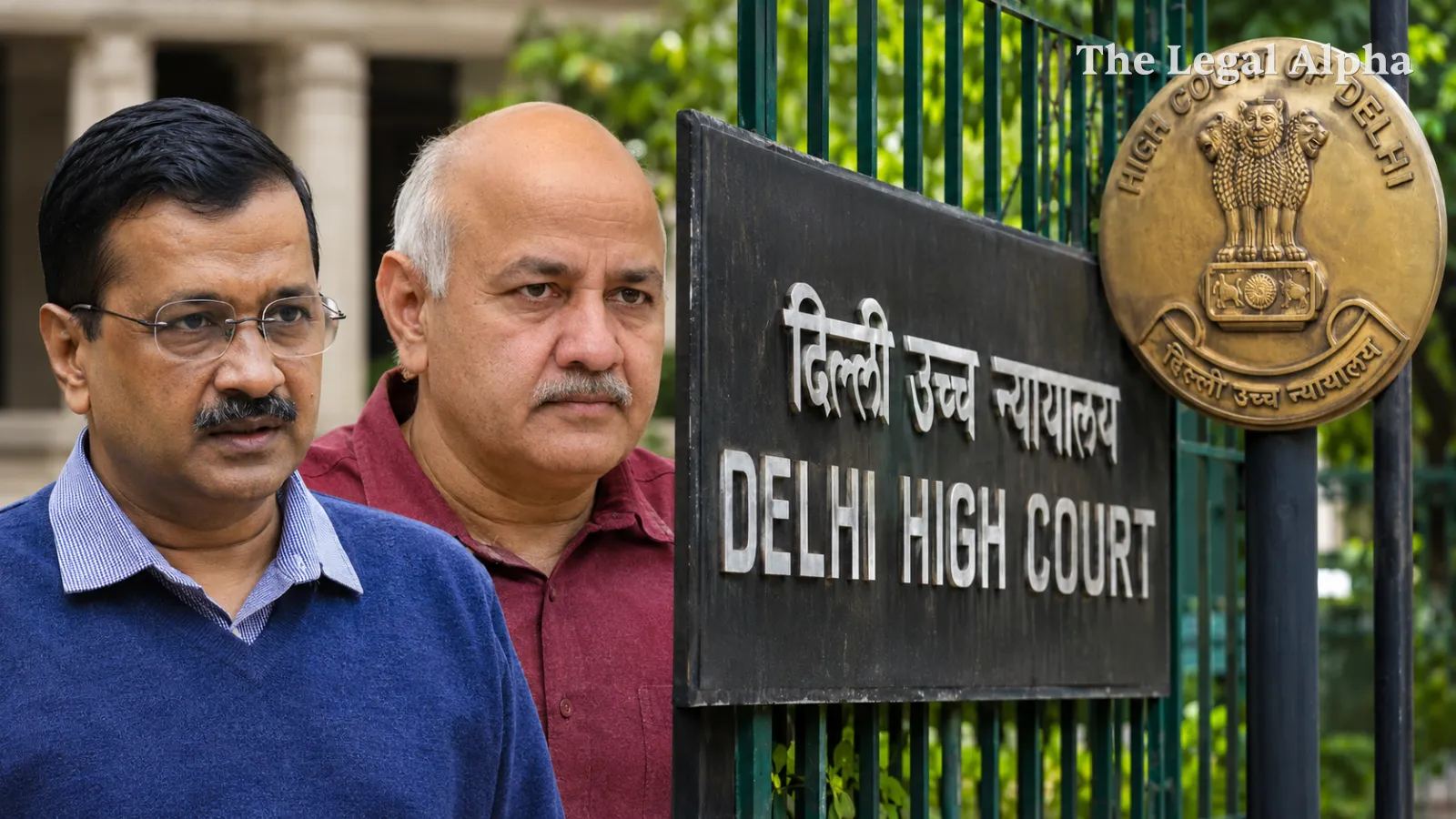
The Delhi High Court has granted Aam Aadmi Party (AAP) leaders Arvind Kejriwal, Manish Sisodia and other party members a final opportunity to submit their responses in a criminal contempt case arising from alleged remarks and social media posts concerning Justice Swarana Kanta Sharma.
A Division Bench comprising Justices Navin Chawla and Arun Bhardwaj expressed displeasure over the continued delay in filing replies. The Court granted the respondents three weeks to submit their responses, warning that their right to file replies could be closed if they failed to comply.
The development concerns the ongoing contempt proceedings initiated after allegations that certain AAP leaders attempted to undermine the credibility of a sitting High Court judge through public statements and online publications.
Legal Topic
Area of Law: Constitutional Law and Contempt of Court
Sub-topic: Criminal Contempt – Scandalising the Authority of the Judiciary
What Is the Core Legal Issue?
The principal legal question is whether public statements, social media posts and communications questioning the impartiality of a sitting judge can amount to criminal contempt by lowering the authority of the judiciary or interfering with the administration of justice.
The proceedings also raise questions about the limits of public criticism of judicial officers, the right to express disagreement with judicial conduct and the responsibility of political representatives when commenting on pending judicial proceedings.
What Did the Delhi High Court Observe and Direct?
The Bench expressed concern that the respondents had not filed their replies despite the registry reporting that the relevant documents had been supplied. It made clear that no further extension would ordinarily be granted.
The Court directed the AAP leaders to:
-
File their replies within three weeks.
-
Raise any objections concerning missing documents in their written responses.
-
Comply with the deadline, failing which their right to submit replies could be closed.
The Bench indicated that the matter would be taken up in January 2027. Importantly, the latest direction concerns the filing of responses and does not amount to a final finding of contempt against the respondents.
Background of the Contempt Proceedings
The contempt proceedings originated from an order dated May 14, 2026, passed by Justice Swarana Kanta Sharma while dealing with the CBI's challenge to the discharge of Kejriwal, Sisodia and other accused persons in the Delhi excise policy case.
The judge took note of social media posts, publicly circulated letters and videos concerning the proceedings and allegations questioning her impartiality. The order examined whether the material went beyond legitimate criticism of judicial decisions and amounted to an attempt to undermine the authority of the judiciary.
The proceedings were initiated against several AAP leaders, including Arvind Kejriwal, Manish Sisodia, Durgesh Pathak, Sanjay Singh, Vinay Mishra and Saurabh Bharadwaj.
Justice Sharma's order distinguished between permissible criticism of judicial decisions and conduct that could scandalise the court or interfere with the administration of justice.
Relevant Legal Provisions
Section 2(c) of the Contempt of Courts Act, 1971
The provision defines criminal contempt to include publication or conduct that scandalises or tends to lower the authority of a court, interferes with judicial proceedings or obstructs the administration of justice.
Section 15 of the Contempt of Courts Act, 1971
This provision empowers the High Court to initiate criminal contempt proceedings on its own motion, subject to the statutory framework.
Article 19(1)(a) of the Constitution
It guarantees freedom of speech and expression. However, this freedom is subject to reasonable restrictions under Article 19(2), which includes contempt of court.
Article 215 of the Constitution
It recognises every High Court as a court of record and empowers it to punish for contempt of itself.
Arguments Presented by the Parties
AAP Leaders and Their Representatives
During the recent hearing, lawyers representing some of the respondents indicated that certain documents had not been supplied in full. They referred to an earlier direction concerning six items of material and submitted that only three had been provided.
The respondents' counsel indicated that their objections could be placed before the Bench through their written replies.
The Court's Position
The Bench referred to the registry's report indicating that the required documents had been supplied. It therefore declined to grant further time and directed the respondents to raise any outstanding concerns in their replies rather than delay filing them.
The Court warned that failure to comply with the three-week deadline could result in closure of their right to file responses.
Why Does This Development Matter?
The proceedings raise an important question about the relationship between freedom of expression and the institutional independence of the judiciary.
Political leaders, public representatives and ordinary citizens have the right to criticise judicial decisions and express disagreement with court proceedings. However, such criticism must be distinguished from conduct that may undermine public confidence in the judicial system or obstruct the administration of justice.
The case is particularly significant because it concerns the use of social media to communicate allegations about judicial impartiality while proceedings are pending.
The eventual outcome may provide further clarity on how criminal contempt jurisdiction applies to online publications and public campaigns directed at judicial officers. However, the respondents have not yet been found guilty of contempt in these proceedings.
Legal Takeaway
The Delhi High Court's latest direction reinforces the importance of complying with procedural deadlines in criminal contempt proceedings. The larger legal question remains whether the alleged publications crossed the boundary between protected criticism and criminal contempt. That question will be determined through the pending proceedings, after the respondents have had an opportunity to present their replies.
Sources
Primary Source:
- Delhi High Court, order dated May 14, 2026, in Criminal Revision Petition No. 134/2026, Justice Swarana Kanta Sharma. Read the Delhi High Court order (PDF).
Additional Sources: