Kerala High Court Calls for Review of Juvenile Age Limit, Suggests Lowering It to 16 Years
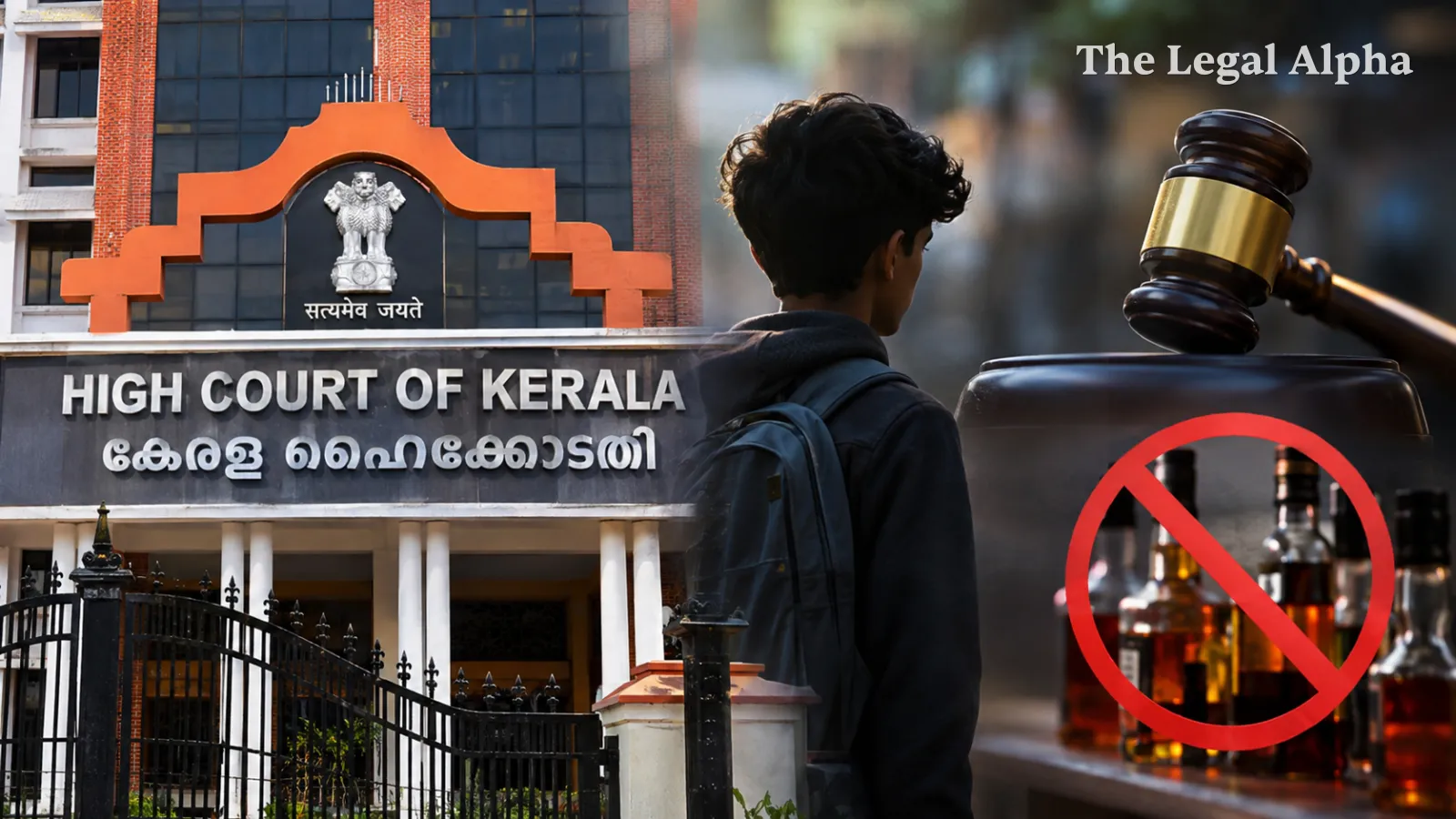
The Kerala High Court has suggested that lawmakers consider reducing the age threshold for juveniles and children in conflict with the law from 18 years to 16 years, referring to changing trends in the maturity of children.
The observation was made by Justice A. Badharudeen while hearing a petition concerning the alleged widespread supply of liquor to underage persons at licensed premises.
The Court also expressed concern over incidents involving persons below 18 years of age allegedly consuming alcohol and subsequently causing fatal road accidents. It observed that easy access to liquor despite statutory restrictions raises serious public safety concerns.
Area of Law
Area of Law: Criminal Law
Sub-topic: Juvenile Justice, Child Protection and Regulation of Alcohol
Core Legal Issue
The principal issue before the Court concerned the enforcement of statutory restrictions prohibiting the sale and service of liquor to persons below the prescribed age under the Kerala Abkari Act.
A broader legal question also emerged from the Court's observations: whether existing laws governing juveniles and children in conflict with the law should be reconsidered in light of changing social circumstances and the perceived maturity of children at the age of 16.
What Did the Court Observe?
The Single Bench of Justice A. Badharudeen observed that the legislature should consider suitable amendments to laws dealing with juveniles and children in conflict with the law, including reducing the relevant age threshold to 16 years.
The Court noted that recent incidents involving minors and fatal motor vehicle accidents after alcohol consumption highlighted the dangers arising from the easy availability of liquor.
Importantly, the suggestion regarding reducing the juvenile age was an observation for legislative consideration and not an operative direction changing the existing legal age limit.
The Court directed the third respondent to file a statement explaining the steps taken to implement Sections 15A and 15B of the Kerala Abkari Act and suggesting possible measures for their effective enforcement.
The matter has been listed for further consideration on November 24, 2026.
Key Legal Points
-
The Kerala High Court has called upon the legislature to consider whether the age threshold governing juvenile justice laws should be reduced to 16 years.
-
The Court's observations were prompted by concerns over alcohol consumption among minors and accidents allegedly linked to such consumption.
-
Sections 15A and 15B of the Kerala Abkari Act were central to the petitioner's complaint regarding the prohibition on liquor sales, service and consumption by persons below 23 years of age.
-
The Court considered the issue serious enough to require a detailed hearing.
-
The Excise Commissioner was directed to explain the enforcement measures adopted and suggest additional steps to prevent violations.
Relevant Law
Kerala Abkari Act, 1 of 1077
-
Section 15A: Relates to statutory restrictions concerning the sale and service of liquor to persons below the prescribed age.
-
Section 15B: Addresses the prohibition on consumption of liquor by persons below the prescribed age.
Juvenile Justice (Care and Protection of Children) Act, 2015
The Act generally defines a child as a person who has not completed 18 years of age. It also provides the legal framework for dealing with children in conflict with the law.
The High Court's suggestion concerns possible legislative reconsideration of the existing age framework. The order does not itself amend the Juvenile Justice Act.
Arguments of the Parties
Petitioner
The petitioner, Vinod Vikraman Pillai, through Advocate U. Jayakrishnan, argued that Sections 15A and 15B of the Kerala Abkari Act impose mandatory restrictions on the sale, service and consumption of liquor by persons below 23 years.
He contended that the continued supply of liquor to underage persons at licensed establishments reflects a failure by the authorities to enforce their statutory obligations.
Respondents
The State authorities were represented by the Public Prosecutor. The Court heard both sides, but the order does not record a detailed account of the respondents' individual submissions.
Why Does It Matter?
The observations raise an important question about the relationship between juvenile justice policy, changing social circumstances and the legal definition of childhood.
Reducing the age threshold for juveniles to 16 years would be a significant legislative change. It could affect how children aged 16 and 17 are treated under the juvenile justice framework, particularly in matters involving alleged offences.
However, the distinction between judicial observations and binding legal changes is important. The existing statutory framework continues to apply unless Parliament amends the relevant legislation.
The proceedings also highlight a separate but equally important concern: the enforcement of restrictions on alcohol sales and consumption involving young people. Effective implementation of existing laws remains central to preventing underage access to liquor and related public safety risks.
Legal Takeaway
The Kerala High Court has placed the question of reducing the juvenile age threshold to 16 years before the legislature for consideration, citing changing trends in children's maturity. However, no change in the existing legal age limit has been ordered. The immediate focus of the proceedings remains enforcement of the Kerala Abkari Act and preventing liquor from reaching underage persons.
Sources
Primary Source: Kerala High Court Order dated November 13, 2026, in Vinod Vikraman Pillai v. State of Kerala & Others, W.P. (Crl.) No. 1746 of 2026(S).
Additional Source: Case report and background information.