Karnataka High Court Bars Deportation of Bengaluru Trader Until Nationality Is Adjudicated Under Law
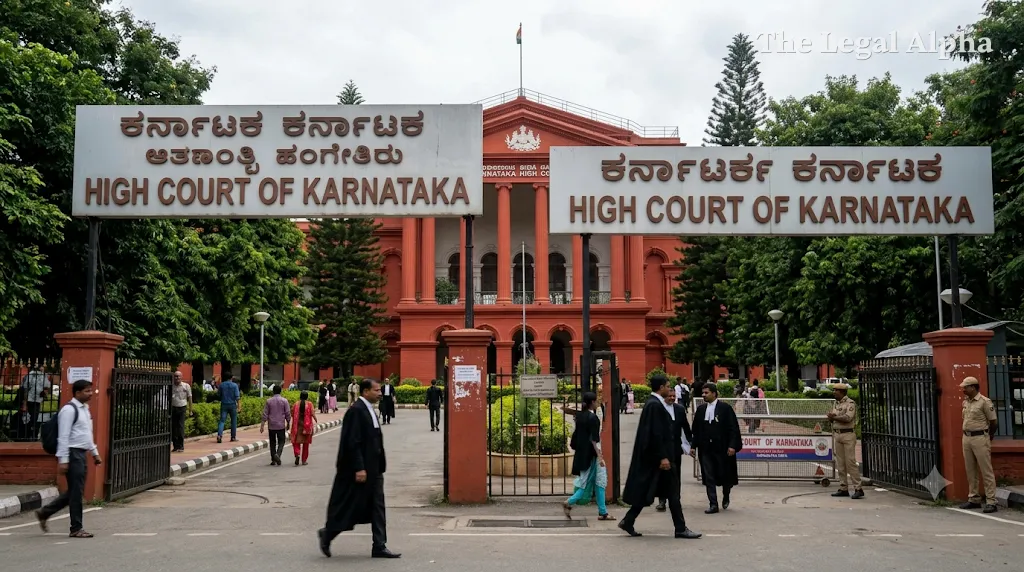
The Karnataka High Court has prohibited immigration authorities from deporting Abdul Rahim, a Bengaluru-based scrap and waste management trader detained on suspicion of being an undocumented Bangladeshi national, until his claim of Indian citizenship is formally decided through a proper legal process.
The dispute began on March 5, 2026, when Parappana Agrahara police picked up Rahim during a local drive to identify illegal immigrants and handed him over to the Foreigners Regional Registration Office (FRRO) in Bengaluru. That very day, the FRRO issued a Movement Restriction Order identifying him as a foreign national named "Md. Rahim Howladar" and confining him to the Utile Foundation detention centre in Kothanur. Rahim, represented through his nephew Jahidul Islam, challenged this order before the High Court, maintaining that he was born in New Delhi in 1979 and is an Indian citizen by birth.
On November 13, 2026, Justice C.M. Poonacha disposed of the writ petition by halting any repatriation or deportation steps until authorities complete a lawful determination of Rahim's nationality, while leaving his confinement at the detention centre undisturbed for the time being.
Legal Topic
Area of Law: Constitutional and Immigration Law
Sub-topic: Citizenship Verification / Procedural Due Process in Deportation
Core Legal Issue
The High Court was called upon to determine whether the Foreigners Regional Registration Office can treat an individual residing in India as a foreign national and initiate deportation proceedings without affording them a personal hearing or examining their documentary proof of citizenship.
Specifically, the court examined the procedural safeguards required under the newly enacted Immigration and Foreigners Act, 2025, and Articles 14 and 21 of the Constitution when a detainee asserts Indian citizenship by birth rather than being apprehended while illegally crossing a border.
What Did the Court / Authority Decide?
Justice C.M. Poonacha issued a balanced ruling that separated the question of temporary detention from the irreversible act of deportation:
-
Deportation Restrained: The court directed the respondents not to deport or repatriate Abdul Rahim until further statutory steps are taken to formally determine his nationality. This extended the protection of an earlier interim stay granted on July 6, 2026.
-
Mandatory Hearing and Document Review: The court held that because Rahim was not caught entering the country illegally and holds government-issued identification, authorities must grant him a personal hearing and evaluate his documents in accordance with law before passing any removal order.
-
Referral to Proper Forum: Observing that the FRRO had failed to follow the statutory adjudication procedure, the court noted that disputed questions of nationality must be decided by a Foreigners Tribunal under the governing framework.
-
Detention Upheld: While blocking deportation, the High Court declined to quash the March 5 Movement Restriction Order completely, directing Rahim to remain housed at the Utile Foundation detention centre until the verification process concludes.
-
Citizenship Left Open: The court clarified that it was not making a final declaration on whether Rahim is an Indian citizen or a Bangladeshi national, leaving that factual determination to the competent authority.
Key Legal Points
-
Procedural Fairness Applies to All Persons: While fundamental freedoms to move and reside freely under Article 19 are restricted to Indian citizens, the constitutional guarantees of equality before the law (Article 14) and protection of life and personal liberty (Article 21) extend to every person in India, including alleged foreigners.
-
Presumption Attached to Verified Documents: Rejecting the authorities' summary dismissal of Rahim's records, the court observed that official documents such as a passport are issued only after due verification and cannot be brushed aside without a fair inquiry.
-
Distinction Between Border Apprehension and Settled Residence: The court underscored that a person living and running a registered business inside the country who claims citizenship by birth cannot be subjected to summary expulsion in the same manner as someone intercepted at the border.
-
Compliance with the 2025 Immigration Framework: Administrative restriction orders issued by the FRRO cannot bypass the statutory mechanism prescribed under the Immigration and Foreigners Act, 2025, and the Immigration and Foreigners Order, 2025, for adjudicating disputed nationality.
Relevant Law
-
Constitution of India: Articles 14 (Right to Equality), 19 (Freedoms of Citizens), 21 (Protection of Life and Personal Liberty), and 226 (Writ Jurisdiction of High Courts).
-
Citizenship Act, 1955: Section 3(1)(a) (governing citizenship by birth for persons born in India between January 26, 1950, and July 1, 1987).
-
Immigration and Foreigners Act, 2025: Section 7(2)(f) (power to restrict the movement and residence of foreigners) and provisions governing Foreigners Tribunals (which replaced the repealed Foreigners Act, 1946).
-
Immigration and Foreigners Order, 2025: Paragraph 8 (regulating movement restrictions and detention centres).
Arguments of the Parties
Petitioner Counsel for Abdul Rahim argued that he was born in New Seemapuri, Delhi, on April 14, 1979, and has lived and worked in India his entire life, operating a GST-registered scrap business in Bengaluru since 2014. The petitioner submitted an Indian passport, birth certificate, Aadhaar card, voter ID, PAN card, driving licence, and municipal identity card to establish his citizenship. He contended that the FRRO violated principles of natural justice by branding him a Bangladeshi national on the very day of his detention without prior notice or an opportunity to be heard, and clarified that he is currently on bail granted by the Allahabad High Court in an appeal against a 2012 conviction in Uttar Pradesh.
Respondent / State Appearing for the FRRO and state authorities, the Additional Solicitor General contended that the detainee is actually a Bangladeshi national named Md. Rahim Howladar, who had previously been convicted by a Ghaziabad court in 2012 under the Foreigners Act, 1946. The authorities argued that his primary records—including two conflicting birth certificates citing a Delhi government hospital that was not established until 1995, and an unverified death certificate for his father—were fabricated, rendering secondary documents like his Aadhaar and passport legally invalid.
Why Does It Matter?
This ruling establishes an early judicial benchmark on how law enforcement and immigration officials must apply the Immigration and Foreigners Act, 2025, during domestic verification drives. Across Indian cities, police drives to detect undocumented immigrants frequently rely on rapid executive assessments by FRRO officials.
By holding that the presence of verified identity documents triggers a mandatory right to a fair hearing before removal, the Karnataka High Court has placed a procedural check on summary deportations. Even where authorities suspect document forgery or point to prior criminal proceedings, executive agencies cannot act as the final judge of citizenship; they must route disputed cases through formal adjudication channels while keeping the individual in civil detention if necessary.
Legal Takeaway
Executive immigration authorities cannot deport a resident who produces Indian identity documents without first conducting a fair hearing and referring the disputed nationality claim to a competent tribunal. However, courts may permit authorities to keep the individual in a designated detention centre while that verification process takes place.
Sources
Primary Source:
Order of the High Court of Karnataka in Shri. Abdul Rahim & Anr. v. The State of Karnataka & Ors., Writ Petition No. 19120 of 2026 (GM-RES), Neutral Citation: 2026:KHC:62981, decided by Justice C.M. Poonacha on November 13, 2026.
Additional Sources:
-
The Indian Express — Report on Karnataka High Court proceedings in W.P. No. 19120 of 2026 (November 16, 2026)
-
The Times of India — Coverage of the Bengaluru scrap trader nationality verification order (November 16, 2026)
-
The New Indian Express — Report on Karnataka HC directions to FRRO regarding nationality determination (November 17, 2026)