Supreme Court Seeks Election Commission’s Response to Rahul Gandhi’s Plea for 48 Questions on Voter Roll Revision
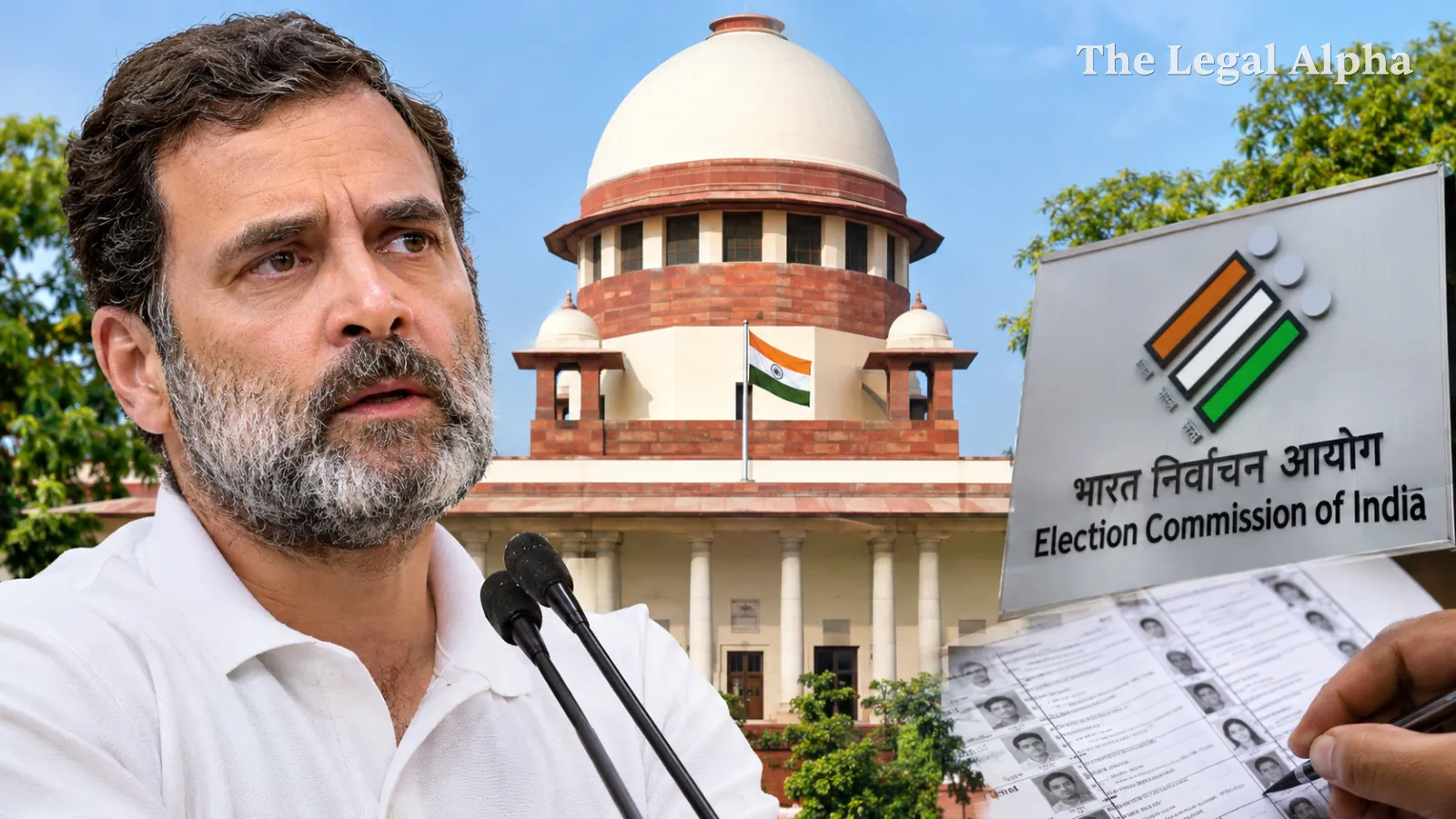
The Supreme Court of India has asked the Election Commission of India (ECI) to respond to an application filed by Rahul Gandhi and other INDIA bloc leaders seeking permission to put 48 formal written questions to the poll body regarding the nationwide Special Intensive Revision (SIR) of electoral rolls.
The development came on November 17, 2026, when a Bench led by Chief Justice of India Surya Kant, along with Justice Joymalya Bagchi and Justice V. Mohana, allowed the Election Commission to file its objections to the application. The Court has scheduled the next hearing for December 9, 2026.
The application raises questions about the Election Commission's internal decision-making, alleged voter exclusions and changes to its digital electoral registration systems.
Background of the Dispute
The application forms part of an ongoing Supreme Court challenge concerning the Election Commission's handling of the Special Intensive Revision of electoral rolls.
Rahul Gandhi and other opposition leaders have questioned whether decisions concerning the nationwide SIR were taken collectively by the three-member Election Commission or whether certain decisions were made without the knowledge or approval of the other commissioners.
The Election Commission, in its counter-affidavit filed on October 26, 2026, maintained that the major decisions concerning the SIR were unanimously approved by all three members.
However, the petitioners contend that the affidavits do not disclose sufficient supporting records, including meeting minutes, file notings, approval dates and details of the decision-making process.
Area of Law and Sub-Topic
Area of Law: Constitutional Law and Election Law
Sub-topic: Election Commission's Powers, Electoral Roll Revision and Judicial Examination of Administrative Decisions
Core Legal Issue
The central legal question is whether the petitioners should be permitted to serve formal interrogatories on the Election Commission and obtain sworn answers concerning decisions taken during the Special Intensive Revision.
The dispute also raises questions about transparency in the functioning of a constitutional authority, the accountability of election officials and the availability of judicial procedures to obtain information held exclusively by public authorities.
What Did the Supreme Court Decide?
The Supreme Court permitted the Election Commission to file its response and objections to the application seeking permission to serve 48 interrogatories.
Senior Advocate Kapil Sibal, appearing for Rahul Gandhi, submitted that the Election Commission's affidavits relied on claims of unanimous approval without providing the underlying records.
Senior Advocate Harish Salve, representing the Election Commission, informed the Court that the poll body had serious reservations about the application.
Chief Justice Surya Kant allowed the Commission to place its objections on record and indicated that the Court would examine the interrogatories issue before taking a decision.
The matter has been listed for December 9, 2026.
Importantly, the Supreme Court has not yet permitted the petitioners to serve the 48 questions. It has only allowed the Election Commission an opportunity to respond before deciding the request.
Key Legal Points Emerging from the Proceedings
-
Collective decision-making: The petitioners want records establishing whether all three Election Commissioners participated in approving the decisions concerning the SIR.
-
Voter exclusions: They seek state-wise and Union Territory-wise information about voters excluded from draft and final electoral rolls and the reasons for their exclusion.
-
Digital electoral records: The questions seek clarification about whether electoral-roll entries were added, deleted or modified through bulk operations without individual orders from Electoral Registration Officers.
-
Form 6 modifications: The petitioners want to establish who authorised the additional declaration introduced in the online Form 6 registration process and whether the Commission formally approved it.
-
Accountability of officials: The application also seeks information about objections filed under Form 7, access to electoral databases, private contractors' involvement and the handling of appeals concerning voter inclusion.
Relevant Legal Provisions
The application relies on procedural provisions of the Supreme Court Rules, 2013, concerning the Court's power to permit interrogatories.
The petitioners have specifically invoked:
-
Order V Rule 1 of the Supreme Court Rules, 2013.
-
Order XXXVIII Rule 11(9) of the Supreme Court Rules, 2013.
-
Order LV Rule 6 of the Supreme Court Rules, 2013.
They have also relied on the Constitution Bench judgment in Justice K.S. Puttaswamy (Retd.) v. Union of India, concerning constitutional rights and the examination of issues involving information held by authorities.
The application further raises issues concerning the Election Commission's constitutional responsibilities under Article 324 of the Constitution of India and the statutory framework governing electoral registration.
Arguments Presented by the Parties
Petitioners' Arguments
Rahul Gandhi and the other opposition leaders contend that the Election Commission's affidavits do not provide the documentary material necessary to establish that decisions concerning the SIR were unanimously approved.
They argue that specific questions should be answered under oath by the concerned officials, particularly where information about internal approvals, database operations and electoral-roll modifications is within the exclusive knowledge of the Commission.
The petitioners also seek disclosure of records supporting the Commission's claims and have requested that any claim of privilege over official documents be supported by specific reasons.
Election Commission's Position
The Election Commission has maintained that the major SIR decisions were unanimously approved by its three members.
During the November 17 hearing, its counsel expressed serious reservations about the application seeking permission to serve the 48 interrogatories.
The Commission has been given an opportunity to file its objections, which the Supreme Court will consider before deciding whether the requested questions may be served.
Why Does This Development Matter?
The proceedings raise an important question about transparency and accountability in the administration of electoral processes.
The Election Commission is a constitutional authority entrusted with supervising elections and maintaining electoral rolls. Questions concerning how decisions are approved, how voter information is modified and how exclusions are recorded have implications for public confidence in the electoral system.
If the Supreme Court eventually permits the interrogatories, the resulting responses could provide greater clarity about the Commission's internal procedures and the handling of electoral data.
The case also highlights the importance of judicial scrutiny where disputes involve official records and administrative decisions that are not readily accessible to the parties challenging them.
However, the present order should not be treated as a finding that irregularities or unlawful voter deletions have occurred. Those allegations remain contested and are yet to be determined by the Court.
Legal Takeaway
The Supreme Court has allowed the Election Commission to respond to the request for 48 written questions before deciding whether the questions can formally be served. The proceedings concern transparency in the Election Commission's decision-making and the administration of electoral rolls, but the substantive allegations remain pending.
Sources
Primary Source: Supreme Court proceedings in Rahul Gandhi v. Election Commission of India, W.P. (C) No. 1351/2026, Diary No. 64196/2026. The official order was not independently available for verification.
Additional Sources: