Supreme Court Upholds Acquittal in Himachal Pradesh Double Murder Case, Emphasising Critical Gaps in Circumstantial Chain and Inconclusive Forensics
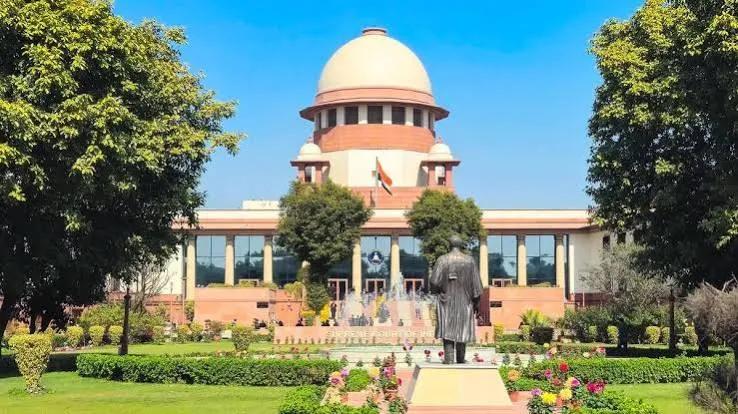
The Supreme Court of India dismissed an appeal filed by the State of Himachal Pradesh challenging the acquittal of a woman accused of murdering her stepmother and minor stepbrother in 2011.
A Bench comprising Justice Manoj Misra and Justice Vijay Bishnoi affirmed the Himachal Pradesh High Court's verdict acquitting the respondent, Anchla alias Chanchla. The bodies of the two victims were discovered on September 7, 2011, inside their locked house in Diur, Himachal Pradesh, having suffered homicidal death by strangulation estimated to have taken place five to seven days prior.
While the trial court had convicted Anchla under Section 302 of the Indian Penal Code (IPC) based primarily on circumstantial assertions—including the "last seen" theory, taxi travel, key recoveries, and a DNA match—the High Court overturned the conviction. On further appeal, the Supreme Court ruled that the prosecution failed to establish an unbroken, complete chain of circumstances excluding every hypothesis of innocence, holding that the police must collect evidence rather than create it.
Legal Topic
Area of Law: Criminal Law
Sub-topic: Circumstantial Evidence / Appeal Against Acquittal / Murder
Core Legal Issue
The fundamental legal question before the Supreme Court was whether an appellate court can reverse a High Court judgment of acquittal when the conviction rests entirely on circumstantial evidence that contains temporal gaps, unverified recoveries, and unexplained witness enlistment.
Specifically, the Court examined whether non-temporal DNA matches and improved witness testimonies can satisfy the rigorous standard of proof beyond reasonable doubt required to convict an accused of murder under Section 302 of the IPC.
What Did the Court Decide?
The Supreme Court dismissed the State's appeal and upheld the acquittal of the respondent.
The Court held that the High Court took a plausible and reasonable view of the evidence that warranted no interference under appellate jurisdiction. The Bench observed that the alleged "last seen" testimony was compromised by serious contradictions and substantial improvements over earlier police statements. Moreover, the medical post-mortem allowed for the possibility that the deaths took place after the date the accused was allegedly present, disrupting the necessary temporal proximity.
The Bench also noted that the investigating agency failed to verify whether the lock produced in court was the one actually broken at the scene, rendering the subsequent recovery of keys legally inconsequential. With the prosecution failing to establish guilt beyond reasonable doubt, the acquittal stands final.
Key Legal Points
-
Stringent Standard for Circumstantial Conviction: Circumstances from which the conclusion of guilt is drawn must be fully established, forming a complete chain that unerringly points to the guilt of the accused and excludes any plausible hypothesis of innocence.
-
Temporal Proximity in "Last Seen" Theory: A wide gap between the time the accused was allegedly last seen with the deceased and the estimated time of death breaks the chain of causation, particularly where third-party access cannot be ruled out.
-
Limitations of Non-Temporal DNA Evidence: A forensic DNA match showing an accused's blood on an item inside a home does not prove guilt where the accused had regular, legitimate access to the premises and where no biological traces link the accused to the fatal assault or the ligature material.
-
Duty to Collect, Not Fabricate Evidence: Unexplained actions by an investigating officer in enlisting witnesses who had no organic reason or prompt to come forward cast serious doubt on prosecution credibility, reiterating that investigators must collect evidence, not create it.
-
Electronic Record Lapses: The failure of police investigators to secure mobile tower location data alongside call detail records constitutes a significant investigative lapse that weakens circumstantial links.
Relevant Law
-
Indian Penal Code, 1860 (IPC): Section 302 (Punishment for murder).
-
Code of Criminal Procedure, 1973 (CrPC): Section 161 (Examination of witnesses by police) and Section 313 (Power to examine the accused).
-
Indian Evidence Act, 1872: Section 8 (Motive, preparation, and previous or subsequent conduct), Section 27 (Information received from accused), and the cardinal principles of circumstantial evidence established in Sharad Birdhichand Sarda v. State of Maharashtra.
-
Appellate Principles on Acquittals: Settled jurisprudence governing interference under Article 136 of the Constitution, which bars overturning an acquittal unless the lower court's view is palpably perverse or impossible.
Arguments of the Parties
Appellant: State of Himachal Pradesh
The State contended that the trial court's conviction was sound, arguing that the respondent had an established motive rooted in inheritance disputes over her father's property. The prosecution submitted that the respondent was seen heading to the home on August 31, 2011, returned with an injured hand, led police to the recoveries of keys and a mobile phone, and that forensic analysis conclusively matched her DNA to bloodstains found on a trunk at the scene of the crime. The State argued these circumstances formed an unbroken chain of guilt.
Respondent: Anchla @ Chanchla
The respondent submitted that the High Court rightly acquitted her due to glaring investigative deficiencies and evidentiary contradictions. It was argued that the sole "last seen" witness substantially altered his testimony, and the estimated time of death left a gap of multiple days during which third-party entry was entirely possible. The defense further highlighted that as a family member who frequently visited the house, past blood traces could not prove homicidal presence, especially when no biological material was found on the victims or strangulation weapons, and the alleged motive was never substantiated.
Why Does It Matter?
This ruling underscores the judiciary's strict scrutiny of circumstantial evidence and serves as an important check against shoddy police practices. By distinguishing between static forensic presence and temporal culpability, the Supreme Court clarified that modern forensic evidence—such as a DNA match—cannot be used as a standalone substitute for a coherent timeline when the accused had lawful, ordinary access to the crime scene.
Additionally, the judgment sends a firm warning to law enforcement agencies regarding investigative shortcuts. The Court's rebuke over the unexplained appearance of convenient prosecution witnesses and the failure to collect corroborative mobile tower location data reinforces essential procedural safeguards designed to protect individuals from wrongful convictions built on suspicion rather than proof.
Legal Takeaway
In circumstantial murder prosecutions, a conviction cannot stand on suspicion, uncorroborated "last seen" accounts, or forensic traces that fail to place the accused at the exact scene during the commission of the crime. Where the prosecution's evidentiary chain reveals plausible alternatives consistent with innocence, an order of acquittal cannot be disturbed.
Sources
Primary Source:
-
Supreme Court of India, The State of Himachal Pradesh v. Anchla @ Chanchla, Criminal Appeal No. 166 of 2019, Neutral Citation: 2026 INSC 1074, Judgment dated October 1, 2026 (Coram: Manoj Misra and Vijay Bishnoi, JJ.).
Additional Sources:
-
High Court of Himachal Pradesh, Record of Criminal Appeal (Acquittal Order, 2014).
-
Deccan Herald Report, Supreme Court upholds woman's acquittal in Himachal Pradesh double murder case, cites gaps in circumstantial evidence (October 2026).