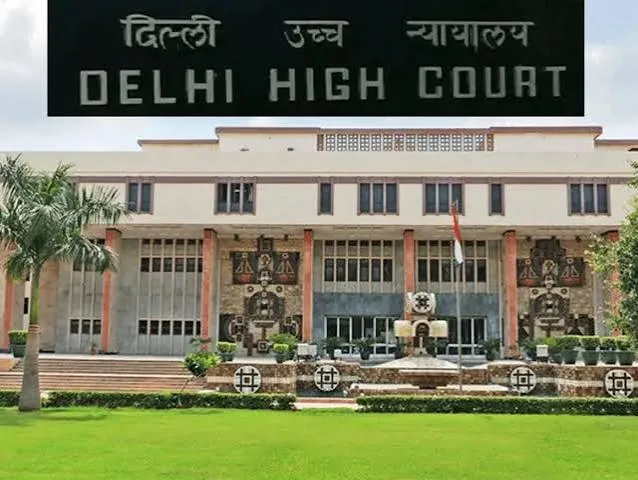
Delhi High Court Directs DDA to Clear Pending Freehold Conversions Under Existing Policy Within Two Months, Deeming ₹155 Crore Freeze Unjustified
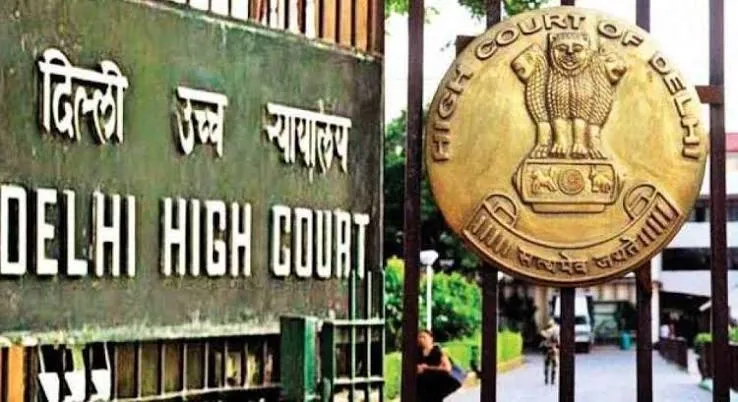
The Delhi High Court has intervened to halt an administrative standstill on property conversions in the capital, directing the Delhi Development Authority to process all pending leasehold-to-freehold applications within two months under the policy active when each application was submitted.
The directive comes after the civic body shut down its online portal and halted the processing of conversion files earlier this year, citing ongoing discussions with the Union Government over revised circle rates and updated guidelines. While the authority took down the processing system, it continued to hold approximately ₹155.06 crore collected from 1,373 applicants between 2020 and 2026 without finalizing their deeds. A Division Bench comprising Justice Prathiba M. Singh and Justice Vikas Mahajan held that such prolonged administrative inaction is unacceptable, emphasizing that citizens cannot be left in limbo indefinitely while public departments deliberate over future policy terms.
Legal Topic
Area of Law: Property Law / Administrative Law
Sub-topic: Leasehold to Freehold Conversion / Retrospective Application of Policy / Administrative Delay
Core Legal Issue
The central question before the Court was whether a statutory development agency can withhold the processing of property conversion requests—after accepting prescribed conversion fees—on the premise that a revised fee structure and procedural framework are under consideration.
The Court also addressed whether any forthcoming administrative policy can be applied retrospectively to alter charges or impose fresh conditions on citizens who had already satisfied the requirements in place on the date of their applications.
What Did the Court / Authority Decide?
The Division Bench ordered the Delhi Development Authority to process every pending conversion application in accordance with the policy prevalent on the date of filing. The Court set an outer limit of two months for the authority to complete this exercise and take formal decisions on all pending files.
The Bench turned down requests from government counsel seeking extended adjournments to place a joint, comprehensive policy on record. The judges observed that although the administration retains the power to formulate prospective regulations for future applicants, freezing existing applications after collecting more than ₹155 crore from the public lacks legal justification.
The Court further noted that the operational deadlock directly impedes urgent financial transactions, senior citizens seeking property sales, and families formalizing partition settlements. The Bench scheduled the matter for compliance review on December 11, 2026, and directed both the Secretary of the Ministry of Housing and Urban Affairs and the Vice-Chairman of the Delhi Development Authority to appear during the proceedings.
Key Legal Points
-
Substantive policy revisions and fee enhancements cannot be implemented retrospectively to stall or defeat applications filed under an operative regime.
-
Retaining substantial conversion deposits while pulling down processing portals breaches core tenets of administrative fairness and legitimate expectation.
-
Inter-departmental consultations and administrative restructuring cannot serve as valid grounds to halt statutory public functions.
-
Undue administrative delay that prevents property owners from perfecting title infringes their lawful ability to transfer, mortgage, or settle immovable property.
Relevant Law
-
Delhi Development Act, 1957: Framing the statutory responsibilities of the authority in managing land administration and conveyance registrations.
-
Principle of Prospective Operation of Administrative Policy: The legal rule establishing that executive notifications affecting monetary obligations or substantive rights apply only to prospective transactions unless retrospectivity is explicitly authorized by statute.
-
Article 300A of the Constitution of India: Protecting the right not to be deprived of property without legal authority, which encompasses unreasonable state interference with the right to alienate or title lawful assets.
-
Judicial Precedent on Delay Charges: Established High Court rulings holding that when an authority accepts fees and utilizes applicant funds over extended periods, it cannot subsequently demand higher rates on account of its own bureaucratic delays.
Arguments of the Parties
Appellants (Delhi Development Authority and Central Authorities) The Delhi Development Authority, represented by its Standing Counsel, submitted that receipt and processing of fresh conversion requests were halted due to administrative exigencies, as the administration sought to align conversion charges with Delhi circle rates to ensure transparency. Central Government counsel, led by the Additional Solicitor General, submitted that the Ministry of Housing and Urban Affairs and the Land and Development Office were actively engaged in streamlining documentation and standardizing rates. The authorities requested at least two additional months to present a comprehensive, unified policy framework rather than dealing with procedural issues piecemeal.
Respondents (Property Owners) Counsel appearing for the property owners argued that applicants had complied with every procedural requirement and paid full conversion charges calculated under the prevalent rules. They pointed out that even in hundreds of instances where formal conversion approvals were already granted, the authority failed to execute conveyance deeds. They contended that shutting down the digital portal unlawfully penalizes citizens for bureaucratic disagreements, blocking property sales, succession planning, and necessary financing.
Why Does It Matter?
The decision delivers immediate relief to thousands of leasehold property holders across Delhi whose transactions have been stalled since the conversion portal was deactivated. By enforcing a strict two-month deadline, the High Court clears the pathway for regularizing title across residential, industrial, and commercial properties that were trapped in bureaucratic limbo.
From an administrative law standpoint, the order reinforces the rule that state agencies cannot hold citizen applications hostage to speculative policy changes after accepting regulatory fees. It restricts the state from retroactively shifting financial or documentation burdens onto applicants when administrative bodies fail to finalize their internal rules within reasonable timeframes.
Legal Takeaway
When a public authority accepts statutory fees under an active conversion scheme, it is legally bound to process those applications under the rules in effect on the date of submission. Prospective revisions to administrative policy or rate hikes cannot be used as a justification to freeze citizen files or delay the execution of conveyance deeds.
Sources
Primary Source:
-
Delhi High Court Order dated September 28, 2026, in Delhi Development Authority v. Mala Sahni Seth & Anr. and connected matters (Contempt Appeal (C) No. 15/2026; Neutral Citation: 2026:DHC:8534-DB), Coram: Justice Prathiba M. Singh and Justice Vikas Mahajan.
Additional Sources:
-
High Court of Delhi Orders dated July 3, 2026; July 30, 2026; and September 7, 2026, in Contempt Appeal (C) No. 15/2026.
-
Official Record of Minutes of Meeting dated August 14, 2026, between the Ministry of Housing and Urban Affairs (MoHUA) and the Delhi Development Authority (DDA).
-
Delhi Development Authority Notifications and Office Orders concerning the Interactive Disposal of Land Information System (IDLI portal).