Supreme Court Suspends Life Sentence of Godhra Train Burning Convict on Medical Grounds
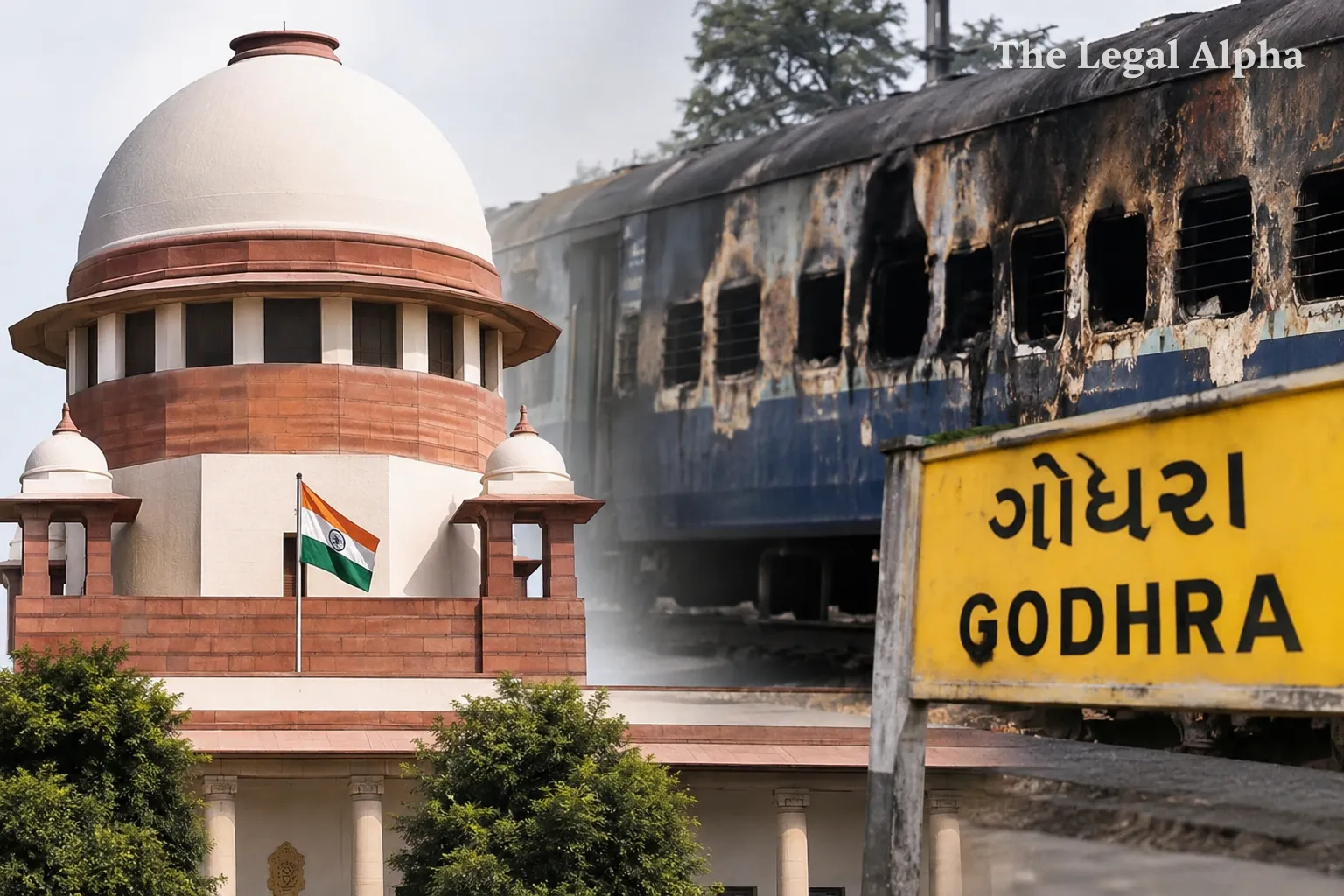
The Supreme Court of India has suspended the life sentence of Irfan Siraj Pada, a convict in the 2002 Godhra train burning case, citing his prolonged incarceration and medical condition. The November 23, 2026 development provides temporary relief to the convict but does not disturb his conviction or finally decide his pending criminal appeal.
What Happened?
A Bench comprising Justice M.M. Sundresh and Justice Prasanna B. Varale passed the order after considering an application seeking suspension of sentence on medical grounds.
The Court took note of the fact that Pada had spent more than 18 years in prison and was suffering from medical ailments. The State of Gujarat also did not dispute the medical condition presented on behalf of the applicant.
The case arises from the burning of the S-6 coach of the Sabarmati Express near Godhra railway station in February 2002, an incident that resulted in the deaths of 59 passengers and subsequently triggered widespread communal violence in Gujarat.
Legal Topic
Area of Law: Criminal Law
Sub-topic: Suspension of Sentence, Bail Pending Appeal and Medical Grounds for Release
Core Legal Issue
The principal legal question was whether a life convict's sentence could be suspended during the pendency of his criminal appeal, considering his medical condition and the substantial period already spent in prison.
The Court had to consider the circumstances justifying temporary release without treating the suspension application as an opportunity to reconsider or overturn the underlying conviction.
What Did the Supreme Court Decide?
The Supreme Court allowed the application for suspension of sentence on medical grounds.
The Bench relied on the following circumstances:
-
Irfan Siraj Pada had remained incarcerated for more than 18 years.
-
He was suffering from medical ailments.
-
The State did not dispute the medical condition placed before the Court.
-
The State acknowledged the seriousness of the underlying offence but expressed no objection to suspension of the sentence on medical grounds.
The Court observed that the applicant's medical circumstances justified granting the requested relief.
Importantly, the order concerns suspension of the sentence and does not amount to an acquittal. The conviction itself has not been set aside.
Key Legal Points
-
Medical grounds: Serious medical circumstances can be considered when deciding an application for suspension of sentence.
-
Prolonged incarceration: The period already spent in prison is a relevant consideration in determining whether temporary relief is justified.
-
State's position: The State's confirmation of the medical circumstances and its lack of objection were relevant to the Court's decision.
-
Suspension is not acquittal: Suspending a sentence does not erase the conviction or determine the merits of the pending appeal.
-
Judicial discretion: The Supreme Court considers the circumstances of each case before granting suspension of sentence.
Relevant Law
Section 389(1) of the Code of Criminal Procedure, 1973
This provision empowers an appellate court to suspend the execution of a sentence or order appealed against and, where the convict is in confinement, release the person on bail or personal bond.
The provision is relevant to applications seeking suspension of sentence during the pendency of criminal appeals.
The corresponding procedural framework under the Bharatiya Nagarik Suraksha Sanhita, 2023, is also relevant to criminal appellate proceedings governed by the new legislation. The applicability of the respective procedural provision depends on the proceedings involved.
Arguments of the Parties
Applicant – Irfan Siraj Pada
The applicant sought suspension of his life sentence primarily on medical grounds. His counsel placed before the Court his medical condition and the fact that he had already spent more than 18 years in prison.
Respondent – State of Gujarat
The State, represented by Advocate Swati Ghildiyal, acknowledged the seriousness of the case. However, it did not dispute the medical condition presented by the applicant and expressed no objection to suspension of the sentence on medical grounds.
Why Does It Matter?
The decision highlights the importance of considering individual circumstances even in cases involving serious criminal convictions.
The ruling is significant for several reasons:
-
Humanitarian considerations: Medical conditions can become an important factor when courts examine requests for temporary relief from incarceration.
-
Long-term imprisonment: Prolonged incarceration may be relevant when an appellate court considers suspension of sentence.
-
Balance between justice and individual rights: Courts must consider the seriousness of the offence while also examining the circumstances of the individual seeking relief.
-
Limited nature of relief: The decision does not weaken the conviction or establish that the applicant is innocent. It addresses his request for suspension of sentence.
The order should not be interpreted as a general rule that every convict who has spent a substantial period in prison or suffers from medical problems is automatically entitled to release. Such applications depend on their individual facts and circumstances.
Legal Takeaway
The Supreme Court's decision demonstrates that medical conditions and prolonged incarceration can be relevant considerations when deciding applications for suspension of sentence. However, suspension of sentence is a limited form of judicial relief and must not be confused with acquittal or the reversal of a conviction.
Sources
Primary Source: Supreme Court order in Irfan Siraj Pada v. State of Gujarat, concerning suspension of sentence dated November 23, 2026. The full text of the specific order was not independently located in the Supreme Court's publicly indexed records.
Additional Sources: