Kerala High Court Reinstates 16 Students After Quashing University Disciplinary Action Over VC Protest
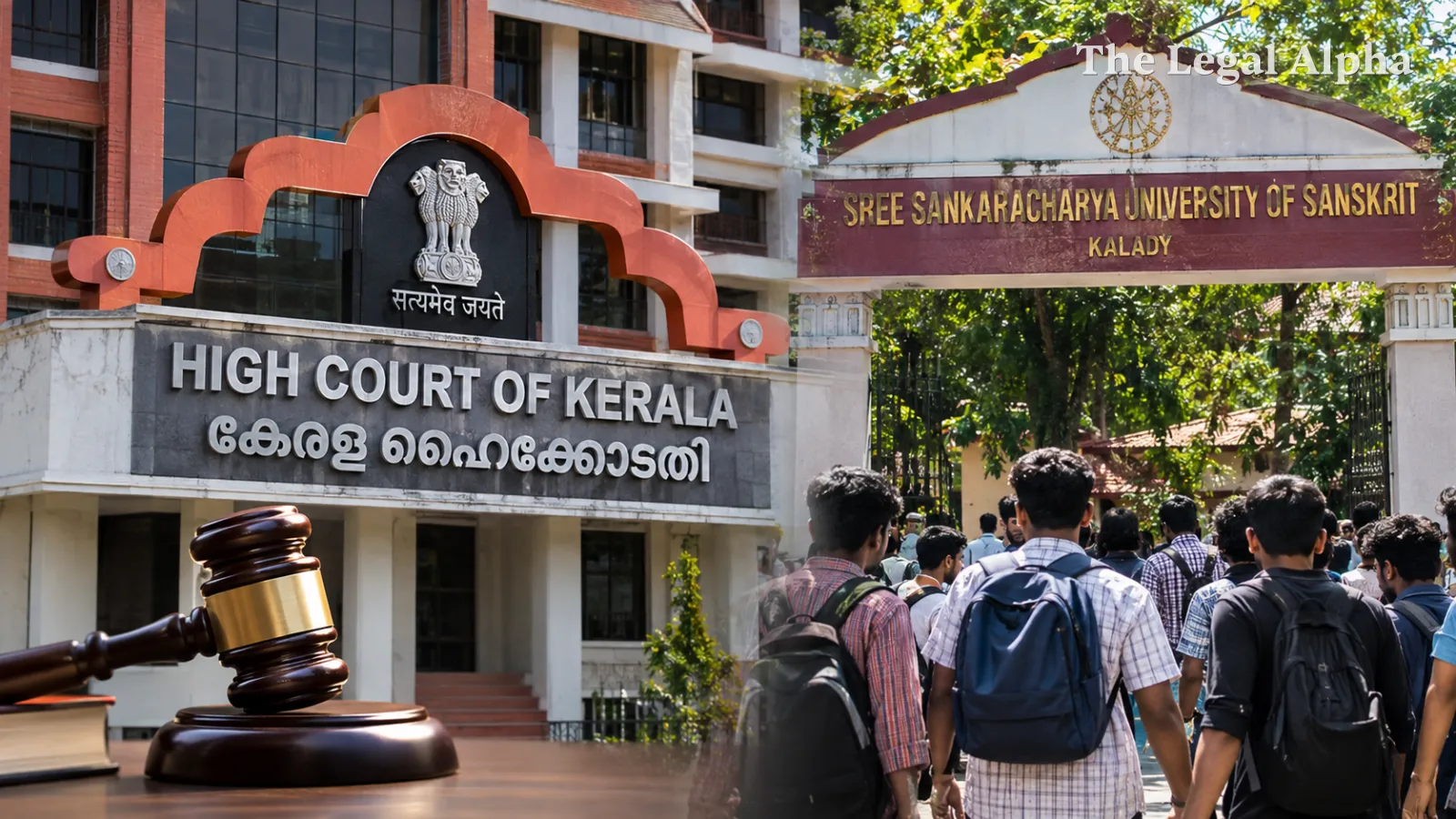
The Kerala High Court has quashed the suspension of 16 students of Sree Sankaracharya University of Sanskrit, Kalady, who faced disciplinary action following a protest against the university's Vice-Chancellor.
Justice PV Kunhikrishnan set aside the university's enquiry report, suspension orders and punishment imposed on the students. The Court also directed the university to allow the students to return to campus and attend regular classes immediately.
The ruling comes after the students challenged the disciplinary proceedings, arguing that their suspension had disrupted their education and prevented them from appearing in scheduled examinations.
Legal Topic
Area of Law: Constitutional Law and Education Law
Sub-topic: Students' Rights, University Disciplinary Proceedings and Principles of Natural Justice
Core Legal Issue
The central issue before the High Court was whether the university's disciplinary action and continued suspension of the students could be sustained in the circumstances of the case, particularly when the students faced restrictions on attending classes and appearing for examinations.
The proceedings also raised questions about the university's authority to impose disciplinary punishment and the safeguards that must accompany internal enquiries against students.
What Did the Court Decide?
The single-judge Bench allowed the students' petition and quashed the university's enquiry report, suspension and consequential punishment.
The Court issued the following directions:
-
The 16 students must be permitted to enter the university campus and attend regular classes immediately.
-
The university must arrange separate examinations for the students within six weeks of receiving a copy of the judgment.
-
The university remains free to initiate a fresh enquiry against the students, if necessary.
-
However, the students cannot be suspended again while any fresh enquiry is pending.
The Court's directions provide immediate academic relief while leaving the university's option to conduct fresh disciplinary proceedings open.
Background of the Dispute
The controversy originated from a protest held on August 13 at the university. The students were accused of conducting a symbolic funeral of the Vice-Chancellor during the demonstration. They were also accused of subsequently obstructing and assaulting her while she was leaving her office.
Two FIRs were registered at the Kalady Police Station in connection with the incident.
On September 1, the university suspended all 16 students and initiated disciplinary proceedings against them.
The students subsequently approached the High Court, contending that their continued suspension was affecting their academic progress.
On October 30, the High Court initially permitted them to provisionally appear for examinations. However, a Division Bench overturned that interim relief on November 3, citing procedural deficiencies relating to examination applications, attendance and internal assessments.
The students then approached the Supreme Court, which declined to interfere with the Division Bench's decision on November 5 but directed the single judge to decide the pending suspension challenge expeditiously.
The High Court ultimately delivered its decision on November 23, 2026.
Key Legal Points
-
Judicial review of university action: Disciplinary decisions taken by universities may be examined by constitutional courts when challenged on legal grounds.
-
Access to education: The Court's directions protect the students' ability to resume classes and complete their academic requirements.
-
Fresh disciplinary proceedings: The university retains the authority to conduct another enquiry, subject to the Court's directions.
-
Protection during enquiry: The students cannot be suspended again merely while a fresh enquiry remains pending.
-
Examination relief: The university must provide separate examinations within the six-week period prescribed by the Court.
Relevant Law
Constitution of India
- Article 226: Empowers High Courts to issue writs and exercise judicial review over administrative and other legally reviewable actions of public authorities, including universities.
Important Judicial Precedent
- Dr Antony Thomas v. VM Muhammed Rafique & Others (2017) – A Kerala High Court decision concerning protests and disciplinary conduct in educational institutions. It was subsequently referred to by the Division Bench in the proceedings concerning the students.
The precise statutory provisions governing the university's disciplinary enquiry have not been independently verified from the November 23 judgment.
Arguments of the Parties
Students' Arguments
The students challenged their suspension, arguing that the disciplinary action had adversely affected their education. They sought permission to return to campus, attend classes and obtain relief concerning examinations.
They had also maintained that their protest was intended to highlight inadequate facilities at the university and disputed the allegations surrounding the incident.
University's Position
The university opposed the students' earlier request for examination-related interim relief, relying on attendance requirements, examination registration deadlines and internal assessment requirements.
It also maintained that disciplinary action had been initiated following the alleged misconduct during the protest.
The university's position in the earlier proceedings must be distinguished from the final directions issued by the single judge on November 23.
Why Does It Matter?
The ruling is significant for the relationship between university disciplinary powers and students' academic rights.
Although universities have the authority to maintain discipline and investigate allegations of misconduct, disciplinary action can also have serious consequences for students' academic progress. The High Court's directions ensure that the students are not deprived of classes and examinations while the university considers whether another enquiry is necessary.
The decision also draws an important distinction between allowing an institution to investigate alleged misconduct and keeping students suspended throughout the enquiry. The university can pursue fresh disciplinary proceedings, but it must comply with the specific safeguards imposed by the Court.
Legal Takeaway
The Kerala High Court has set aside the suspension and disciplinary punishment imposed on 16 students while preserving the university's authority to conduct a fresh enquiry. The ruling ensures their immediate return to academic activities and directs the university to arrange separate examinations within six weeks.
Sources
Primary Source:
- Kerala High Court, Sree Sankaracharya University of Sanskrit v. Archana P.S. & Others, order dated November 23, 2026. The full text of this latest order was not independently available for verification.
Additional Sources: