Delhi Court Issues Non-Bailable Warrant Against Dhruv Rathee in 2018 Defamation Case
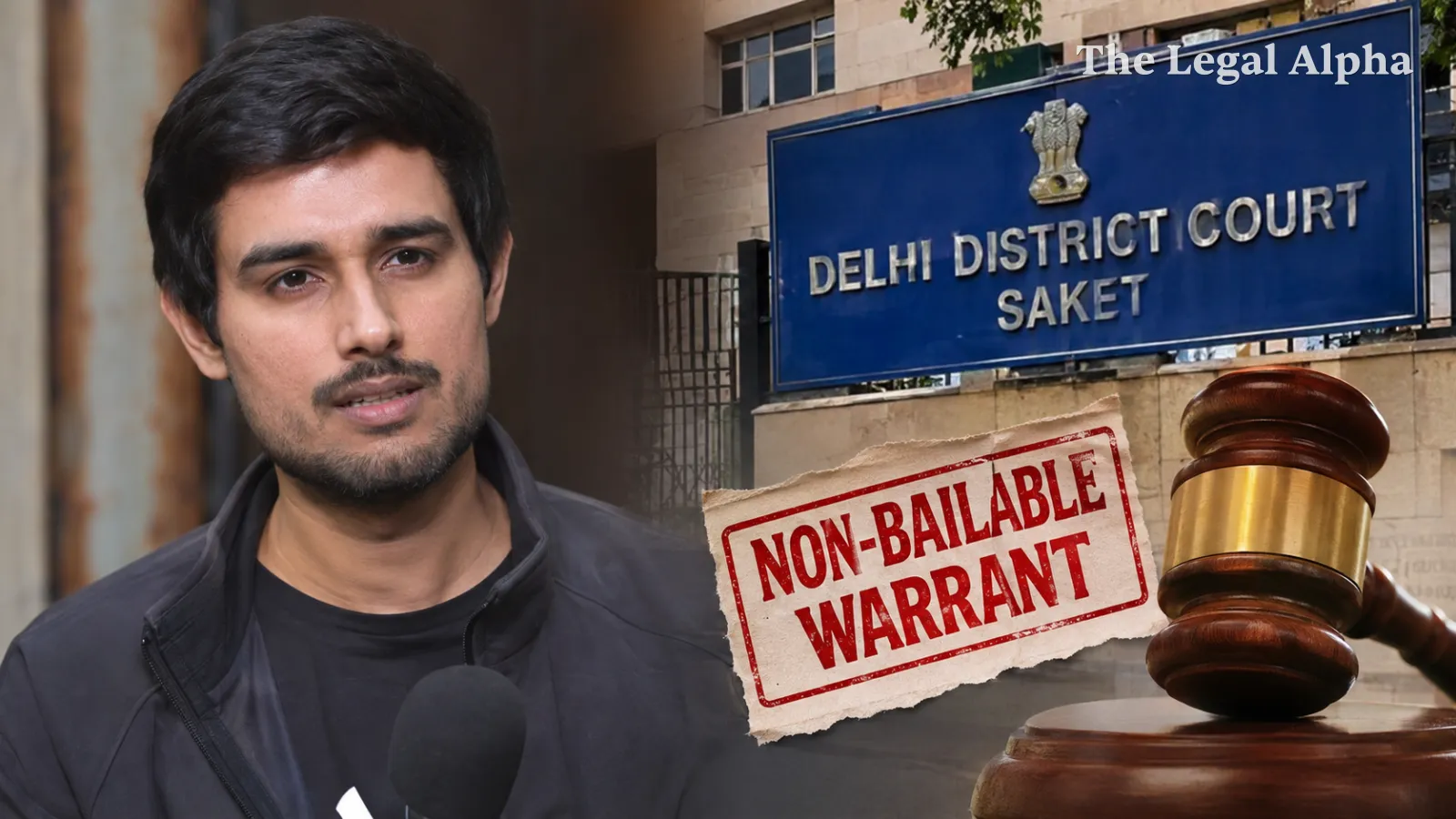
A Delhi court has issued a non-bailable warrant (NBW) against YouTuber Dhruv Rathee in an eight-year-old criminal defamation case filed over his 2018 video titled “BJP IT Cell Part 2”. The case was filed by Vikas Sankrityayan, also known as Vikas Pandey.
Background of the 2018 Defamation Complaint
The complaint was filed by Vikas Pandey, who is also known as Vikas Sankrityayan and is associated with the social media page I Support Narendra Modi.
The dispute concerns a video published by Dhruv Rathee in 2018 under the title “BJP IT Cell Part 2”. Pandey alleged that the video contained defamatory statements about him and damaged his reputation.
These allegations have not been established merely because the complaint was filed. They remain subject to determination through the judicial process.
Why Did the Saket Court Issue a Non-Bailable Warrant?
The latest warrant follows repeated difficulties in securing Rathee's appearance before the court.
Earlier, the court issued a bailable warrant on October 17, 2026. That process reportedly could not be completed because the address in Austria mentioned in the earlier proceedings was incorrect.
A subsequent bailable warrant issued on October 31 was also reportedly unsuccessful, with the court being informed that Rathee's Gurugram residence was locked.
After considering the difficulties in securing his presence, the court issued a non-bailable warrant on November 23, 2026.
What Is the Difference Between a Bailable and Non-Bailable Warrant?
A bailable warrant allows the person concerned to secure release by furnishing the required bail bond or surety, subject to the terms of the warrant.
A non-bailable warrant is a more stringent judicial direction for securing an accused person's presence before the court. It does not automatically mean that bail is legally impossible, but release requires consideration by the competent court.
Courts generally resort to non-bailable warrants after considering the circumstances and the need to ensure the accused's appearance.
Importantly, issuing such a warrant does not amount to a conviction or establish that the allegations in the complaint are true.
What Is the Legal Basis of the Defamation Case?
The complaint relates to criminal defamation under Sections 499 and 500 of the Indian Penal Code (IPC), which governed criminal defamation when the alleged publication took place in 2018.
Section 499 defines criminal defamation, while Section 500 prescribes the punishment for the offence.
Under this framework, a person may face criminal proceedings if the prosecution establishes that the legal requirements of defamation are satisfied and no applicable exception protects the statement.
The court must ultimately examine the allegations, evidence and applicable legal provisions before determining criminal liability.
How Is Arvind Kejriwal Connected to the Dispute?
The controversy also involved former Delhi Chief Minister Arvind Kejriwal, who had shared Rathee's video on social media in 2018.
Kejriwal subsequently acknowledged before the Supreme Court that sharing the video had been a mistake.
The Supreme Court stayed the trial court proceedings against Kejriwal in February 2024 while considering his challenge to the criminal defamation proceedings arising from the retweet.
The proceedings involving Kejriwal are legally distinct from the latest non-bailable warrant issued against Rathee.
What Happens Next in the Case?
The matter has been listed for further hearing on December 3, 2026, before the Saket Court.
The next proceedings will be significant in determining whether the court is able to secure Rathee's appearance and how the criminal defamation complaint will progress.
The detailed order explaining the latest warrant and its specific conditions was not available in the reports reviewed at the time of writing.
Legal Significance of the Court's Action
The development highlights the importance courts attach to ensuring the appearance of accused persons in criminal proceedings. Repeated difficulties in serving summons and warrants can lead courts to consider stronger procedural measures.
However, the issuance of a non-bailable warrant should not be confused with a finding of guilt. The allegations against Dhruv Rathee will have to be examined through the judicial process, and the complainant must establish the case in accordance with law.
Conclusion
The Delhi court's decision to issue a non-bailable warrant against Dhruv Rathee marks a significant procedural development in the long-pending 2018 criminal defamation case. However, the warrant concerns securing his appearance before the court and does not determine his guilt or the truth of the complainant's allegations.
Sources
Primary Source: Detailed court order not available in the reports reviewed.
Additional Sources: