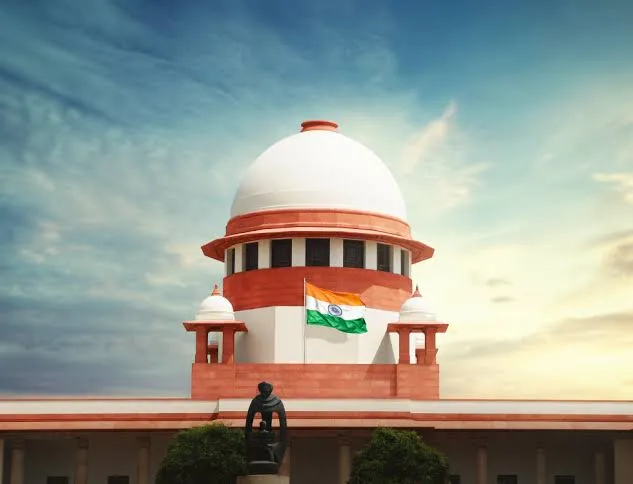
Supreme Court Steps In to Protect 135-Year-Old Central Secretariat Library Amid Central Vista Space Crunch
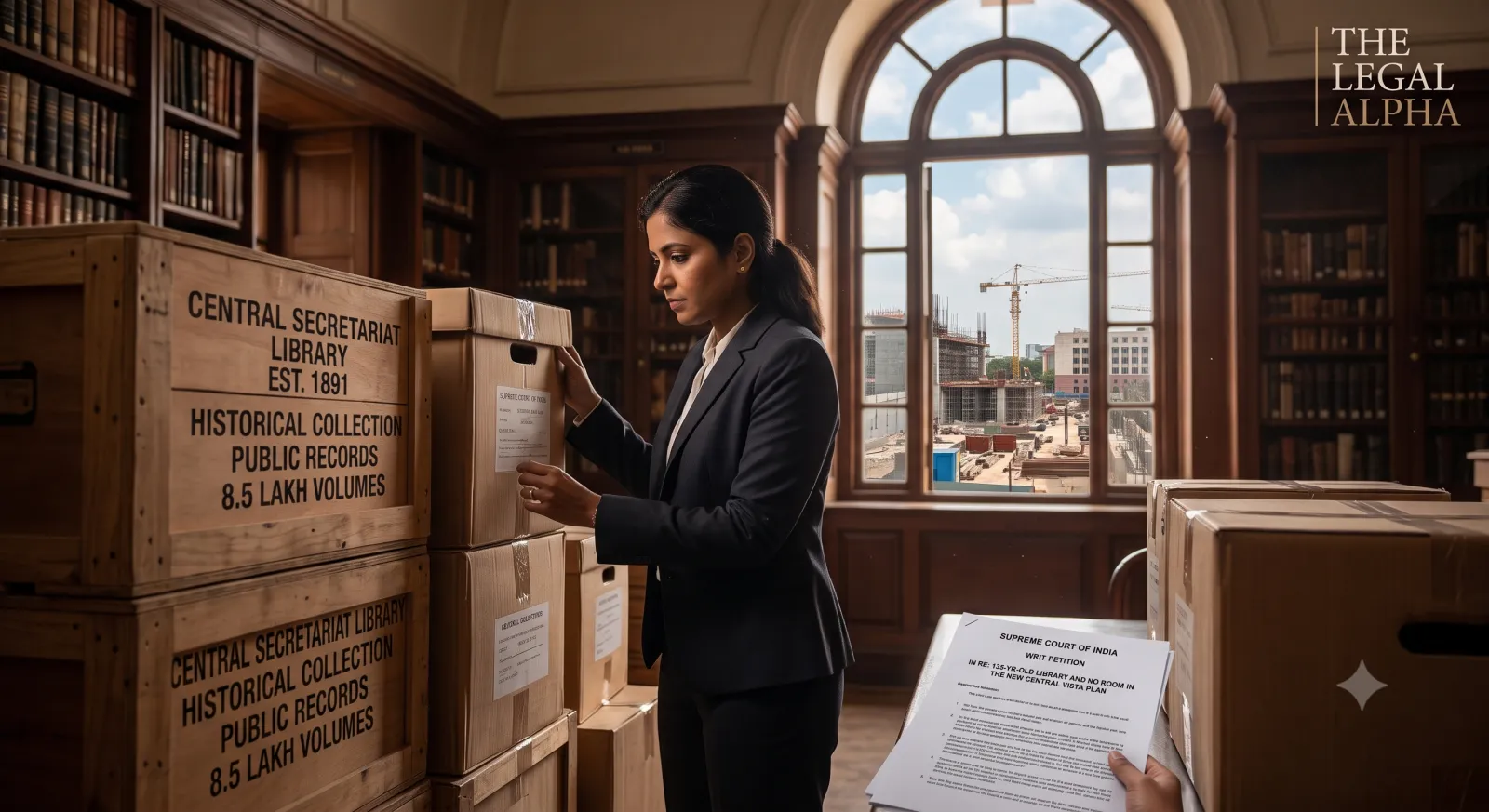
The Supreme Court of India has taken suo motu cognisance of the uncertain future facing the historic Central Secretariat Library during the ongoing Central Vista redevelopment project in the national capital. The top court registered a public interest proceeding titled In Re: 135-Yr-Old Library 8.5 Lakh Books– And No Room In The New Central Vista Plan, listing the matter for consideration before a Division Bench comprising Justice PV Sanjay Kumar and Justice Sanjeev Sachdeva.
The judicial intervention comes after public records and media reports highlighted severe space constraints threatening the institution. Founded in 1891, the library holds more than 8.5 lakh volumes, including irreplaceable colonial-era gazettes, government reports, and historical manuscripts. It currently occupies roughly 5,500 square metres across four floors in Shastri Bhawan, a complex slated for demolition under the Central Vista master plan. Concerns mounted when urban affairs authorities offered the repository only two rooms—spanning roughly 300 square metres—in the newly built Kartavya Bhawan-2 complex, prompting the court to scrutinize whether the state has adequately planned for the preservation of this national asset.
Legal Topic
Area of Law: Constitutional Law & Cultural Heritage Law
Sub-topic: Suo Motu Writ Jurisdiction / Protection of Public Archives and Cultural Property
Core Legal Issue
The primary legal issue before the Supreme Court is whether the Union government has adhered to its constitutional responsibilities and statutory obligations to safeguard national heritage and public records during massive administrative redevelopment.
The court is examining whether an administrative plan that severely downsizes or fragments a century-old public archive warrants judicial intervention under Article 32, and whether executive agencies are legally bound to ensure functionally viable, non-disruptive relocation arrangements prior to demolishing historic institutional sites.
What Did the Court / Authority Decide?
The proceedings remain at an initial stage, and the Supreme Court has not yet made a substantive ruling on the merits. Rather than disposing of the issue, the court initiated suo motu proceedings to examine the state's relocation blueprint, scheduling an initial hearing to review administrative plans.
On the administrative side, the Union Ministry of Housing and Urban Affairs publicly sought to quell concerns, stating on social media that dedicated space for the Central Secretariat Library has been incorporated into the Kartavya Path redevelopment layout and that construction processes are currently underway. The Supreme Court's upcoming hearing will assess whether these executive assurances align with the physical space and archival preservation standards required by the library.
Key Legal Points
-
Inherent Suo Motu Oversight: The Supreme Court reiterated its authority under Article 32 of the Constitution to act independently when administrative actions threaten institutions of substantial national and historical value.
-
Preservation of Public Heritage: The proceedings bring into focus the constitutional mandate requiring the state to protect records, historic archives, and cultural repositories from neglect, deterioration, or improper dispersal.
-
Inter-Ministerial Administrative Conflict: The issue highlights a procedural and logistical impasse between the infrastructure allocator (the Ministry of Housing and Urban Affairs) and the custodial institution (the Ministry of Culture), bringing government allocation policy under judicial scrutiny.
-
Preliminary Nature of Proceedings: No final directions or injunctions have been issued; the court is at the stage of determining whether formal notices, affidavits, or independent expert reviews are necessary.
Relevant Law
-
Article 32 of the Constitution of India: Confers original jurisdiction on the Supreme Court to safeguard constitutional rights and step in on public interest issues through extraordinary writ powers.
-
Article 49 of the Constitution of India: Directs the State to protect every monument, place, or object of artistic or historic interest of national importance from spoliation, disfigurement, or destruction.
-
Article 51A(f) of the Constitution of India: Imposes a fundamental duty to value and preserve the rich heritage of the nation's composite culture.
-
Public Records Act, 1993: Governs the management, preservation, and custody of official public records created and held by central government agencies.
Arguments of the Parties
Concerns Flagged / Ministry of Culture's Stance
The premise of the court's intervention arises from disclosures that the library was offered merely two rooms totalling around 300 square metres in Kartavya Bhawan-2. The Ministry of Culture had formally informed urban development authorities that its collection of 8.5 lakh books, specialized preservation units, and public reading rooms require at least 5,466 square metres. The department noted that cramming an institution second in size only to Kolkata's National Library into 300 square metres was physically impossible and risked damaging priceless historical documents.
Union Government / Ministry of Housing and Urban Affairs
The Ministry of Housing and Urban Affairs has maintained that public reports characterizing the library as abandoned or left without room in the new complex are incorrect. The Ministry clarified that adequate accommodation for the Central Secretariat Library has been integrated into the Kartavya Path redevelopment plan, and that the administrative machinery required to construct and establish the permanent facility is actively progressing.
Why Does It Matter?
This dispute touches upon a recurring challenge in administrative modernization: how governments preserve historical memory when revamping physical infrastructure. Large-scale public development projects frequently focus on modern office ergonomics, creating a risk that research facilities, public archives, and cultural institutions are treated as secondary storage problems rather than protected heritage.
By stepping in on its own motion, the Supreme Court signals that executive discretion in infrastructure redevelopment remains accountable to broader cultural preservation duties. If the court establishes clear parameters for the relocation, it could create binding precedents governing how central and state governments handle public archives, libraries, and heritage collections during future urban redevelopment projects.
Legal Takeaway
The Supreme Court's intervention affirms that urban redevelopment and administrative consolidation cannot bypass the constitutional imperative to preserve public heritage. When state modernization plans risk compromising irreplaceable cultural repositories, the judiciary will exercise its suo motu writ jurisdiction to demand practical, verifiable safeguards from executive authorities.
Sources
Primary Source:
Supreme Court of India, Suo Motu Writ Petition (Civil) titled In Re: 135-Yr-Old Library 8.5 Lakh Books– And No Room In The New Central Vista Plan (Listed before a Bench of Justices PV Sanjay Kumar and Sanjeev Sachdeva).
Additional Sources:
Official communications of the Union Ministry of Housing and Urban Affairs (MoHUA); Institutional and archival records of the Central Secretariat Library, Union Ministry of Culture.