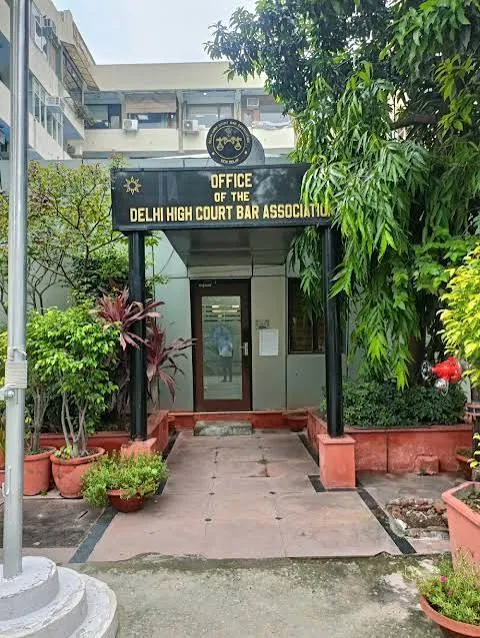
Youth Congress Mounts High Court Challenge Against Delhi Police Over Last-Minute Jantar Mantar Protest Ban
The Indian Youth Congress has moved the Delhi High Court against the Delhi Police after authorities refused permission for a planned peaceful demonstration at Jantar Mantar in New Delhi. The petition, filed by youth wing national president Uday Bhanu Chib through advocate Roopesh Singh Bhadauria, challenges an administrative order dated October 1 rejecting the organisation’s request.
The demonstration was planned to register public opposition and demand transparency regarding the role of Chief Election Commissioner Gyanesh Kumar over recent electoral roll revision procedures. According to the petition, the organisers formally applied for permission on September 25, proposing a gathering of roughly 100 to 150 people alongside written undertakings to adhere strictly to all public safety, traffic, and security regulations. Despite repeated follow-ups, the police communicated their formal rejection only on October 1—the exact date the protest was scheduled to begin. The matter is expected to be listed for hearing before the High Court in the coming days.
Legal Topic
Area of Law: Constitutional Law / Administrative Law
Sub-topic: Freedom of Speech and Assembly / Regulation of Public Demonstrations
Core Legal Issue
The controversy turns on the boundaries of administrative discretion exercised by police authorities when regulating public gatherings at designated protest venues. The central legal question is whether the State can arbitrarily reject an application for a non-violent political gathering without satisfying the constitutional threshold of reasonable restrictions.
The petition also brings procedural fairness into sharp focus. Specifically, it questions whether law enforcement agencies can sit on protest applications and issue eleventh-hour rejections on the day of the event, effectively defeating the organizers' fundamental rights and depriving them of meaningful judicial recourse.
What Did the Court / Authority Decide?
-
Action by Administrative Authority: The Delhi Police issued a formal rejection order on October 1 denying permission for the gathering at Jantar Mantar on law, order, and security grounds.
-
Status Before the High Court: The Delhi High Court has not yet rendered a decision on the merits. The writ petition has been instituted and is awaiting preliminary listing and consideration next week.
-
Pending Status: No interim relief or judicial directions have been granted yet; the validity of the police order remains under judicial review.
Key Legal Points
-
Constitutional Protections for Assembly: The right to hold non-violent, unarmed protests is enshrined under Article 19(1)(b) and forms an indispensable component of freedom of expression under Article 19(1)(a).
-
Threshold of Reasonable Restrictions: State authorities cannot impose arbitrary bans; any restriction must strictly fall within the parameters of public order and morality under Articles 19(2) and 19(3) while meeting the test of proportionality.
-
Procedural Due Process in Public Licensing: Withholding administrative decisions until the date of a scheduled event violates procedural fairness by presenting citizens with a fait accompli.
-
Designated Status of Jantar Mantar: Constitutional jurisprudence affirms that designated spaces like Jantar Mantar exist precisely to enable peaceful citizen engagement, requiring authorities to facilitate rather than routinely suppress non-violent gatherings.
Relevant Law
-
Constitution of India:
-
Article 19(1)(a): Freedom of speech and expression.
-
Article 19(1)(b): Right to assemble peaceably and without arms.
-
Articles 19(2) and 19(3): Permissible grounds for imposing reasonable restrictions on fundamental freedoms.
-
Article 226: Jurisdiction of the High Court to issue prerogative writs.
-
-
Delhi Police Act, 1978: Regulatory provisions governing assembly permits and maintenance of public order in the national capital territory.
-
Judicial Precedents:
-
Mazdoor Kisan Shakti Sangathan v. Union of India (2018): The Supreme Court recognized Jantar Mantar as a legitimate demonstration site and mandated fair, objective guidelines balancing the right to protest with civic order.
-
Himat Lal K. Shah v. Commissioner of Police (1973): The Constitution Bench ruled that police powers to regulate assemblies cannot be converted into an arbitrary licensing mechanism that extinguishes the right itself.
-
Arguments of the Parties
Petitioner (Indian Youth Congress / Uday Bhanu Chib)
-
The petitioner argued that holding a peaceful, disciplined gathering of 100 to 150 people constitutes a fundamental right under Articles 19(1)(a) and 19(1)(b) of the Constitution.
-
The petitioner submitted that explicit assurances were provided to ensure zero disruption to traffic and public tranquility, rendering the denial unreasoned and arbitrary.
-
The petitioner contended that the Delhi Police’s practice of withholding its decision until October 1, the scheduled protest date, was a deliberate procedural tactic designed to frustrate the planned event without allowing time for legal appeal.
Respondent (Delhi Police / Licensing Authority)
-
The authorities justified the rejection based on administrative assessments regarding law and order management and the need to prevent disruption around sensitive zones in Central Delhi.
-
Law enforcement agencies routinely maintain that discretionary permissions for political demonstrations must yield to public safety, crowd containment necessities, and vehicular flow.
Why Does It Matter?
-
Dissent Against Constitutional Watchdogs: The dispute touches on the democratic necessity of holding constitutional offices, such as the Election Commission of India, accountable through peaceful civic demonstrations.
-
Checking Administrative Inaction: The litigation spotlights the administrative tactic of delaying protest permits until the last moment, an issue that regularly affects political organizations, student groups, and civil rights bodies across India.
-
Precedential Value for Urban Protests: A clear ruling from the Delhi High Court could reinforce time-bound procedural obligations on police authorities, ensuring that permission requests are decided transparently and well before scheduled events.
-
Protection of Democratic Spaces: It reaffirms the constitutional principle that regulatory powers granted to the police exist to facilitate order, not to function as an indirect veto on peaceful assembly.
Legal Takeaway
The right to assemble peaceably at designated public grounds is a constitutionally entrenched freedom that cannot be curtailed through arbitrary administrative vetoes. Law enforcement agencies are required to assess protest applications under fair, transparent standards and communicate decisions in a timely manner so that the fundamental right to dissent remains meaningful rather than illusory.
Sources
Primary Source:
-
Writ Petition filed before the Delhi High Court by Indian Youth Congress President Uday Bhanu Chib (through Advocate Roopesh Singh Bhadauria) challenging the Delhi Police rejection order dated October 1.
Additional Sources:
-
Guidelines on public demonstrations framed pursuant to the Supreme Court judgment in Mazdoor Kisan Shakti Sangathan v. Union of India (2018) 17 SCC 324.