Voter Rolls or Citizenship Trials? The Evidentiary Burden Behind the Election Commission’s Special Intensive Revision

The Election Commission of India (ECI) initiated a large-scale Special Intensive Revision (SIR) across multiple states to overhaul, clean, and verify electoral rolls ahead of legislative assembly elections. While the Supreme Court recently affirmed the Commission’s broad statutory authority to conduct this state-wide revision exercise, the operational rollout has triggered intense legal debate across High Courts and constitutional forums.
During door-to-door enumeration, Booth Level Officers (BLOs) have repeatedly asked registered electors to produce documentation to prove their Indian citizenship, removing individuals who fail to furnish specific ancestral or identification documents. Civil liberties advocates, affected citizens, and legal scholars have challenged these actions, warning that local administrative verifications are effectively shifting the burden of proving nationality onto ordinary voters without statutory sanction.
Legal Topic
Area of Law: Constitutional Law & Election Law
Sub-topic: Electoral Roll Verification / Citizenship Adjudication & Evidentiary Standards
Core Legal Issue
The central legal issue is whether the Election Commission of India, while conducting an administrative revision of electoral rolls under the Representation of the People Act, 1950, can require enrolled voters to prove their Indian citizenship.
At stake is whether field-level election officers can deploy a reverse burden of proof—analogous to Section 9 of the Foreigners Act, 1946—to remove existing electors from the rolls, bypassing the procedural safeguards established under Article 326 of the Constitution and binding judicial precedents.
What Did the Court / Authority Decide?
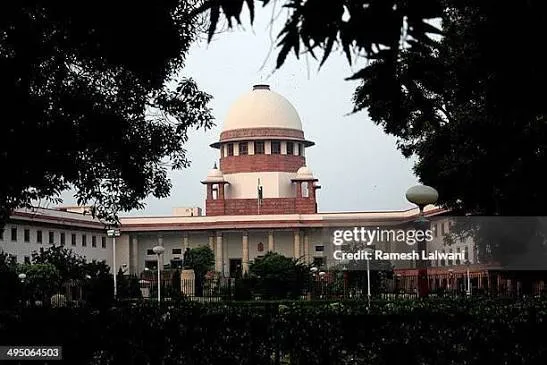
In Association for Democratic Reforms & Ors. v. Election Commission of India & Ors., the Supreme Court upheld the legal validity of the SIR exercise. A bench headed by Chief Justice Surya Kant ruled that the Commission possesses explicit constitutional authority under Article 324 and statutory competence under Section 21 of the Representation of the People Act, 1950 to order special revisions to preserve the purity of the electoral roll.
However, the Court did not authorize election authorities to conduct roving inquiries into the citizenship of enrolled electors. While the bench observed orally in subsequent hearings that exclusion from a voter roll does not formally extinguish a person’s citizenship, it did not issue an operative written directive restraining executive bodies from treating voter deletion as a finding of non-citizenship. Several High Courts, including the Delhi and Bombay High Courts, have since intervened to scrutinize automated rejections and mechanical notices issued by election officers, leaving the broader procedural safeguards against arbitrary disenfranchisement subject to continuing judicial oversight.
Key Legal Points
-
Presumption in Favor of Enrolled Electors: Under long-standing constitutional jurisprudence established in Lal Babu Hussein, an individual whose name is already enrolled on the voter list enjoys a legal presumption of citizenship that cannot be arbitrarily displaced without concrete initial evidence.
-
Misapplication of Section 9 Foreigners Act: The reverse burden of proof under Section 9 of the Foreigners Act, 1946 applies strictly to foreigners' adjudication proceedings and cannot be imported into routine administrative voter revisions.
-
Absence of a Conclusive Citizenship Document: Indian statutory law does not provide a single civil identity paper that conclusively certifies citizenship: Section 9 of the Aadhaar Act expressly bars Aadhaar from proving nationality, while passports and voter identity cards remain subject to statutory rebuttals and administrative revision.
-
Limited Jurisdiction of Booth Level Officers: Under the Registration of Electors Rules, 1960, booth-level enumerators are authorized to verify ordinary residence, address shifts, and factual errors—not to act as citizenship tribunals.
-
Non-Binding Nature of Oral Observations: Judicial comments made from the bench during oral hearings hold persuasive value but do not create binding legal precedent or enforceable obligations on executive authorities in the absence of a signed written order.
Relevant Law
-
Constitution of India: Article 324 (plenary powers of election superintendence), Article 326 (universal adult franchise and the right to vote), Article 325 (single uniform electoral roll), and Articles 14 and 21 (guarantees against arbitrary executive action and procedural due process).
-
Representation of the People Act, 1950: Section 16 (disqualifications for registration), Section 19 (conditions of registration), Section 21 (preparation and revision of electoral rolls), and Section 22 (correction and deletion procedures).
-
Registration of Electors Rules, 1960: Rules 21A, 23, and 25 (procedures for inquiries, claims, objections, and revisions).
-
Foreigners Act, 1946: Section 9 (statutory burden of proof regarding non-citizenship).
-
Aadhaar (Targeted Delivery of Financial and Other Subsidies, Benefits and Services) Act, 2016: Section 9 (prohibition against using Aadhaar as proof of citizenship or domicile).
-
Binding Judicial Precedents: Lal Babu Hussein & Ors. v. Electoral Registration Officer & Ors. (1995) 3 SCC 100; Association for Democratic Reforms & Ors. v. Election Commission of India & Ors. (2026).
Arguments of the Parties
Challengers and Civil Rights Petitioners
-
The petitioners argued that the SIR has transformed an administrative voter-roll update into an unconstitutional citizenship scrutiny exercise that targets economically and socially vulnerable populations.
-
They submitted that requiring enrolled voters to prove their lineage or submit rare historical documents violates established precedent, which forbids arbitrary re-examinations of citizenship without a documented prima facie basis.
-
They contended that voter roll exclusion carries severe collateral harms, exposing individuals to bureaucratic marginalization, loss of social welfare entitlements, and civil disenfranchisement without due process.
Election Commission of India
-
The Commission contended that Article 324 mandates it to maintain pure and accurate electoral rolls, which inherently requires the removal of dead, shifted, duplicate, and disqualified electors.
-
It submitted that Section 21(3) of the Representation of the People Act, 1950 gives the Commission full discretion to direct special intensive revisions whenever necessary to protect the integrity of representative elections.
-
It maintained that house-to-house enumeration is a standard verification process and that any elector facing wrongful omission has access to statutory remedies and appeal mechanisms under the Registration of Electors Rules.
Why Does It Matter?
The controversy over the Special Intensive Revision exposes a structural problem in Indian administrative law: the state possesses comprehensive identification databases, yet no accessible civil document serves as definitive proof of citizenship for an ordinary person. By requiring ordinary citizens to demonstrate citizenship on demand to local enumerators, the process creates an impossible standard of compliance for millions of working-class families, migrants, and displaced individuals who do not possess generational paperwork.
If the distinction between updating a voter roll and adjudicating citizenship remains blurred, administrative disenfranchisement can occur under the guise of database maintenance. The absence of an explicit, binding Supreme Court decree shielding deleted electors from collateral consequences leaves excluded citizens vulnerable to losing public welfare benefits and basic civic protections.
Legal Takeaway
An administrative voter roll revision cannot be used to conduct a summary trial of an elector's citizenship. Existing registered voters enjoy a legal presumption of eligibility, and the state cannot reverse the burden of proof onto citizens without explicit statutory backing and clear prima facie justification.
Sources
Primary Sources
-
Supreme Court of India: Association for Democratic Reforms & Ors. v. Election Commission of India & Ors., Judgment dated May 27, 2026 (Writ Petition (Civil), 2026 LawSuit(SC) 612).
-
Supreme Court of India: Lal Babu Hussein & Ors. v. Electoral Registration Officer & Ors. (1995) 3 SCC 100.
-
Relevant Statutes: Constitution of India, Articles 324 & 326; Representation of the People Act, 1950, Sections 16 & 21; Foreigners Act, 1946, Section 9; Aadhaar Act, 2016, Section 9.
Additional Sources
-
Election Commission of India: Regulatory guidelines and notifications governing the Special Intensive Revision of Electoral Rolls.
-
High Court of Delhi & High Court of Bombay: Petitions and orders concerning procedural compliance and automated form rejections under the SIR framework (August–October 2026).