Marriage Extends Beyond Childbearing: Madras High Court Rules Inability to Conceive Is Not Ground for Divorce or Cruelty
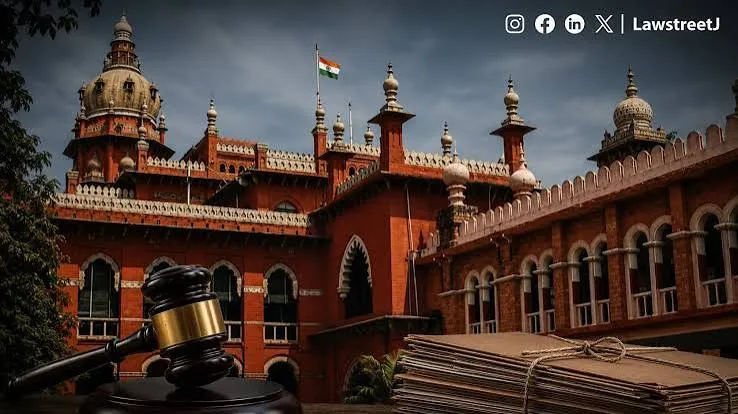
The Madras High Court recently dismissed a husband's petition seeking the dissolution of his marriage on grounds of cruelty, clarifying that procreation cannot be considered the primary or sole purpose of matrimony. The court held that a woman cannot be branded as having failed in her marital obligations simply because she could not conceive or give birth to a child.
The ruling arose from an appeal against a matrimonial dispute where the husband sought divorce under the Hindu Marriage Act, 1955. He contended that the absence of children and medical complications affecting conception caused him profound mental distress that amounted to cruelty. Rejecting this contention, the High Court emphasized that marriage is an institution fundamentally rooted in companionship, mutual emotional support, and shared existence rather than mere reproductive utility.
Legal Topic
Area of Law: Family and Matrimonial Law
Sub-topic: Grounds for Divorce / Mental Cruelty / Involuntary Infertility
Core Legal Issue
The central legal question before the High Court was whether a spouse's biological inability to conceive a child—or the failure of a couple to achieve procreation—amounts to "mental cruelty" within the meaning of Section 13(1)(ia) of the Hindu Marriage Act, 1955.
The court also examined whether reproductive capacity constitutes an essential legal condition of marriage, such that its absence permits a spouse to allege that the other has defaulted on core marital commitments.
What Did the Court Decide?
The Madras High Court declined to grant a decree of divorce, determining that medical infertility or childlessness cannot be categorized as cruelty under matrimonial law. The bench observed that an involuntary biological condition is an unfortunate circumstance of life, not a deliberate or contumacious act directed toward inflicting distress on the other spouse.
The court reiterated that mutual care, shared commitment, and emotional bonding form the real foundation of marriage. It observed that treating marriage purely as a mechanism for producing offspring reduces the sanctity of the relationship and ignores modern legal understandings of human dignity. Consequently, the court held that the wife had not committed any matrimonial offence and that childlessness cannot be turned into a ground for dissolving the marriage.
Key Legal Points
-
Procreation Is Not the Sole Purpose of Marriage: Contemporary family jurisprudence recognizes marriage as a partnership anchored in companionship, mutual trust, and shared life; childbearing is an incidental dimension, not an absolute legal condition of the union.
-
Involuntary Medical Conditions Do Not Amount to Cruelty: Biological inability to conceive lacks the intentionality or willful conduct required to establish mental cruelty under Section 13(1)(ia) of the Hindu Marriage Act, 1955.
-
Distinction Between Consummation and Fertility: While the law addresses capacity to consummate a marriage in specific contexts, it does not mandate biological fertility as a requisite for maintaining marital validity.
-
Protection from Matrimonial Stigma: A spouse cannot be legally held to have failed in marital duties or subjected to divorce proceedings on the basis of reproductive challenges beyond their control.
Relevant Law
-
Section 13(1)(ia) of the Hindu Marriage Act, 1955: Authorizes dissolution of marriage where one party treats the petitioner with cruelty following solemnization.
-
Section 12(1)(a) of the Hindu Marriage Act, 1955: Pertains to voidable marriages on grounds of impotence preventing consummation, distinguishing sexual capacity from the ability to procreate.
-
Established Principles of Matrimonial Cruelty: Judicial standards requiring proof of grave and weighty conduct rendering cohabitation intolerable, excluding ordinary misfortunes or biological circumstances.
Arguments of the Parties
Appellant / Husband
The husband argued that the inability to have children deprived him of the joy of parenthood and caused him severe emotional anguish, which he submitted amounted to sustained mental cruelty. He claimed that the inability to conceive frustrated the fundamental expectations of the marital relationship and warranted a decree of divorce.
Respondent / Wife
The wife maintained that childlessness was a biological circumstance outside her control and could not be attributed to any neglect, fault, or willful wrongdoing. She submitted that she had remained dedicated to the marriage and that an involuntary health condition could not lawfully be equated with matrimonial cruelty.
Why Does It Matter?
This decision carries vital significance for family law and gender justice. Infertility and reproductive difficulties frequently carry intense social stigma, and women often face unilateral blame or abandonment when a couple cannot conceive. By affirming that marriage is not reduced to biological childbearing, the High Court provides a vital legal safeguard against the weaponization of reproductive challenges in divorce litigation.
The judgment also provides clarity for family courts navigating cruelty petitions. It firmly separates genuine matrimonial misconduct from biological misfortune, establishing that non-procreation cannot be packaged as a fault-based ground for ending a marriage.
Legal Takeaway
Inability to bear children does not constitute matrimonial cruelty and cannot be treated as a valid ground for divorce under the Hindu Marriage Act. The law views marriage as an enduring partnership of mutual companionship and emotional support, where childbearing is not a mandatory duty.
Sources
Primary Source: Judgment of the Madras High Court concerning divorce and matrimonial cruelty under the Hindu Marriage Act, 1955.
Additional Sources: Hindu Marriage Act, 1955; Supreme Court of India precedents on mental cruelty in matrimonial relationships.