Public Office vs Judicial Lineage: Supreme Court Justice Oka Calls for Ethical Boundaries in State Panel Appointments
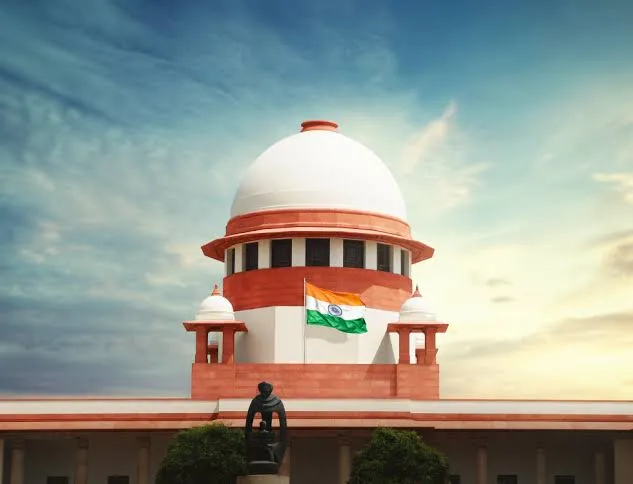
Supreme Court Judge Justice Abhay S. Oka addressed professional propriety within the legal ecosystem, observing that children and close relatives of sitting judges ought to voluntarily refrain from accepting appointments on government and public agency panels.
Speaking on judicial ethics and public perception, Justice Oka underscored that while relatives of judges possess the legal qualification and constitutional right to practise law, accepting briefs or retainerships from the state while a parent occupies the bench creates an avoidable perception of favouritism or patronage. The remarks spotlight long-standing institutional concerns regarding potential conflicts of interest, transparency in state panel empanelments, and the overarching necessity to preserve untainted public faith in the administration of justice.
Legal Topic
Area of Law: Judicial Ethics and Professional Responsibility
Sub-topic: Bar Council Standards / State Empanelment Protocols / Conflict of Interest
Core Legal Issue
The core issue centres on whether the relatives of serving judicial officers should accept state-sponsored briefs and public sector legal appointments, and how institutional mechanisms must balance an advocate's fundamental right to carry on their profession with the constitutional necessity to insulate the judiciary from appearances of bias or political patronage.
At its foundation, the dilemma tests the boundary between statutory professional rights and non-statutory self-regulation, questioning whether self-restraint should be codified into strict disqualification norms or maintained as a convention of institutional integrity.
What Did the Court / Authority Decide?
While Justice Oka’s observations were delivered in an institutional address rather than as an operative judicial ruling, his remarks articulated several key propositions for the legal fraternity:
-
Relatives and children of sitting judges should, as a matter of personal and professional propriety, ideally decline appointments as standing counsels, panel advocates, or special public prosecutors for state authorities and government departments.
-
The integrity of the judicial process rests heavily on public confidence, which can easily be eroded if litigating parties perceive that state patronage flows toward judicial chambers through family associations.
-
The legal profession requires continuous self-regulation to prevent institutional erosion, cautioning that appearances of impropriety often inflict equal damage to the legal system as actual bias.
Key Legal Points
-
Advocates have an ethical obligation to safeguard institutional credibility by eschewing briefs that could give rise to a reasonable perception of undue influence or official patronage.
-
Government panels must ensure non-opaque, merit-driven selection mechanisms rather than dispensing retainerships on perceived proximities to the judiciary.
-
The principle of natural justice requires not merely an impartial bench, but the total elimination of circumstances that could cause an ordinary litigant to reasonably suspect bias.
-
Self-imposed ethical conventions within judicial families serve as an essential bulwark preserving institutional independence against executive leverage.
Relevant Law
-
Constitution of India: Article 19(1)(g) (right to practise any profession), Article 14 (equality and non-arbitrariness in public appointments), and Article 21 (fair trial and public faith in the justice delivery system).
-
Advocates Act, 1961: Provisions governing the enrolment, conduct, and professional privileges of advocates.
-
Bar Council of India Rules (Standards of Professional Conduct and Etiquette): Chapter II, Part VI (rules governing an advocate's duty to the court and restrictions on appearing before relatives).
-
Restatement of Values of Judicial Life (1997): Code adopted by the Supreme Court outlining expected ethical standards and conflicts of interest concerning judicial family members.
Arguments of the Parties
Because these remarks arose in a public address on institutional transparency rather than an adversarial courtroom proceeding, there were no formal contesting parties. However, the dialogue surrounding the subject reflects two clear perspectives within the Bar:
Advocates of strict boundaries argue that state briefs are funded by public exchequer resources and frequently involve high-stakes government litigation. When these briefs go to relatives of sitting judges, it breeds cynicism among ordinary litigants and fellow advocates who lack judicial connections, undermining fair competition and institutional neutrality.
Conversely, perspectives defending open practice submit that young lawyers should not face arbitrary professional handicaps merely due to their lineage. They argue that once a practitioner meets the requisite criteria and merit benchmarks, blanket disqualifications from public work unduly curtail their career development and legitimate constitutional right to practice.
Why Does It Matter?
The discussion touches a sensitive nerve across high courts and the Supreme Court regarding how law officers and panel counsels are selected. State governments represent the largest litigator in the country, and appointments to government panels remain a significant avenue for career advancement and visibility.
When judicial relatives are inducted into state panels, it risks creating the perception of a reciprocal relationship between the political executive and the judiciary. Justice Oka's call reinforces that public confidence in the legal apparatus cannot hinge solely on subjective integrity; it requires structural and voluntary insulation from situations that invite public doubt. This debate encourages both state law departments and bar councils to introduce objective empanelment criteria and foster transparent appointment protocols across all jurisdictions.
Legal Takeaway
Public perception is fundamental to judicial legitimacy: avoiding the appearance of a conflict of interest is just as vital as avoiding an actual conflict. While judicial relatives maintain the right to practise, adopting voluntary restraint against state-sponsored appointments safeguards the Bar's independence and upholds uncompromised public trust in the courts.
Sources
Primary Source: Address by Justice Abhay S. Oka, Supreme Court of India, on judicial ethics and institutional integrity.
Additional Sources: Bar Council of India Rules on Standards of Professional Conduct and Etiquette; Restatement of Values of Judicial Life (1997).