Accused Must Be Heard Only After Examining Complainant Under Section 223 BNSS, Rules Delhi High Court Division Bench
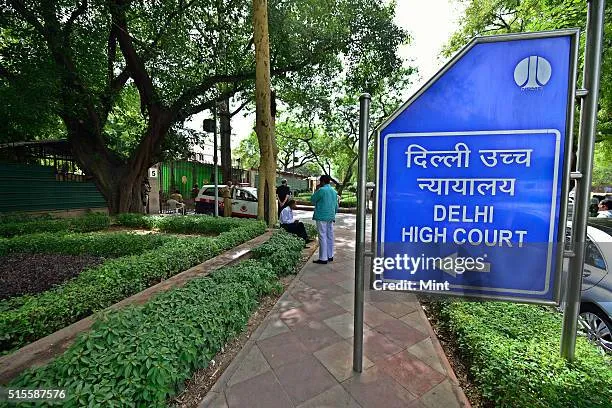
A Division Bench of the Delhi High Court resolved conflicting judicial opinions on the procedural roadmap governing private criminal complaints under the Bharatiya Nagarik Suraksha Sanhita, 2023. The court ruled that in private complaints, a Judicial Magistrate must first examine the complainant and any supporting witnesses on oath before issuing statutory notice to the proposed accused.
The ruling resolves divergent approaches taken by trial courts across the capital following the implementation of the new criminal codes. In challenges brought by Dr. Rita Bakshi and Anita Rani Mehra, Magistrate courts had issued notices to proposed accused persons immediately upon receiving private complaints—well before recording pre-summoning evidence. The Division Bench held this threshold issuance to be improper, clarifying the sequential steps that lower courts must follow prior to taking cognizance.
Legal Topic
-
Area of Law: Criminal Law and Procedure
-
Sub-topic: Private Complaints / Pre-Cognizance Safeguards / Section 223 BNSS
Core Legal Issue
The controversy centered on the interpretation of the first proviso to Section 223(1) of the BNSS, a newly introduced statutory protection that mandates giving an accused person an opportunity to be heard before cognizance is taken.
The court had to determine the precise procedural milestone at which a Magistrate takes cognizance, and whether the phrase "while taking cognizance" requires issuing notice to the proposed accused at the threshold upon receipt of the complaint, or only after the complainant and witnesses are examined on oath.
What Did the Court Decide?
The Division Bench comprising Justice Navin Chawla and Justice Ravinder Dudeja answered the reference by establishing a clear four-step procedure for handling private complaints:
-
A Magistrate who receives a complaint must first examine the complainant and any witnesses on oath under Section 223(1), unless statutory exemptions apply.
-
Notice to the proposed accused under the first proviso cannot be issued mechanically at the threshold upon the mere filing of a complaint.
-
If the sworn statements and initial inquiry disclose the ingredients of an offence, the Magistrate must issue notice and give the accused an opportunity of being heard.
-
A formal decision on taking cognizance can occur only after this hearing is completed.
-
The court clarified that the accused’s right at this pre-cognizance stage remains limited: the accused can challenge the legal sufficiency of the allegations by demonstrating that the complaint and recorded statements disclose no offence, but cannot turn the stage into a mini-trial.
The individual petitions were directed to be placed before the appropriate Roster Bench for final disposal in accordance with these principles.
Key Legal Points
-
Examination on oath under Section 223(1) constitutes an integral part of the process leading to the decision to take cognizance under the BNSS framework.
-
The requirement to afford the proposed accused an opportunity of being heard operates after the initial evidentiary material has been recorded, ensuring the accused has concrete allegations to respond to.
-
Pre-cognizance hearings do not permit a full-dress defense or cross-examination; the proposed accused is confined to arguing that the material on record does not make out a prima facie case.
-
Issuing notice prior to recording the complainant’s testimony subjects respondents to unnecessary litigation when a complaint could otherwise be dismissed for lack of basic substantiation.
Relevant Law
-
Section 223(1), First Proviso, Bharatiya Nagarik Suraksha Sanhita, 2023 (Examination of complainant and mandatory pre-cognizance hearing to accused)
-
Section 210, Bharatiya Nagarik Suraksha Sanhita, 2023 (Cognizance of offences by Magistrates)
-
Section 227, Bharatiya Nagarik Suraksha Sanhita, 2023 (Issue of process)
-
Section 200, Code of Criminal Procedure, 1973 (Erstwhile procedure for examining complainants)
Arguments of the Parties
Petitioners / Proposed Accused: Counsel for the petitioners contended that the newly added proviso to Section 223 was enacted as a safeguard against malicious and frivolous prosecutions. They argued that notice cannot be issued in a vacuum at the immediate filing stage; the proposed accused must be supplied with the complaint alongside the recorded statements of the complainant and witnesses to effectively show why cognizance should not be taken.
Complainants / State: The respondents submitted that Section 223 primarily deals with the examination of the complainant, while the power to take cognizance is governed independently by Section 210 of the BNSS. They argued that the legislature intentionally avoided prescribing a rigid sequence, leaving it to the Magistrate's discretion to issue notice at the inception to save judicial time and prevent protracted pre-summoning proceedings if the complaint is unmerited on its face.
Why Does It Matter?
The transition from the CrPC to the BNSS introduced substantial structural changes, and the first proviso to Section 223(1) created widespread confusion among trial judges, resulting in contradictory procedures across districts. By settling the exact choreography of private complaints, this Division Bench ruling prevents premature harassment of prospective defendants while maintaining order in Magistrates' court dockets. It strikes a balance between protecting citizens against vindictive litigation and guarding trial courts from conducting premature mini-trials before the basic complainant evidence is even placed on record.
Legal Takeaway
Under Section 223 of the BNSS, a Magistrate cannot issue pre-cognizance notice to a proposed accused straightaway upon filing of a complaint. The complainant and witnesses must be examined on oath first, and notice to the proposed accused is issued only after that preliminary evidentiary foundation is laid.
Sources
-
Primary Source: Delhi High Court Judgment in Dr. Rita Bakshi v. Seema Bajaj & Anr. and Anita Rani Mehra & Anr. v. Neena Kapoor (Neutral Citation: 2026:DHC:8460-DB, decided on September 29, 2026).
-
Additional Sources: Bharatiya Nagarik Suraksha Sanhita, 2023; Code of Criminal Procedure, 1973.