Supreme Court Seeks Centre’s Views on Public Awareness and Potential Law to Curb Marriages Between Close Blood Relatives
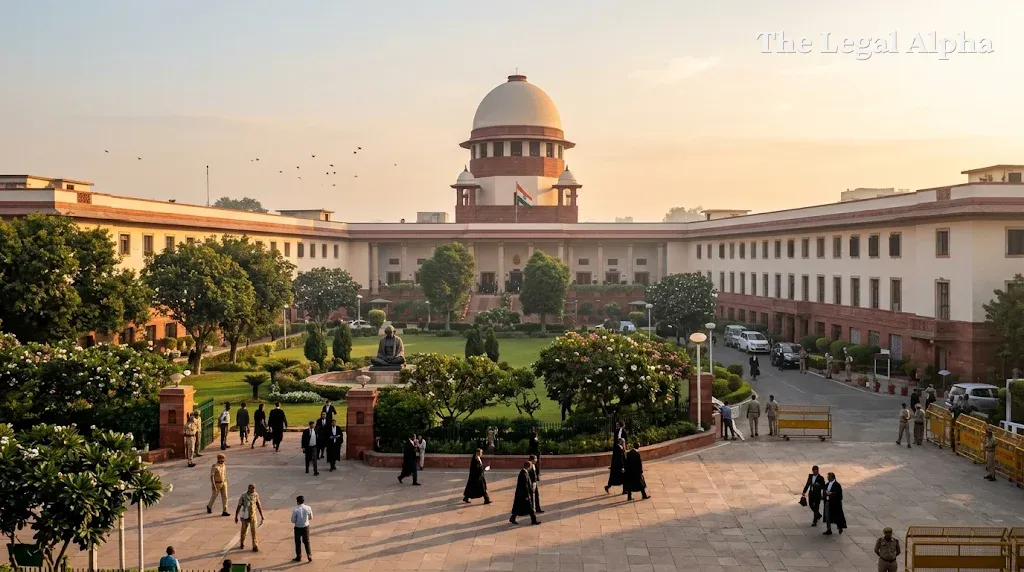
The Supreme Court of India has issued a limited notice to the Union Government, asking it to consider whether legislation or nationwide public awareness campaigns are desirable to address health risks linked to marriages between close blood relatives.
A three-judge bench comprising Chief Justice Surya Kant and Justices Joymalya Bagchi and V. Mohana passed the order while hearing a public interest litigation (Charvi S. v. Union of India, Diary No. 23903/2026). The petition was filed by Charvi S., a Bengaluru-based law student born to first-cousin parents who suffers from a 40% visual impairment. While declining to step into the legislative arena to ban or regulate such customary unions directly, the Court stated that it wanted to "sensitise" the government on the medical consequences of consanguineous marriages and explore ways to inform citizens—including through school and college curricula.
Legal Topic
Area of Law: Family Law & Constitutional Law
Sub-topic: Consanguineous Marriages / Customary Exceptions / Public Health and Fundamental Rights
Core Legal Issue
The central question before the Supreme Court was whether the judiciary can—or should—intervene to restrict or attach mandatory medical preconditions to marriages between close blood relatives that are otherwise permitted under statutory customary exceptions. Specifically, the Court had to weigh the State's public health interest in preventing foreseeable genetic disorders in children against the constitutional protection of personal autonomy in choosing a marital partner and the exclusive domain of Parliament to enact social reform legislation.
What Did the Court / Authority Decide?
The Supreme Court clarified the boundaries of judicial intervention and passed a limited procedural order:
-
Refusal to Legislate: The bench explicitly stated that courts cannot regulate or ban consanguineous marriages, noting that enacting social reform laws falls squarely within Parliament’s domain.
-
Limited Notice Issued: Rather than issuing binding directions, the Court issued notice to the Union of India for the restricted purpose of urging the government to examine two options: the desirability of bringing suitable legislation, or launching widespread publicity and educational initiatives (such as incorporating the subject into academic curricula) to highlight the genetic risks of intra-familial unions.
-
Emphasis on Informed Consent: Drawing a parallel to earlier jurisprudence involving marriages with HIV-positive individuals, the bench observed that marriage remains a matter of personal choice, provided the decision is backed by fully informed consent.
-
Current Status: The matter remains pending before the Supreme Court, awaiting the Union Government’s formal response on its policy and legislative stance.
Key Legal Points
-
Separation of Powers: The Supreme Court reaffirmed that altering personal laws or overriding established marriage customs through statutory amendments is a legislative function, not a judicial one.
-
Personal Autonomy vs. Public Health: Recognizing marital choice as an integral part of personal liberty, the bench indicated that the State's immediate role lies in ensuring individuals have access to medical facts so they can exercise informed consent rather than imposing judicial mandates.
-
Scientific Temper as a Constitutional Duty: While issuing the limited notice, the bench referenced Article 51A of the Constitution, noting the fundamental duty of citizens to develop a scientific temper and spirit of inquiry.
-
Prospective and Preventive Scope: The plea explicitly steered clear of seeking retrospective invalidation or criminalization of existing marriages, focusing instead on preventive healthcare safeguards like premarital genetic counseling.
Relevant Law
-
Hindu Marriage Act, 1955 (Sections 5(iv) and 5(v)): These provisions prohibit marriages between individuals within "degrees of prohibited relationship" or sapinda relationships (extending up to three generations on the mother's side and five on the father's side), unless the custom or usage governing each party permits such a union.
-
Special Marriage Act, 1954 (Section 4(d)): Bars civil marriages within prohibited degrees of relationship, subject to a proviso allowing unions permitted by officially notified customs.
-
Constitution of India:
-
Articles 14 and 21: Invoked by the petitioner regarding the right to health and life of children born with preventable genetic conditions, alongside the Court's recognition of personal autonomy in marriage.
-
Article 15: Cited in the petition in support of special provisions for the welfare and best interests of children.
-
Article 51A(h): Referenced by the bench regarding the Fundamental Duty to develop a scientific temper.
-
Arguments of the Parties
Petitioner
Appearing through Senior Advocate Kaadambari Singh and Advocate-on-Record Anjuman Tripathy, the petitioner argued that unchecked customary exceptions expose future generations to severe, avoidable genetic harm. Citing medical studies and her own experience with 40% visual impairment, photophobia, and cone dystrophy resulting from a first-cousin marriage, she submitted that consanguineous unions increase homozygosity, leading to higher rates of congenital malformations, sensory impairments, and infant mortality. She urged the Court to read mandatory public health safeguards—such as premarital genetic counseling, risk disclosure, and voluntary screening—into Sections 5(iv) and 5(v) of the Hindu Marriage Act, framing the issue around intergenerational equity and child welfare rather than criticism of any community.
Respondent (Union of India)
The Union Government has not yet filed its formal reply, as the Supreme Court has only just issued a limited notice seeking its response.
Why Does It Matter?
Consanguineous marriages—such as unions between first cousins or uncles and nieces—remain culturally accepted and legally protected by customary exceptions across several regions in India, particularly in southern states. By declining to strike down statutory exceptions while simultaneously nudging the Centre on public education, the Supreme Court has charted a cautious middle path.
If the Union Government acts on the Court's observations, the immediate impact is unlikely to be a sudden ban on customary marriages. Instead, it could accelerate public health interventions—such as integrating genetic risk awareness into school curricula, expanding voluntary premarital screening programs in high-prevalence districts, and strengthening existing frameworks like the National Policy for Rare Diseases. For families and healthcare policymakers, the case highlights an ongoing shift toward addressing hereditary disorders through public awareness and informed consent rather than coercive legal prohibitions.
Legal Takeaway
The Supreme Court will not judicially ban or restrict customary marriages between close blood relatives, maintaining that marriage is a personal choice and social reform belongs to Parliament. However, by asking the Centre to consider public awareness campaigns and curriculum changes, the Court has signaled that informed consent—backed by accessible medical knowledge about genetic risks—is essential when families exercise customary marital exceptions.
Sources
Primary Source:
Supreme Court of India proceedings and order in Charvi S. v. Union of India (Diary No. 23903/2026), heard by Chief Justice Surya Kant and Justices Joymalya Bagchi and V. Mohana.
Additional Sources:
-
The Hindu Marriage Act, 1955 (Sections 5(iv) and 5(v))
-
The Special Marriage Act, 1954 (Section 4(d))
-
LiveLaw, Hindustan Times, and Times of India court reporting on the November 2026 proceedings